
One of our favorite local cultivars: The West Marin Mystery
Those who have read all of my blogs know how much I value testing, though perhaps some of you don’t know exactly why. This blog is going to talk about the value of testing, how testing is the only way to know what you’ve grown, and why, if you are growing for someone who is sick, you absolutely must test. Testing your plants is not only a way to know exactly what is inside them, it also demonstrates to others your care and commitment for understanding what you have grown.
I have tested every plant I’ve grown. I have used two different labs for the testing. The first, a lab about an hour drive from me, was pretty bare bones, but adequate for basic information. They went out of business during the pandemic.
I moved to where I do all my testing now: SC Labs. They are a significant improvement over my previous lab. First, they send a courier to my home, to pick up my samples for testing. I live 20 miles from the nearest stop light, well out in the country, so I am grateful. Their lab reports are in-depth enough that I can actually make decisions about certain cultivars and who would benefit from them, simply by reading the test results. There is one page in particular, the PhytoFacts page, that has proven surprisingly accurate and instructive.
Testing is an expense and if you grow a lot, it’s going to be expensive. Figure, on the average, for a basic test, it’s going to cost about $80 a plant. That rate will probably vary, depending on where you live, but generally, that’s what we’ve paid. For that money, we get the full roster of THC, CBD and Terpene potency and percentages. We get plant moisture (always interesting to get this–it helps me become better at drying my plants. The goal is to be close to 11%.)
As an aside, regarding the cost of these tests, for the last three years, I have been writing off my tests at tax time. In fact, I write off everything I purchase regarding cannabis, at tax time. Cannabis is legal in California, so these are legitimate business expenses.
One test that we don’t do is the mold test and you might be surprised at that, given how we view our plants as medicine for my beloved sick wife, and others. The reason we don’t test for mold is because we wash each of our plants at harvest, and remove any and all pathogenic material before we dry in a temperature and humidity controlled room. We are mold free, and not having to take that test is a savings. You can read more about washing in my blog titled Harvest Begins. (Here’s a spoiler–you don’t lose trichomes when you wash)
But the page in the SC Labs report that draws the most views in my family, and in many ways, has been the most surprisingly instructive tool, is what they call their PhytoFacts page. On this page, you’ll see the basic potency information, but you’ll also get a taste and flavor expectation, a color coated terpene breakdown, and then most amazingly, you get a graph showing what the test indicates will be the Entourage Effects. At first, I thought it was a gimmick. I don’t think that way now. I find this page shockingly accurate as a predicant for how someone is going to react to the respective cultivar. Let me illustrate this with an example:
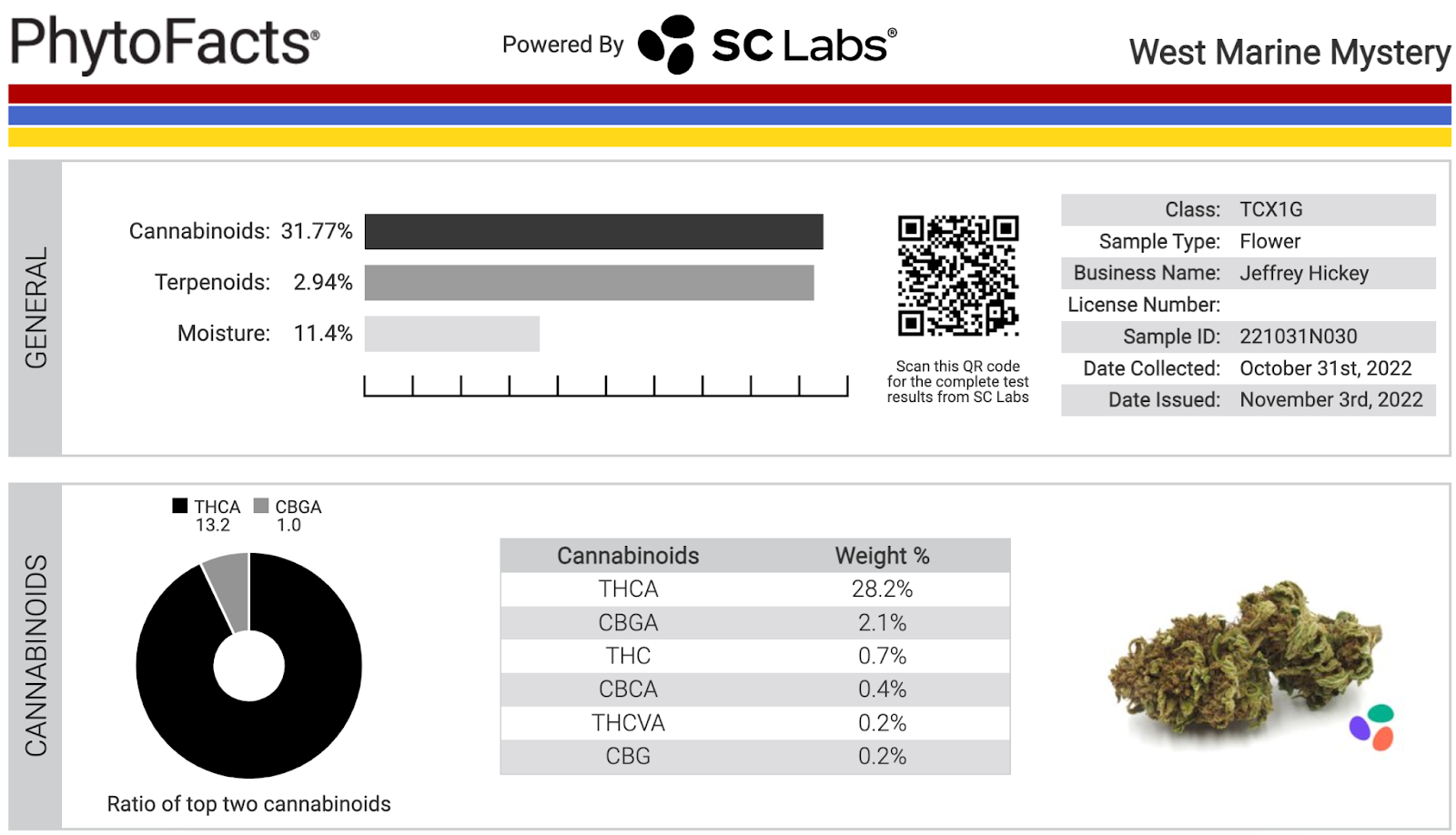
Above you see the top of the Phytofacts page from SC Labs on a cultivar called The West Marin Mystery. This is a local cultivar that is not commercially available. You can see by the basic test scores on the above page that this is a very powerful plant. She has 28.2% THCA, which is very good for outdoors, and almost 3% terpenes, which is high. In fact, I got a message from SC Labs, congratulating me on the terpene percentage. I was happy and honored to get that notice.
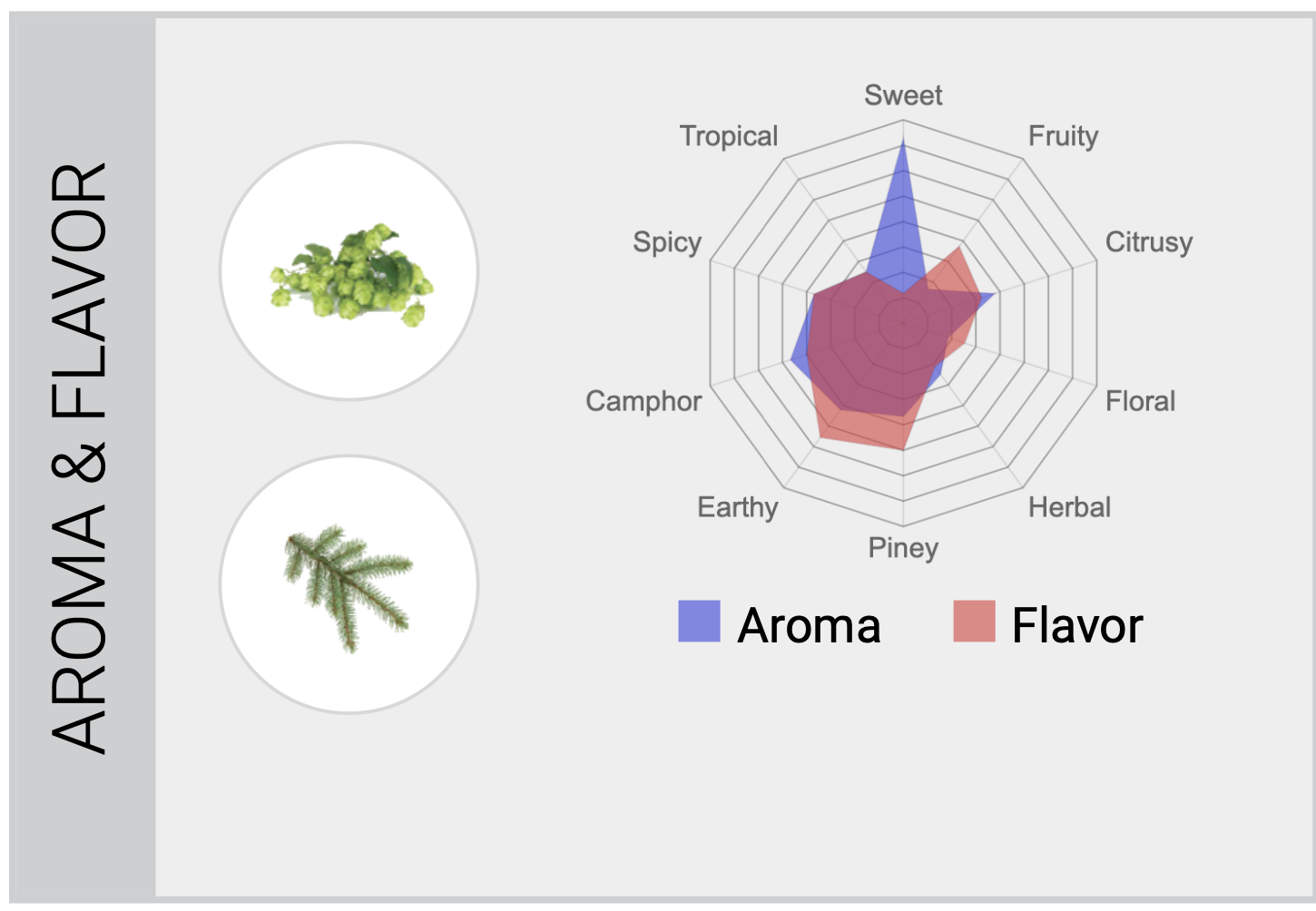
On this chart, they describe the aroma and flavor profile. As I don’t smoke, this is not material to me, but I know others who find this chart fascinating.
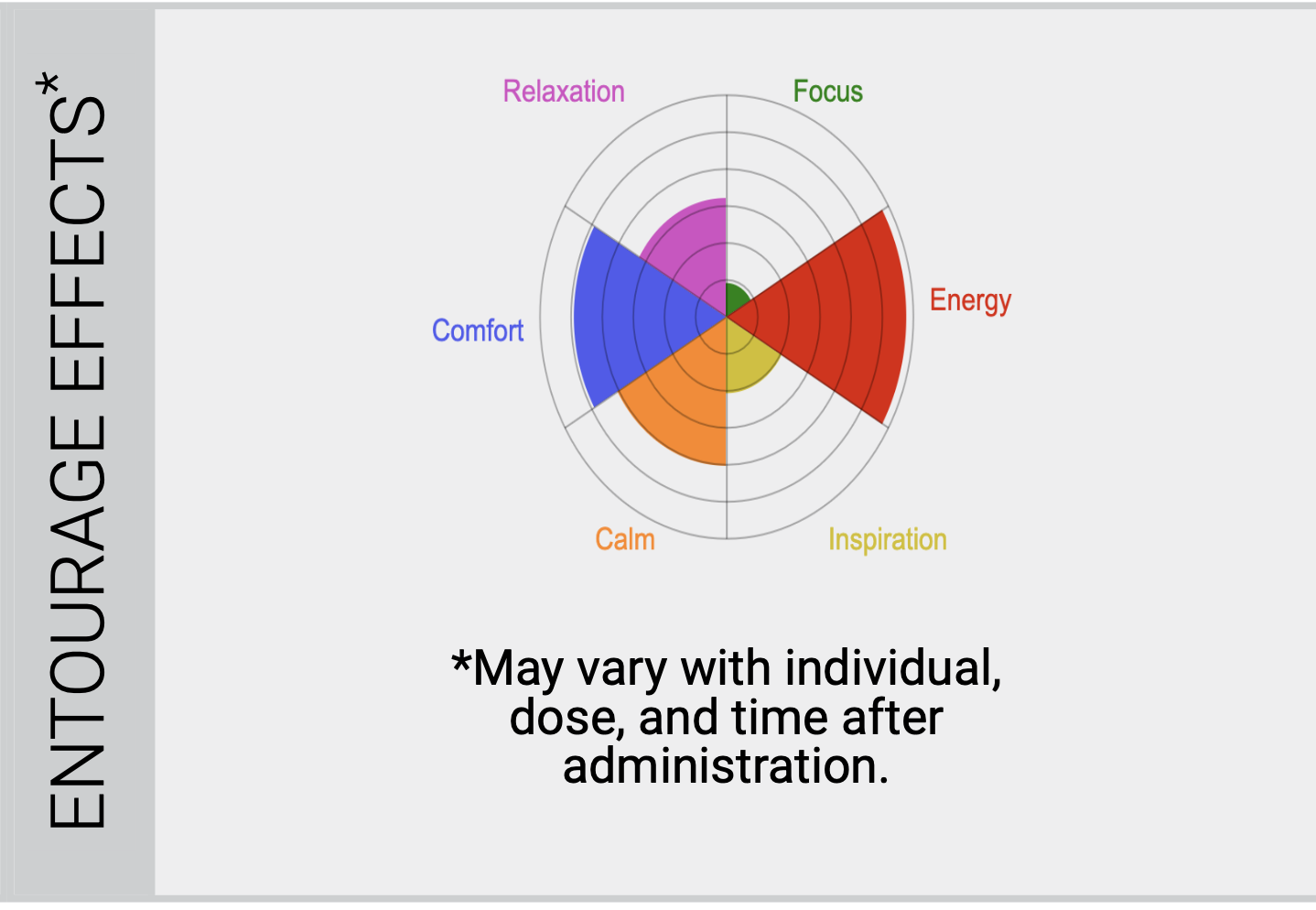
And then, they become audacious by predicting the actual Entourage Effects. As you can see by the graphic, Energy, Comfort and Calm are the top three predictions for how you might respond to this cultivar. Well, to date, just about everyone who has tried this cultivar agrees with this graph. Btw, I have personally found the indicator for Inspiration to be instructive, but perhaps not in the way originally intended. When I see high Inspiration, that usually means a plant that would probably give me anxiety and the sort of clown car effect which sativas can bring, and that I don’t enjoy. Lower inspiration and higher Energy and Comfort, on the other hand, I can go all day and remain chill.
The cynic in me says that perhaps I read this and it influenced the way I feel. I can certainly see the placebo effect as being possible for the wishfully inclined. But in my case, well before I got this test result, I had baked on pills filled with concentrated oil from this plant and I had drawn my own conclusions about the Entourage Effects. When I looked at the page for the first time, I smiled and thought, “This is spot on.”
Now, allow me to introduce you to Mr. M., someone in our part of the world who suffered a severe stroke four years ago. We did not know Mr. M. or his family, but we heard about what happened, and how he had not slept in years.
So, we decided to try and help him. We sat down and talked with his wife. Obviously, I’m not a doctor, and I’m definitely not here to make things worse. So I listened closely to everything she said and saw two ways we could potentially be of assistance. First, we could help him sleep, but I also wanted to see if we could impact his mood during the day. The West Marin Mystery was the strain I grew that I felt had the greatest chance to help him. We made pills from this strain at approximately 10 milligrams per pill.
We were told the next day that he’d had a very good day, and slept that night, better than he had in years.
I don’t know if you can put a monetary value on an event like that, the impact it had and will continue to have. Their life is beyond difficult. Any description other than that would be a disservice to the truth. But as I explained to his wife when we got started, maybe, just maybe this could be a tool for her, to bring them both a calming respite, or comfort on a given day, perhaps on an especially difficult day.
So, I probably could have guessed that the strain would be helpful, based on how it made me and others feel. But the test result set everyone up for success. It told me to expect a certain result and that result was achieved. Not only for me and my family, but for a stroke victim, who needed help that he was not getting from Western medicine. I actually gave samples from two different cultivars, just so he could compare, but I told them that in my opinion, the West Marin Mystery is the strain he’s going to want. I was correct. The other cultivar had just a bit too much a-pinene (inspiration) and it made him anxious, just like it does me.
Here’s another example: A friend with cancer undergoing chemo could not keep anything on his stomach, nor could he sleep. He was withering away.
I went to my test scores and almost immediately found what I was looking for, Ultimate Purple, a solid sleep plant, with the added bonus of the third strongest terpene on her being Limonene, which is one of the best (but not only) terpenes for stopping nausea. In addition, I included a tincture of Rainbow Kush, for daytime if needed, because it also had a high amount of Limonene. But it also had the terpene, Valencene, which among other things, helps with the efficacy of chemotherapy. Our friend is cancer free now, but is still using both tinctures.
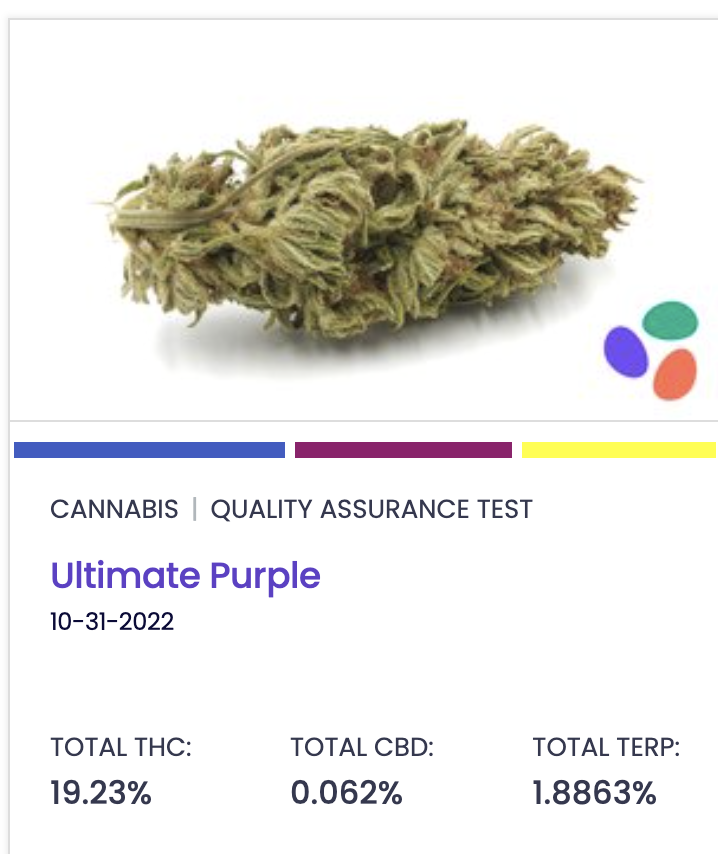
The little lines below the bud picture, the blue, brown and yellow lines, show the top three terpenes on the plant, the blue being Beta Caryophyllene, the brown being Myrcene, and the little yellow line represents Limonene. That’s all I needed to know.
Without test results, however, I would not have known for certain where in my plants I could find help for my friend.
Another general reason for testing: Without testing, you can’t know for certain what you’ve just grown. You think you know, because you grew her before and she made you feel a certain way. You’re growing her again, so you can feel that way again. But she’s not a clone of that plant.
Remember that every seed represents a number of phenotype possibilities. The same cultivar isn’t necessarily going to make you feel the same way. The best example of this that I know is the world famous cultivar AK47. Did you know that this cultivar has won the Cannabis Cup for best cannabis of the year, two times? Further, did you know that it won that award one year for Best Sativa, and another year for Best Indica?
True story, and a prime example of different phenotypes.
So when someone tells you that a certain plant is “always” going to make you feel a certain way, they are not correct, unless it’s from a clone of the plant you love.
Here’s another example, and this could only be explained by a test:
We grew a Blueberry Kush autoflower a couple of years ago. We were trying to bolster the sleep portion of our dispensary and thought we’d sample an autoflower, which we’d not grown before. If grown from normal seed, this is a heavy body high cultivar. Generally considered a couch lock, lights out plant.
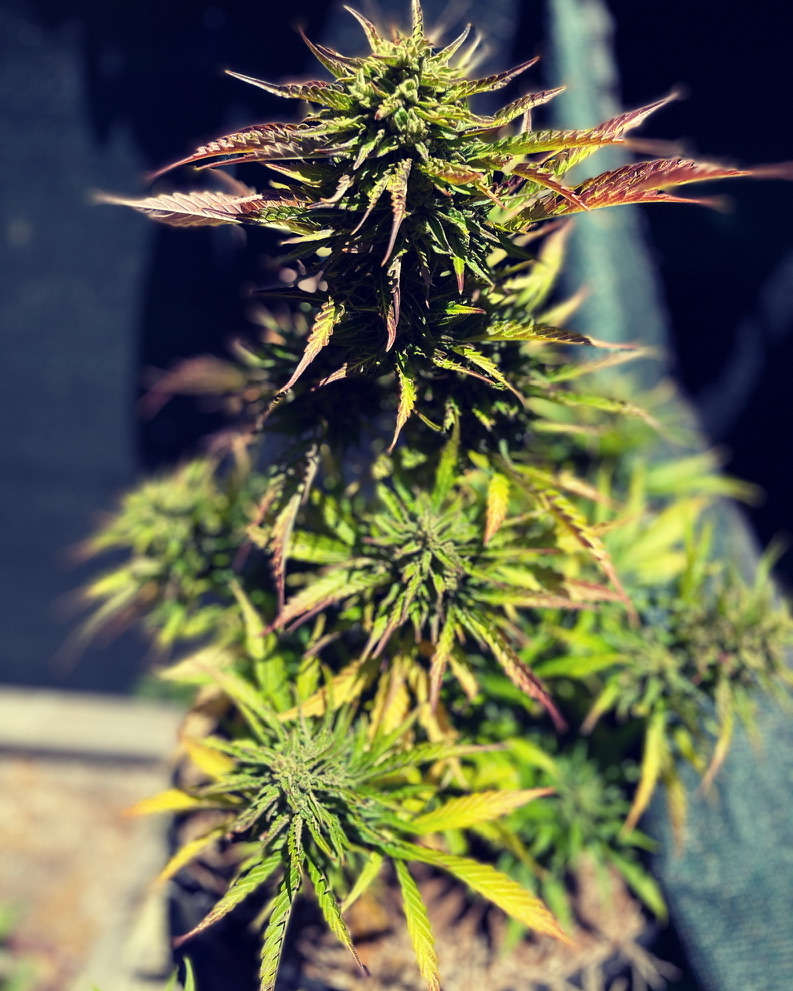
Blueberry Kush auto flower.
Before we got the test result, a friend asked to try some one night before their sleep. We had not tried it at all at that point, but we had no reason to think it would do anything other than what was advertised. Turns out, that friend was up most of the night. Could not sleep.
So when the test result came back, this is what I saw:

Two things jump out at me–First, the lowness of the overall scores, indicative of the weakness of the autoflower, compared to West Marin Mystery, for example. The other thing is, of course, Energy. If we had seen this first, we never would have given it to our friend for sleep. The other way to know this is not a plant for inducing sleep, is to look at the terpenes. The #1 terpene on this autoflower is terpinolene, which is typically found on sativa plants. BUT, having the test results, one of my children took the entirety of that autoflower and turned it into highly concentrated hashish, which they use for microdosing to insert some creative energy before they draw.
The test scores showed us what to do with the plant, and the autoflower clearly did not deliver typical Blueberry Kush impact. It was still valid, but not what we expected. This is not entirely uncommon when you grow from seeds.
An egregious example that SC Labs has helped reveal to us is how many CBD seeds we’ve grown to flower that did not have any CBD in them. I wrote about this in my previous blog, so I won’t go into detail on it here. But, what to do with three Harlequin, who each grew to be over a pound and a half harvest plants, with no CBD, but respectively 14%, 16% and 18% THC? It was a massive disappointment to find out these beauties were duds.
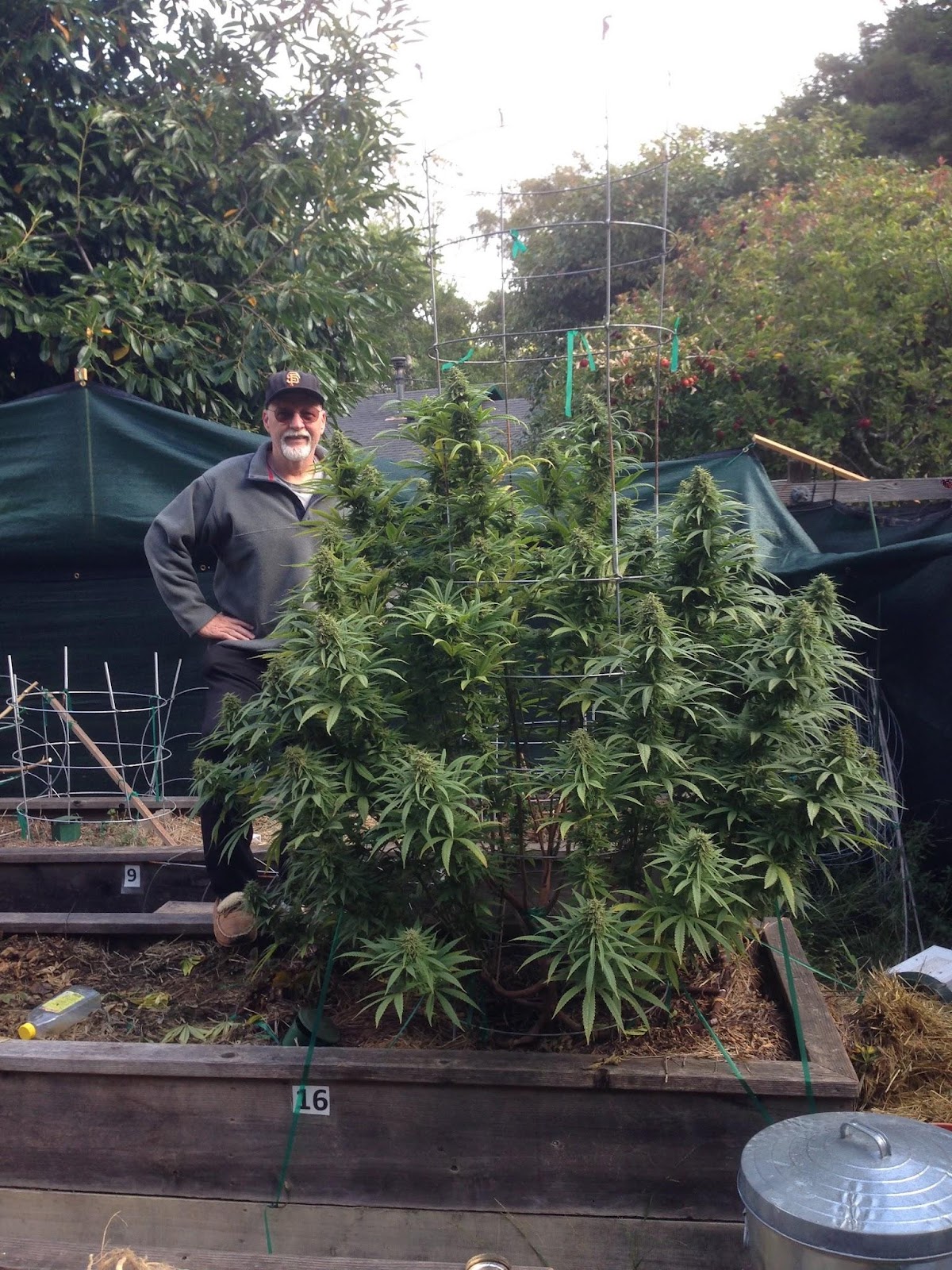
Harlequin in bed 16, before finding out she had no CBD.
As it turned out, we turned all the plants to FECO (Full Extract Cannabis Oil) and since growing them in 2018, I have been taking micro dose pills for daytime energy. In fact, those Harlequin pills were one of the primary driving engines behind the 2020 Isolation Grow Blog. I microdosed and I wrote a book in six months. Without knowing what was inside the plants, however, the disappointment of not growing what I wanted might have caused me to get rid of the plants. I’m glad I did not.
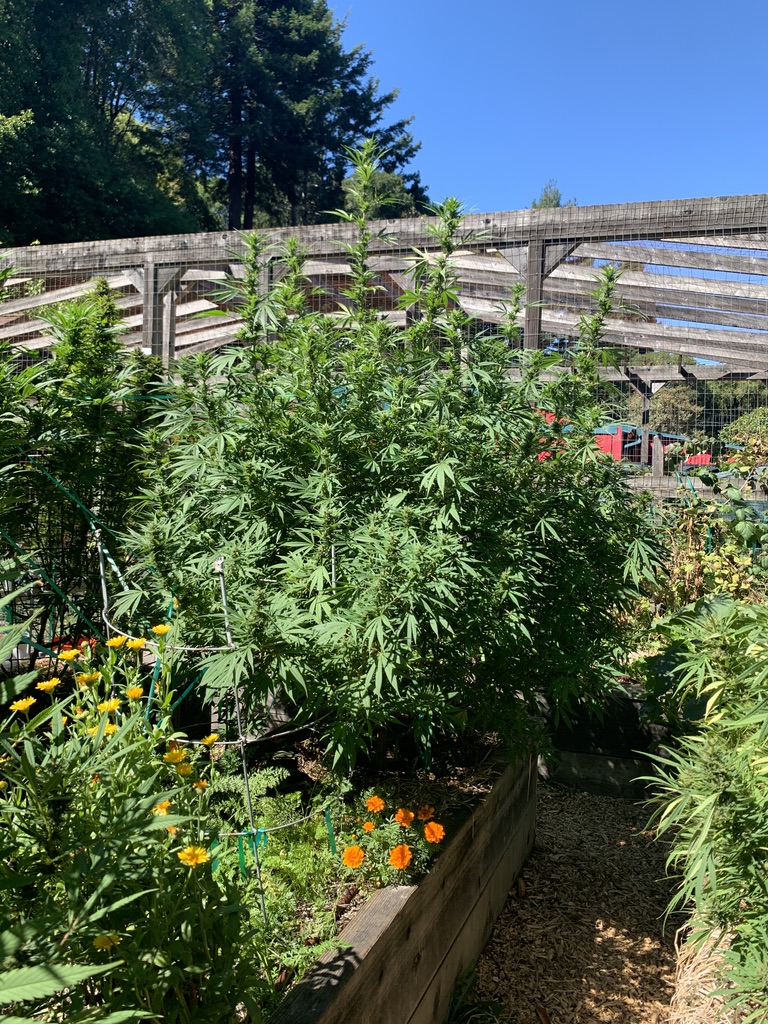
This is Ringo’s Gift from bed 11, the knockout plant.
The most startling example of the value of testing plants came in 2020. We had recently grown a very large Ringo’s Gift, which is typically about a 25:1 ratio CBD to THC. It’s very good for pain, but it won’t get you high at all. That’s what we’ve basically always gotten from this plant. Until 2020. She was a giant and we had high hopes for her. She had nearly 20% CBD, so we knew she’d be great for pain. Karen made her into FECO, and made us each a pill to take, to see how we reacted. I sample every cultivar I grow this way. Karen makes the pill to my preferred dose, and her own is made to her preferred dose. Then we see what happens. With CBD pills, the main thing we usually notice is how much or how little the medicine impacted our relative pain. It usually takes about half an hour before you start noticing and up to an hour before it’s hitting at full impact.
Well, on this particular day that Karen and I sampled Ringo’s Gift, we were shocked to discover that by an hour later, all we wanted to do was shut out all light and close our eyes.
We were not stoned. This was not a body high. Ringo’s Gift is not typically psychoactive at all. But we were absolutely drugged. What in the world could have caused this? To my uneducated mind, I immediately thought that Karen must have somehow overcooked the FECO, perhaps, and had possibly activated an exaggerated amount of CBN, like really old weed, which will make you drowsy. Though in truth, what we felt was well beyond drowsy.
So, a few days later, Karen made another batch of FECO from the plant and witnessed every step being done correctly. She never left the room during the process. She made two more pills and we tried them again.
Once more, our day was basically spent fighting off sleep, really feeling sedated. It felt nothing like cannabis, or any Ringo’s Gift we’d ever had.
Finally, I turned to the test scores, which I should have looked at first. The answer was plainly obvious. Usually, plants have percentages of terpenes that fall well below one percent. We’d never before seen a plant with 5% myrcene. She also had a high amount, relative to other plants, of CBN, which makes you drowsy.
But at very high doses, the terpene myrcene, which is the most common terpene found on cannabis, is a sedative. It will knock you out. Myrcene is a very common terpene in plants associated with sleep. If you are looking for a sleep aid in a cannabis store, ask the bud tender for something heavy in myrcene. In the case of this particular phenotype, we have not replicated these results. Looks like a particular pheno with some wild hair up its nose. We keep FECO of this plant in the fridge for when someone absolutely needs to be knocked out.
Because I test every plant, I’m now able to look at the test scores alone and know if a plant is for daytime or nighttime. We had a brief period where we were getting a little low on sleep meds. I knew that I’d be growing more later that year, but in the meantime, as an exercise, I pulled out our test results from previous years and tried to find any cultivars that we might have been using for the wrong time of day. One of the strains I’ve grown, Shiatsu Kush, tends to be on the sleepy side of 50/50. But only with test results could I find one that was purely for sleep. It had a healthy amount of myrcene, but all Shiatsu Kush do. The key was the lack of euphoria inducing terpenes. When I found one lacking in those terpenes, I had Karen make some test pills for sleep. BOOM, they worked. Then I found another surprising example from a Rainbow Kush, which usually has some level of euphoria. But not, as it turned out, the famous giant, RK 18, from the Isolation Grow Blog. That nearly three pound plant did not have a lick of energy or euphoria in her terpenes. She was, and is, a giant sleep plant. I did not anticipate that, nor are sleep plants generally nearly three pound yields. But with different phenotypes, the only way to know for certain what you’ve grown, is to test it.

That giant over my left shoulder is RK18, a terpene rich, nearly 3 pound sleep plant.
There is one more factor to consider regarding testing, and that is of your own education. After getting test results, you will have documents in your hands that can help you radically change how much you know. I tell students to learn about the effects of every terpene possible. I look up every terpene I’m seeing for the first time. The amount of knowledge I have now is well beyond anything I could have dreamed when I was going to school, and understanding my test scores are a huge part of my growth. Yes, they are costly, but so generally is an education. Every test score I have is an opportunity to dive deeper and get as close as I possibly can to exactly what is inside the miraculous plants I’ve grown. So–consider your test scores as not only the ego gratifying statistics of a great grow, but also an opportunity to go beyond gratification by endeavoring to greater understanding and knowledge. Test scores are a critical component to long game strategy.
Information is always power. Knowing more is better. Understanding what you grow will make you better at your craft, your art, and your potential as a grower. The tests from SC Labs have revealed the secrets inside of what I grow. That information colors every decision I make regarding my family’s medicine. As a family, we’re all learning from this.
I want to circle back to the notion of growing for someone who is seriously ill. This is what brought me to growing medicinal cannabis. I have certainly come to understand and enjoy recreational cannabis, but that is still not my emphasis as a grower. I grow medicine. I know many of us refer to this plant as medicine, but the concept resonates a little stronger when you are caring for someone sick that you love. You have to be 100% positive that what you are giving your sick loved one, and your entire family, is safe and clean. To be certain of this is not a casual assignment. It requires a commitment on your part and diligence throughout every aspect of your grow, your harvest, the washing, drying, and curing. For the same reason you must have an adequate drying room after six months of work, you don’t want to waste your medicine by not understanding exactly what you have grown. You want your grow to be safe for your family and friends. You also want to educate your family and others with what test scores reveal. If you grow it well, how it makes you feel will take care of itself, and you will know the intrinsic satisfaction of growing all the medicine your family needs. A full home dispensary of plant based medicine is peace of mind.
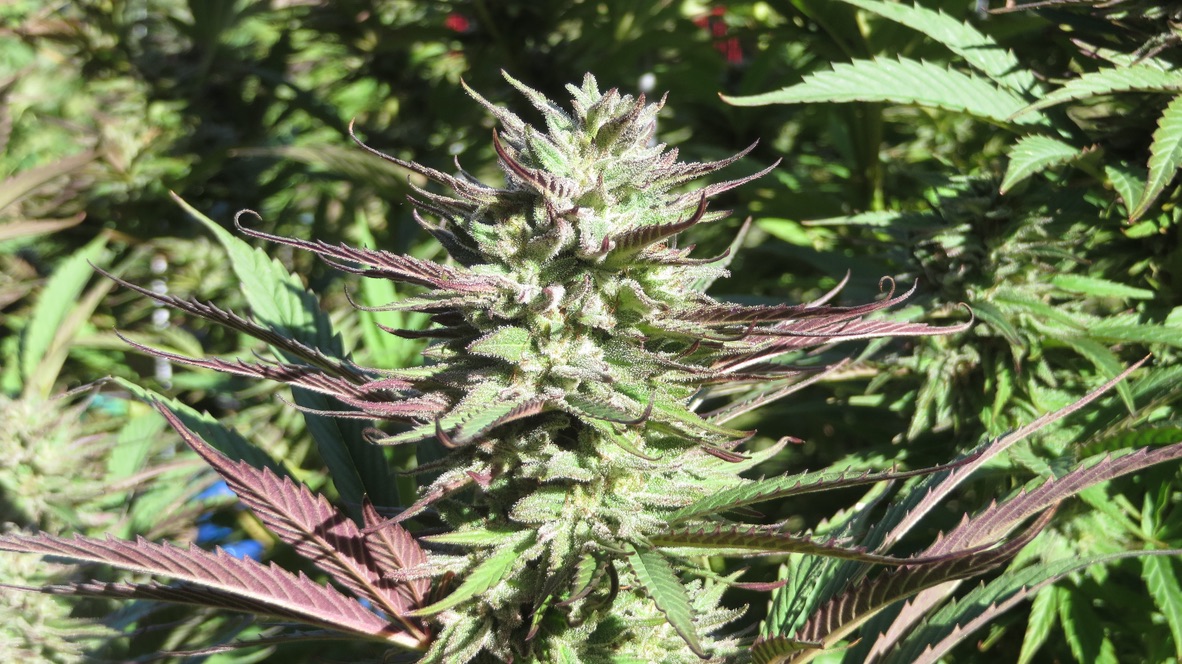
Shiatsu Kush wishes you a fine day.
Hey Friends: If you’d like to support jeffreyhickeyblogs.com, please feel free to donate to PayPal @jeffreydhickey.
Disclaimer: The majority of the links in jeffreyhickeyblogs.com posts are affiliate program links. This means that (most of the time) when you purchase a product linked from my site, I receive a commission.

 Jeffrey Hickey Writes Blogs
Leave a comment