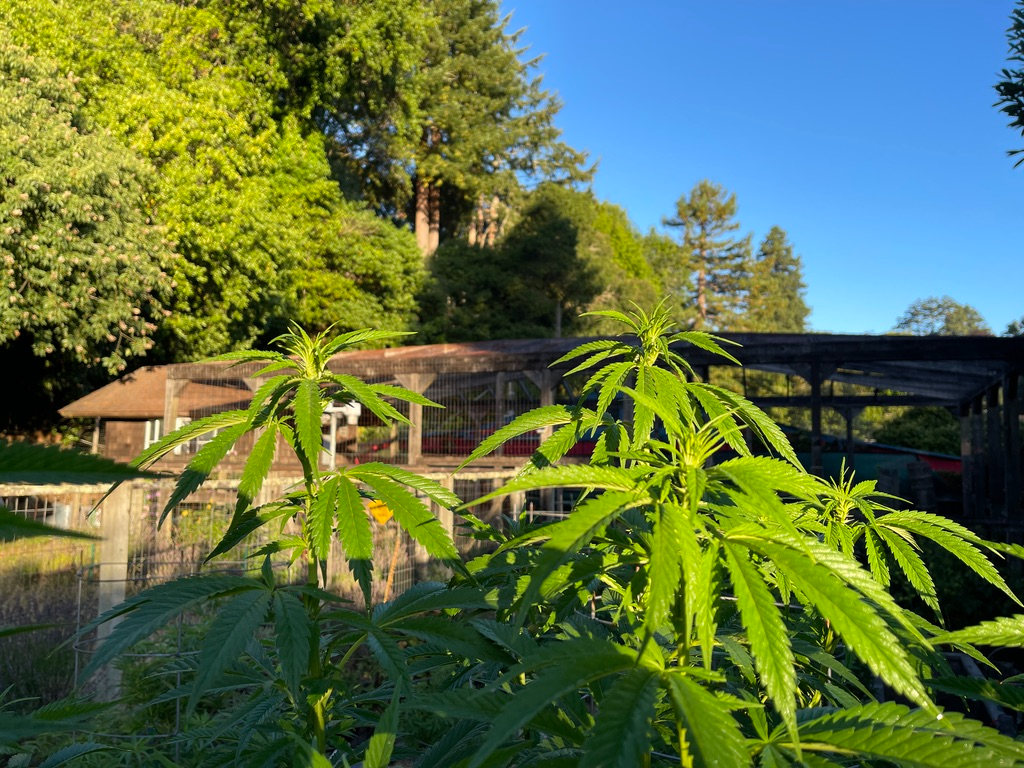
First, we are finally negative. Fifteen days of Covid was not fun, but we’re better. Thank you to those who brought us needed supplies, or ready-to-eat food. A huge thank you to Mr. T for the taco truck run. We have faced a long reminder as to the difficulties of isolation, but we’ve also been reassured at how kind neighbors can be.
Approximately half of our harvest will happen before the end of September. If you’ve been following this blog, you know that one of my goals this year was to trigger an earlier harvest, and my efforts are paying off. This is the first time that I’ve taken action to make my plants flower sooner and it’s awesome to see them behaving exactly as I had hoped.
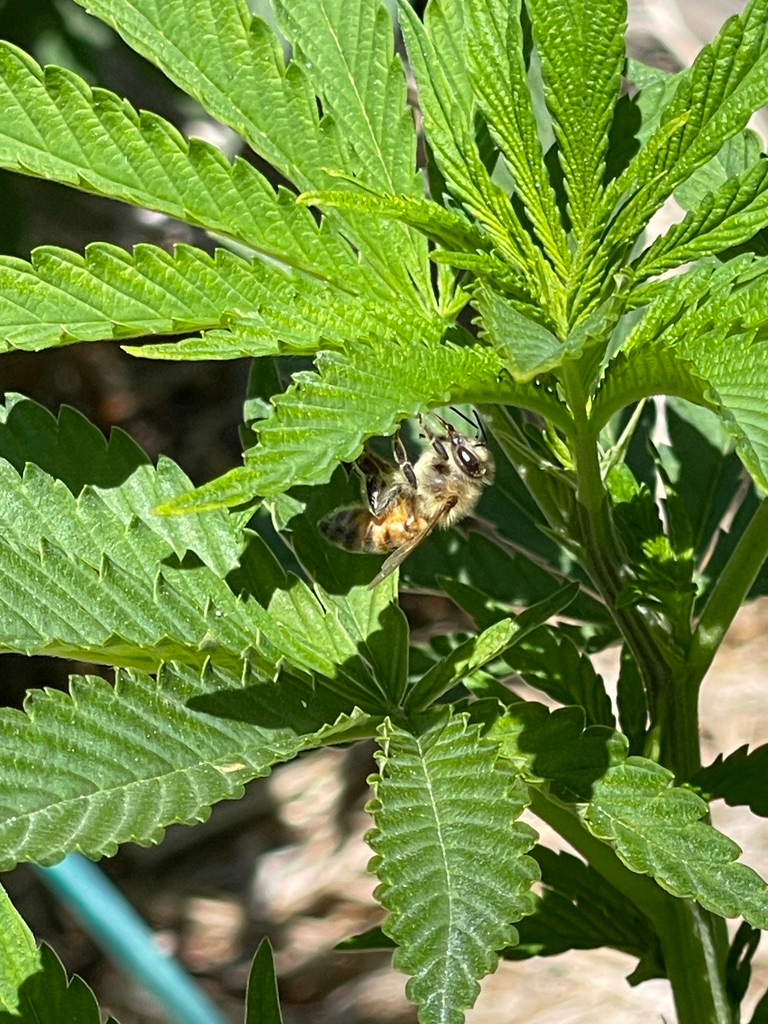
Bees love to nap on my fan leaves during flowering. Can’t say for certain that they are feeling anything, but they love to bake. So do yellow jackets, and it’s rare to see those scavengers mellow. I’ve never read any evidence to support that these creatures are impacted by anything growing on my plants. All I can do is watch, and ten years of observations tell me that fan leaves with trichomes make bees and wasps sleepy and very mellow.
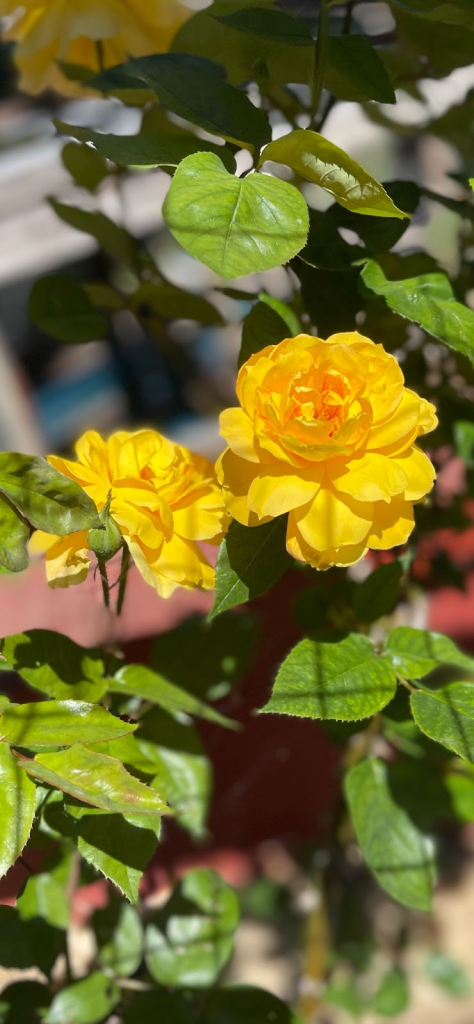
It’s a flowering garden now, and everything I do from this point forward is to aid the development and potential strength of those flowers. Because they are starting earlier, there is a much greater chance for each plant to actually reach their projected harvest date. This has never been my number one priority, but it’s nice when it happens, and now I am becoming curious about upcoming test scores. The only cannabis plants that get water now are the two in cloth bags and watering will be minimal even for those plants. The plants in beds will now only get a quart of tea for each of the next four weeks, before being given nothing but foliar sprays for the last month. Of course, Cherry Punch in bed 15 hasn’t received any water other than what’s in the weekly compost tea, since May 25. She shows no signs of stress, only vigorous flowering.
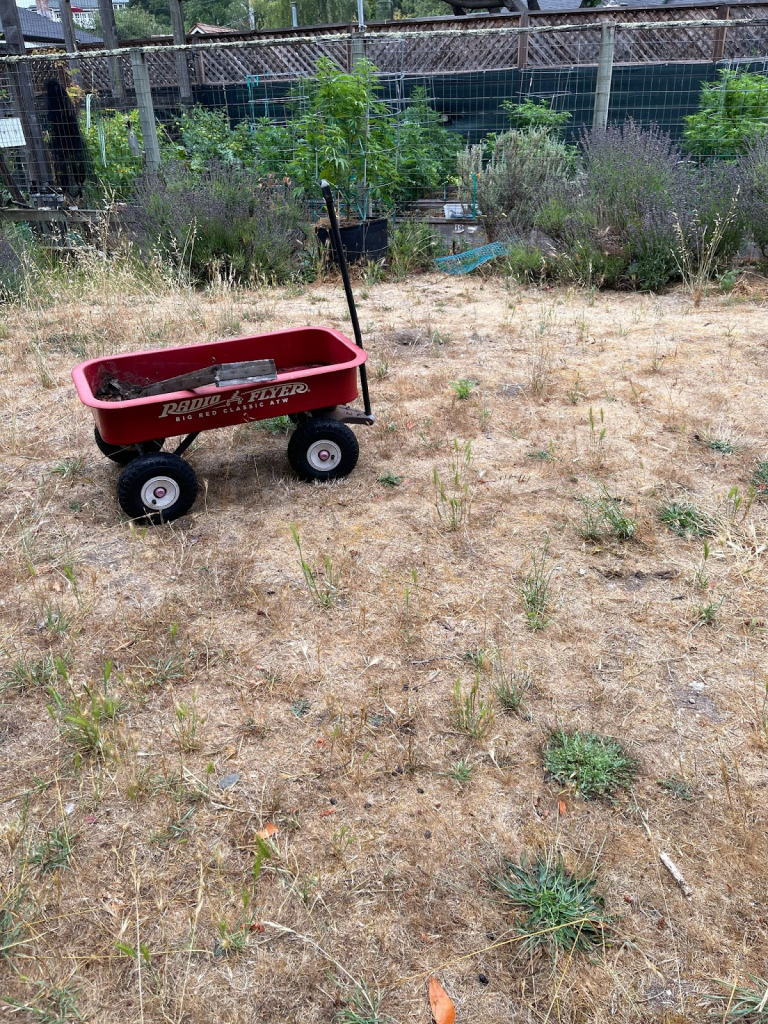
A small amount of deer scat can be seen 18 feet from the unprotected Apple Crumble. There have been no nibbles and I don’t think there will be any now.
As the flowers begin to emerge, this is a critical week for pruning. We are getting to the law of diminishing returns as far as leaves go. If a leaf is covering a potential flower top, the leaf is removed. It is now all about the sun, and getting the sun to touch as many young flowers as possible. Because trichomes are the way each plant protects itself from the sun. The more sun, the more trichomes are produced.
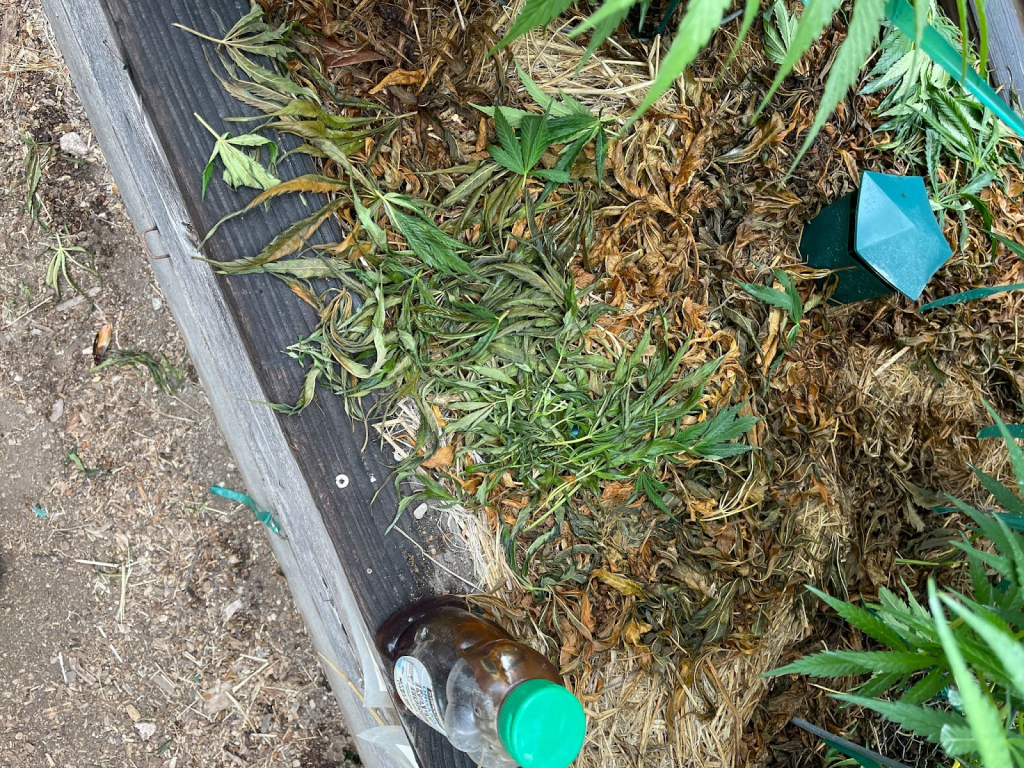
This is where we generally get an annual benefit from the so-called Indian Summer. After a summer with high temperatures mostly in the upper 60’s (approx. 20C), we’ve been reaching 20 degrees warmer in the last week. This seems to happen annually around here and the timing could not be better.
So I once again inspect each plant with an eye towards what I can remove. I want clear sun paths for the flowers, and plenty of air and space for growth.
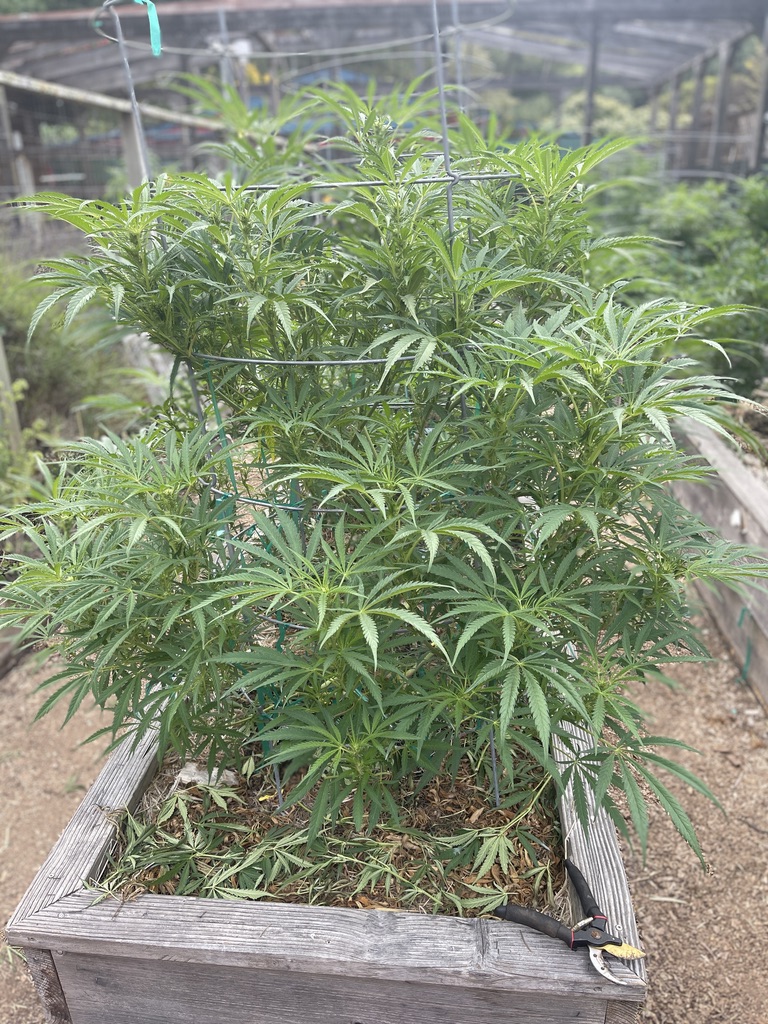
Purple Punch is a plant that needs constant pruning to make room for flowers. I can see a lot more lower pruning needs to be done tomorrow.
We’re up to four foliar sprays a week, but now we have a new foliar spray that we must work in proactively, and that is BT. Once your cannabis garden flowers, it is worm season. This is a slightly tricky spray, because it does not interact well with one of my other sprays, Regalia. I’ll need to skip a week of Regalia and let that week be devoted to worm control. I’ll probably have to do this at least twice. That means a period of time with some pathogenic vulnerability. Any new powdery mildew evidence will need to be removed from the beds and not allowed to spread, and it will be a hands-on fight until Regalia can be applied again. It then becomes a bit of a dance for the remainder of the grow. This is where I consult my weather charts often, specifically for any changes in humidity, which is the driving force in pathogens. If humidity remains high, we spray for powdery mildew and inspect for worms. When the humidity dips for a few days, we spray for worms and inspect for powdery mildew.
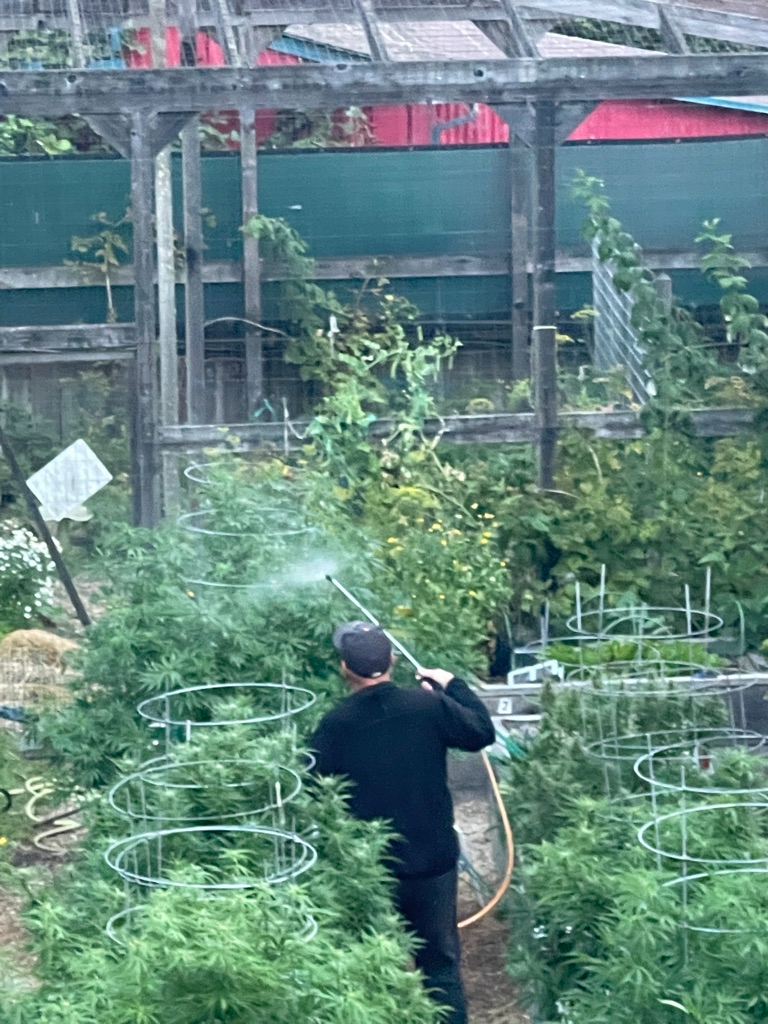
I have not sprayed BT yet, because moths are still scarce. That will change very soon.
If a true powdery mildew breakout should occur during a BT period, I can spot spray the powdery mildew with Neem and that will keep it at bay until the next Regalia spray. I’ve only had to do that once in the past.
Something else unusual about BT is the time of day that is best for application. Most foliar sprays are applied about an hour before any light hits the plants for the day. Pre-dawn foliar sprays are specifically why I’m up and outside so early. But BT is different. It is best to spray BT in the early afternoon, which is usually the peak egg laying time for moths. I was told this by the BT manufacturer when I was researching the Home Grow program I created. They said that the ideal time is the afternoon, when the white moths are desperately looking to dump their daily allotment of eggs. They are prolific, too. They flit from leaf to leaf, depositing their payloads on as many plants as possible.
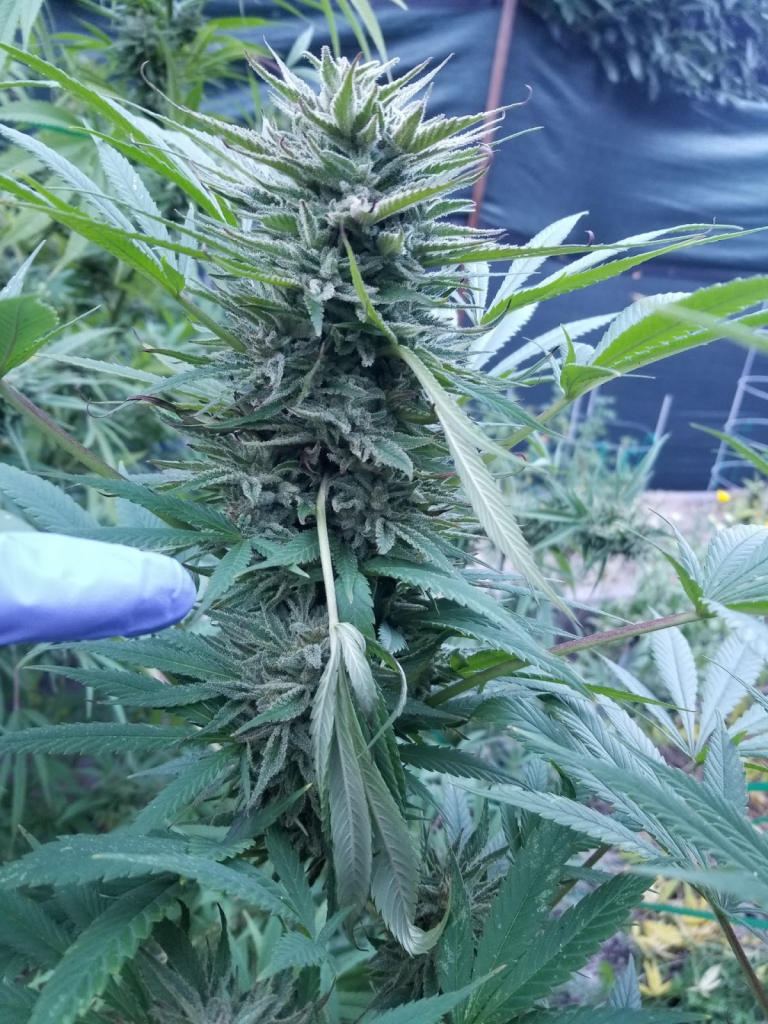
A reminder: When hunting for mold, a telltale sign is the limp leaf. Mold lies within.
Something else about BT: It’s brutal on worms. You will be clearing away carnage from your flowers and you’ll need to do it manually, because some of them won’t just fall off. They will mold. Once worms have ingested BT, they stop eating and starve. They wither, change color and rot. That mold can spread, though Stargus should prevent that. But you still have to get rid of the mold eventually. After a week of BT, my next foliar sprays will be using a different nozzle with a slightly harder spray, as I attempt to wash off the carnage. This has worked in the past.
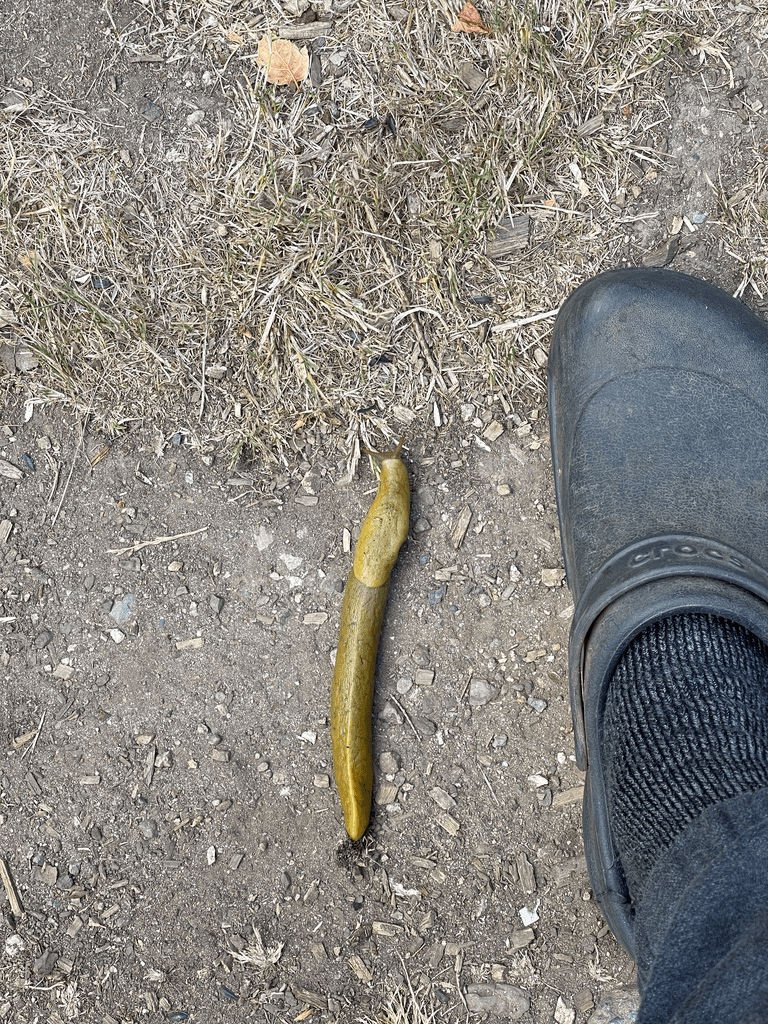
My shoe size is 13. That’s a banana slug, and this slug is the number one reason that I keep the beer traps full for the entire grow. Imagine the damage one of these monsters could do to a beautiful young bud. And they don’t always select low hanging flowers. Sometimes they like to climb up to the big ones, the top tops.
The good news is, if the beer is poured, they cannot resist it.
Of course, regarding mold, or any other pathogen, when we harvest, every plant gets washed. That is the final, and safest method, for removing all pathogenic material and turning plants into medical grade.
When Mr. T’s CBG autoflower plants arrive in about three weeks, they will all get washed before they are air-dried and tested.
So this week is all about pruning, cleaning out the cottage, and preparing it for drying. There’s one more thing: Enjoying how good I suddenly feel. Flowers are developing, the odor is growing, and I feel fine.
I’ve got a concert to attend next month and I can’t wait. A big crowd is no big deal at the moment. I won’t even have to wear a mask. For a little while at least, I am immune, and I’m going to enjoy it while it lasts.
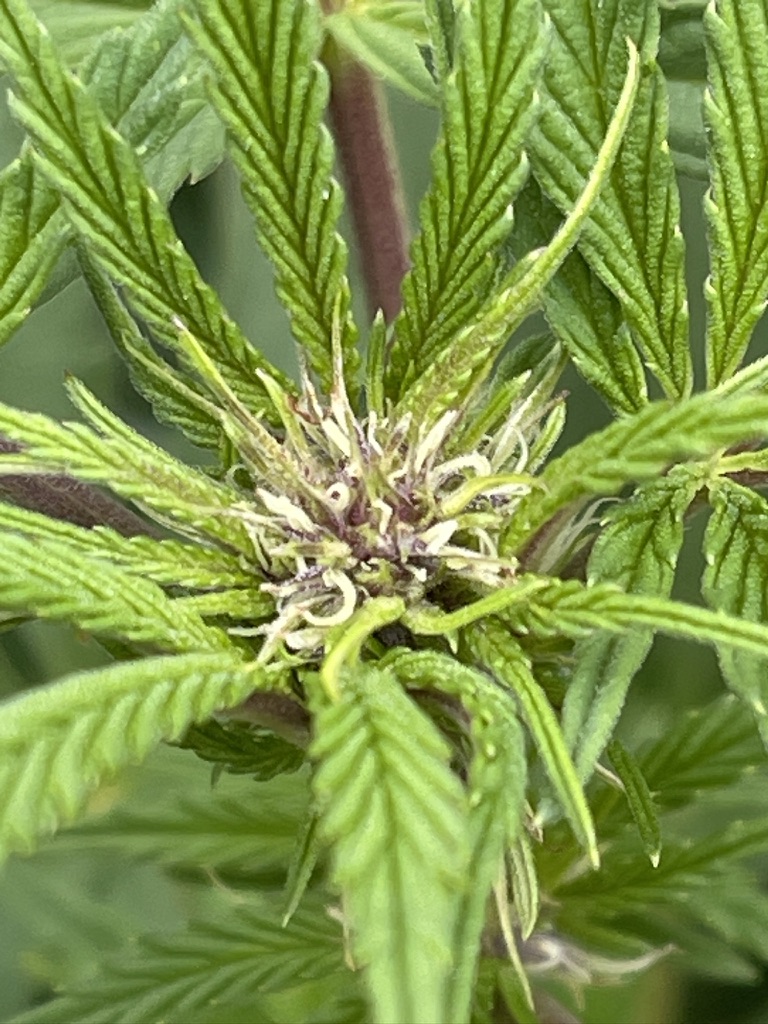
Looks like some purple emerging from Fruitcake 18.
Hey Friends: If you’d like to support jeffreyhickeyblogs.com, please feel free to donate to PayPal @jeffreydhickey.
Or contact me directly with your idea (good seeds are always welcome–and if I grow them, I will get the flowers tested and share with you the results.
Disclaimer: The majority of the links in jeffreyhickeyblogs.com posts are affiliate program links. This means that (most of the time) when you purchase a product linked from my site, I receive a commission.
 Jeffrey Hickey Writes Blogs
Leave a comment