
Every autumn, while flowers develop, I study the long-range forecasts. I’ve previously mentioned how I specifically watch for changes in humidity. If it is consistently high, I spray for powdery mildew and inspect for moth worm damage. If the humidity is variable and drops down below 50% during the day, that’s a good time to spray BT and inspect plants for powdery mildew.
I also watch the long-range forecasts for any rain on the horizon. Rain can change everything. Small amounts of rain are a gift. At this stage, I consider anything up to about a half an inch of rain to be a bonus for the plants, and an acceptable risk for the flowers. A little rain is not going to hurt them.
On the other hand, if it is more than half an inch, or if it rains over a period of days and never dries out, that is a serious problem. This is one of the biggest risks in growing cannabis outdoors. Imagine spending five months doing highly detailed work with your plants, only to have all that work undone in a matter of hours by a storm.
It has happened here before:
On September 30, 2018, a major storm hit us. Over three inches of rain fell in two days.

I saw this forecast seven days before it happened, so I had some time to react. The first thing I did was measure the entire bed area.
I then went online and located a tarp that was literally a couple of inches more in every direction than our measurement. As you can see, it fits like a glove. Got it delivered 48 hours before the storm hit, so I still had time to make a final decision.
When it became obvious that the storm was going to hit us, both of my children came home and attached the tarp over the beds. The two raised areas under the tarp, on the left and in the foreground, are ladders, placed so the water would run off and not accumulate, which would put a lot of weight on the tarp.
It was cozy under there. In fact, it was a little too cozy. It certainly kept the rain off of the plants. But it also raised the humidity under the tarp and any plants already close to becoming moldy simply exploded. We lost one entire plant and portions of several others. There was no way to combat the increase in humidity. Pathogenically speaking, we were inside an active petri dish. No spray could help.
But, and this really is the important part, we saved the rest of the crop. We lost about two pounds from our harvest total, but saved the vast majority of the medicine.
So the tarp worked, though we lost a bunch of flowers because of it.
Having said that, if the rain had continued, we might have still lost a majority of the crop due to mold spreading like wildfire under the tent.
However, if we had not covered the plants and allowed them to absorb this much rain, we could have lost the entire crop.
While the tent was up, we also had a blast sitting under it, taking bong rips.

The foliar spray shown in this photograph was done just before taking off the tarp. I had to spray them in the shade. I love this photograph, because it shows how dark it was under the tent, and it also shows the tiny size of my original foliar sprayer.
LOL, can you imagine trying to use that size sprayer for 12-14 giant plants? It was taking me six or seven fill ups per spray. It was taking me over two hours to do every spray, every day. I felt like a significant portion of each summer was being spent priming some damn manual pump. It was after this experience that I began searching for larger, battery powered foliar sprayers.
I do not believe this year is going to be anything like that. The forecast calls for a few hundredths of an inch. This is nothing more than a slight sip for the plants. It won’t change anything, though I’m certain that the thirsty plants won’t mind a little drink. None of my flowering plants are receiving any water.
In the future, if faced with this dilemma again, I would harvest everything early. Through years of testing my plants, I have learned that early harvests are not a bad thing. There’s plenty of medicine on the plants 2-3 weeks before harvest date. It’s not an ideal choice, but the alternative is losing the entire crop, or portions of the crop. I will always harvest early to save the medicine.
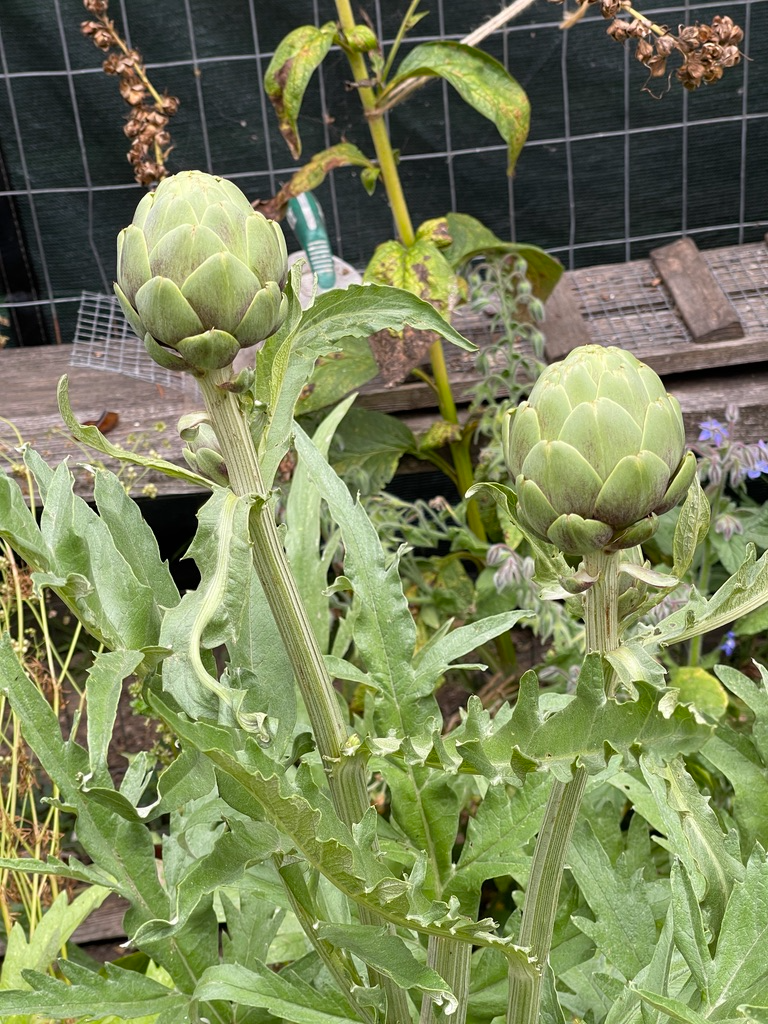
Meanwhile, harvest proceeds. We’ll soon eat our first home-grown artichokes. At the end of the season, we’ll cut these way back, and expect multiple pieces of fruit to grow next year.

We grow all kinds of cucumbers, including pregnant ones.
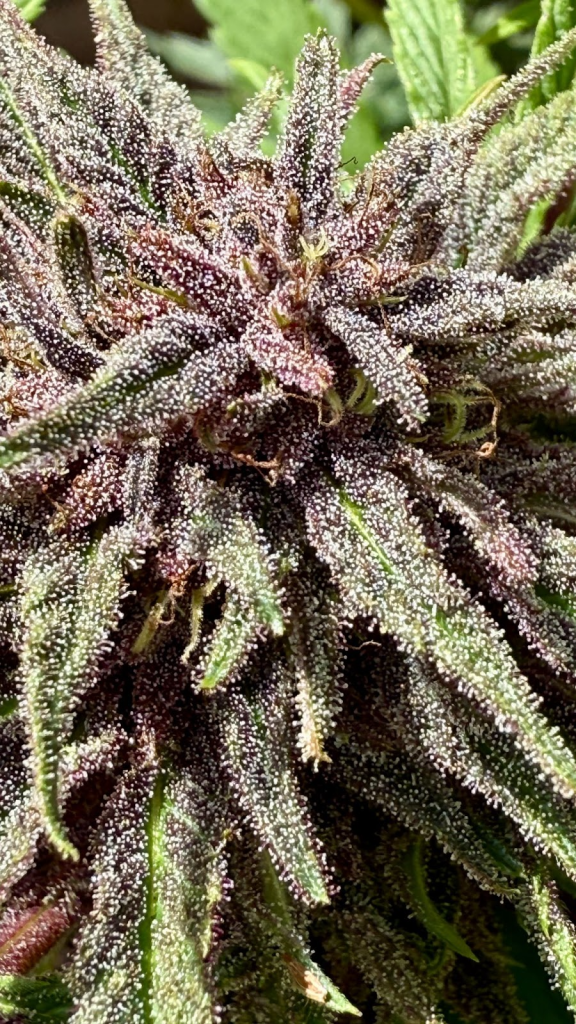
Fruitcake 18, with a month to go.
Even though I’ve used Stargus for three years, I am still not used to not seeing flower mold when every plant is flowering in our garden. Before finding this amazing product, there have been years when every single plant inspection brought more mold findings and more flowers removed.
It was such a regular thing, it had almost become normalized. That’s what makes growing now so special. We don’t get much of what we used to face, or what a lot of you are still facing on a regular basis.
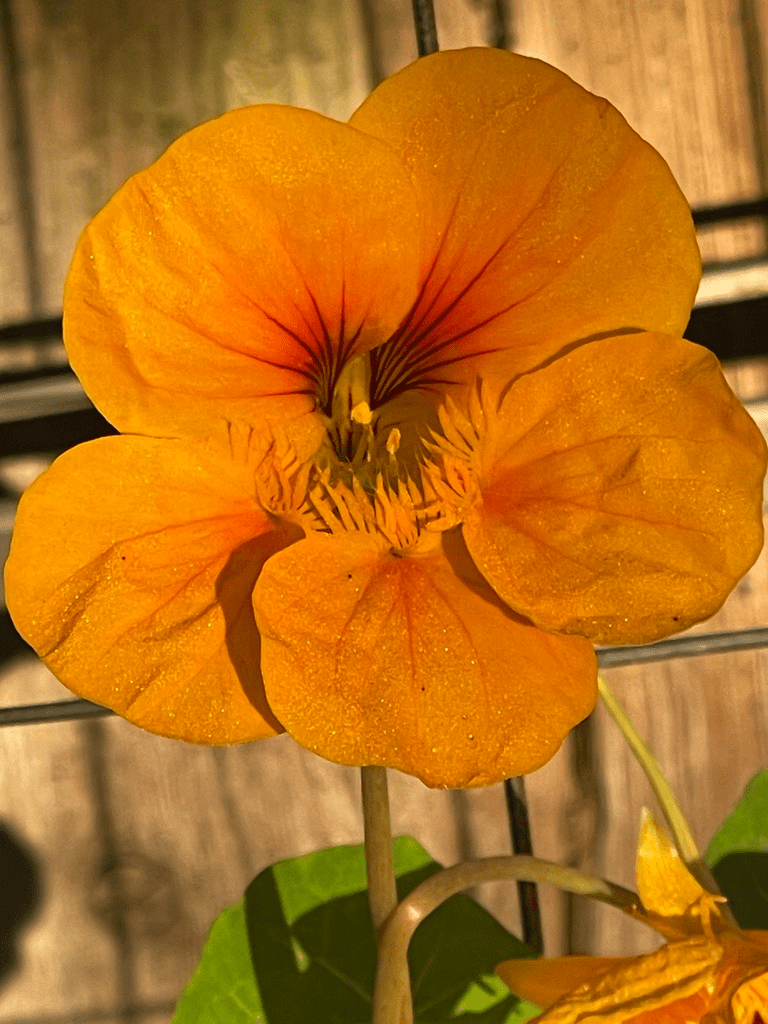
The ever-edible nasturtium, photographed near dawn and spared from a salad for another day.
Some of our non-cannabis flowers would certainly appreciate some rain. It would prolong their season. Another reason to hope for a little moisture is fire prevention, though our last fire in this region was ironically caused by a lightning strike during a storm.

Those were some scary days and nights. Fire came within four miles of us. We were not evacuated, so I was able to keep working my plants.
After that experience, I always have a suitcase packed and ready to go. My “go-bag” lives in my drying cottage. I am always ready to drop and go, should the siren sound. Anyone who has lived through it knows what I’m talking about.
Late summer rain is not a casual thing around these parts. The weather right now is the most electric and dangerous time of year. This is our traditional “fire season”. Fire weather is associated with higher temps, very low humidity and wind.
So far, we’re getting everything but the low humidity. It has been high for most of the last six weeks. The entire flowering period is happening with pathogenic risk factors on the highest level of alert. We see evidence in the persistent stem mold, but none has creeped into the flowers yet. With each passing day, we get closer to when we can safely harvest plants early, should any mold attack begin that we’re unable to quell.
Given that we’ve stopped better than 95% of that kind of mold, a rain storm might be one of the few weapons nature still has to overcome my plants. It’s not likely, but as a grower, I have to be mindful of the possibility, and of surprises.
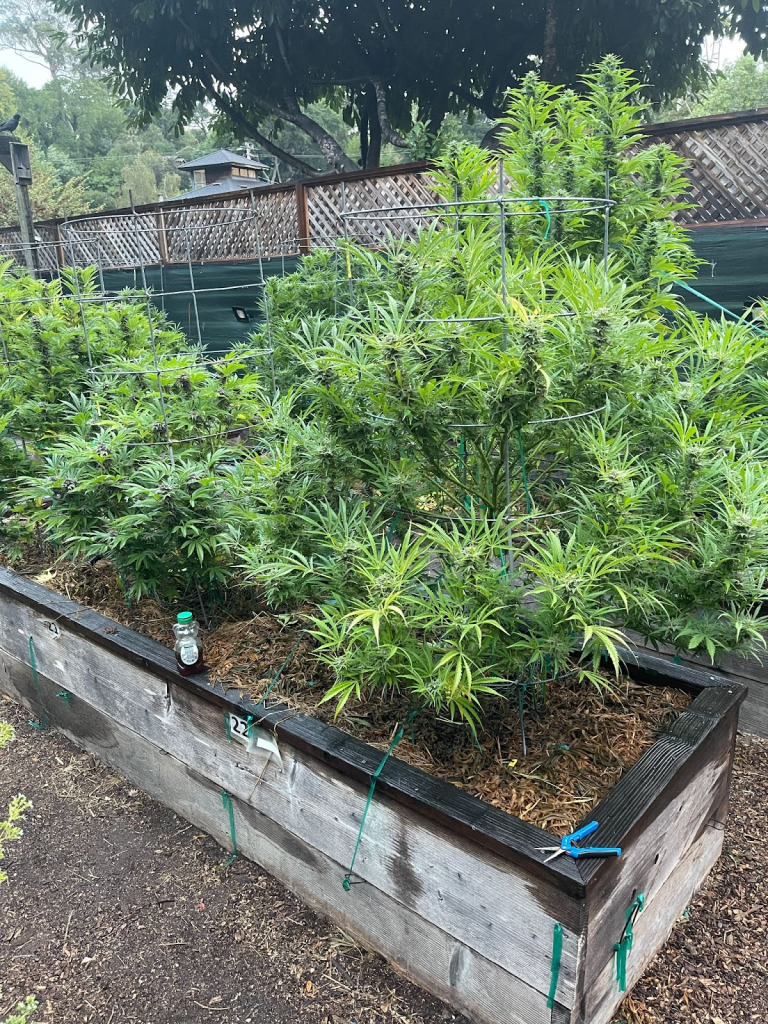
Voila! Soaked overnight.
It’s now Tuesday, September 9, nearing dawn, and it’s raining harder than anyone predicted. This is a small cheat for Cherry Punch 15. This is more solo water than she’s gotten in over 100 days.

It’s only .23 of rain, just under a quarter inch, which is not a lot, but is plenty for watering everything in my beds. Every plant is getting a bonus drink of pure, pH neutral, 8.0 water. It’s nature’s fertilizer.
The other important project for this week is pulling out samples for CBG auto flower testing. There will be 31 bags with five gram samples for testing, and the courier will be picking them up on Thursday, just about the same time as this blog gets published.
Warm days, variable humidity, and surprise storms. Everything is moving fast towards harvest now.

Hey Friends: If you’d like to support jeffreyhickeyblogs.com, please feel free to donate to PayPal @jeffreydhickey.
Or contact me directly with your idea (good seeds are always welcome–and if I grow them, I will get the flowers tested and share with you the results.
Disclaimer: The majority of the links in jeffreyhickeyblogs.com posts are affiliate program links. This means that (most of the time) when you purchase a product linked from my site, I receive a commission.
 Jeffrey Hickey Writes Blogs
Leave a comment