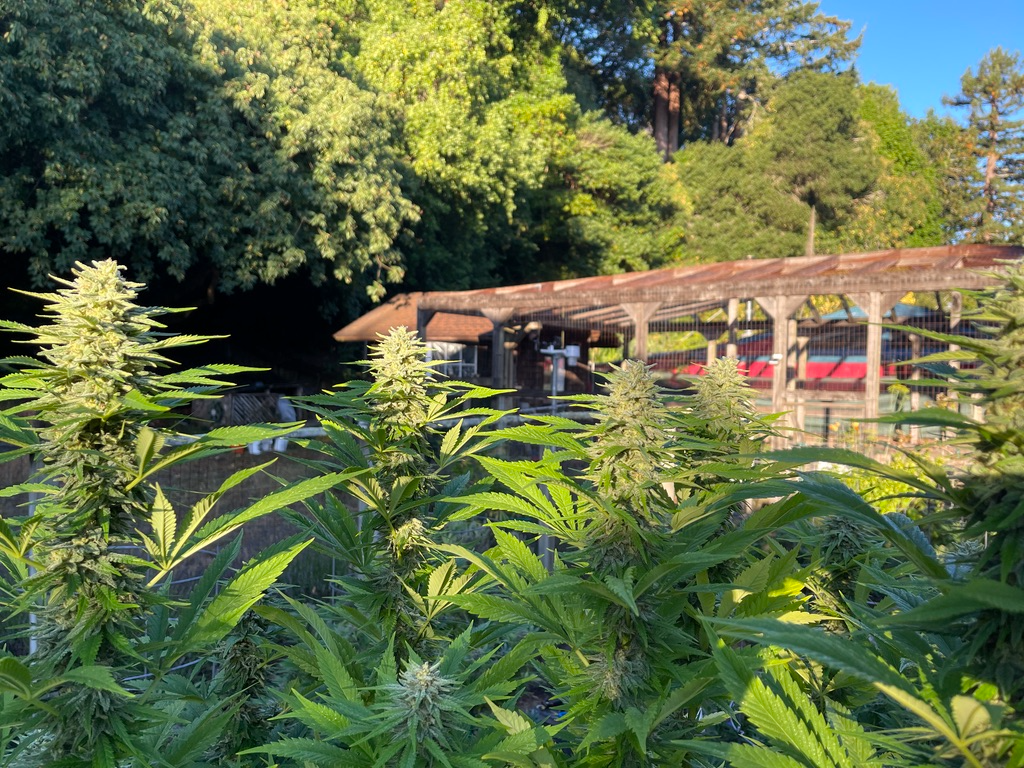
For months in my beds, vegetables and cannabis grow in similar, vegetative ways. It’s the vegetables that flower first and begin producing. We’ve been eating fresh food for a couple of months now. We’re still eating from the garden, but the harvest is slowing down. As food production declines, cannabis is hitting its peak.
I have largely let the vegetables go at this point. Tomatoes have not been watered in months, so the plants are dying, even while the last of the fruit is ripening. These are the sweetest tomatoes of the season. One of my heirloom tomatoes, the black krim, is having a smaller, second crop of tomatoes, because she recently got about a third of an inch of rain, so she has renewed momentum.
But generally, the vegetables are in decline while cannabis peaks.
This coincides with the shift in weather from summer to fall. We are now having consistent chilly mornings, while having some of our warmest afternoons. The contrast in temperatures causes sudden activity in cannabis leaves.
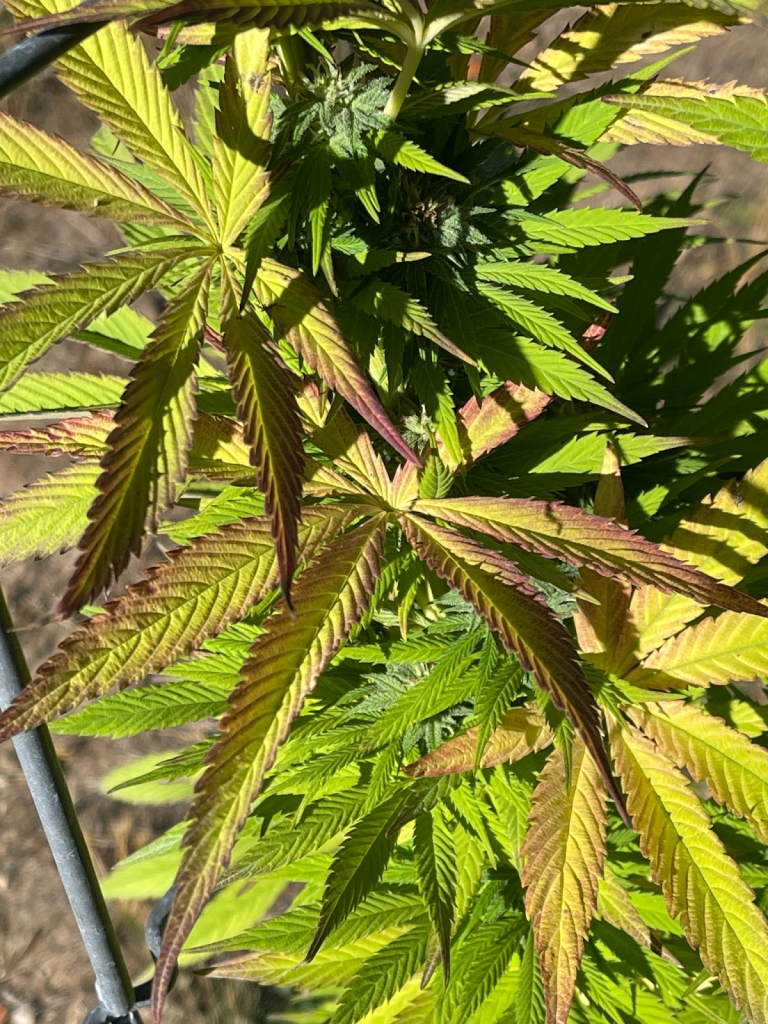
Colors are emerging.
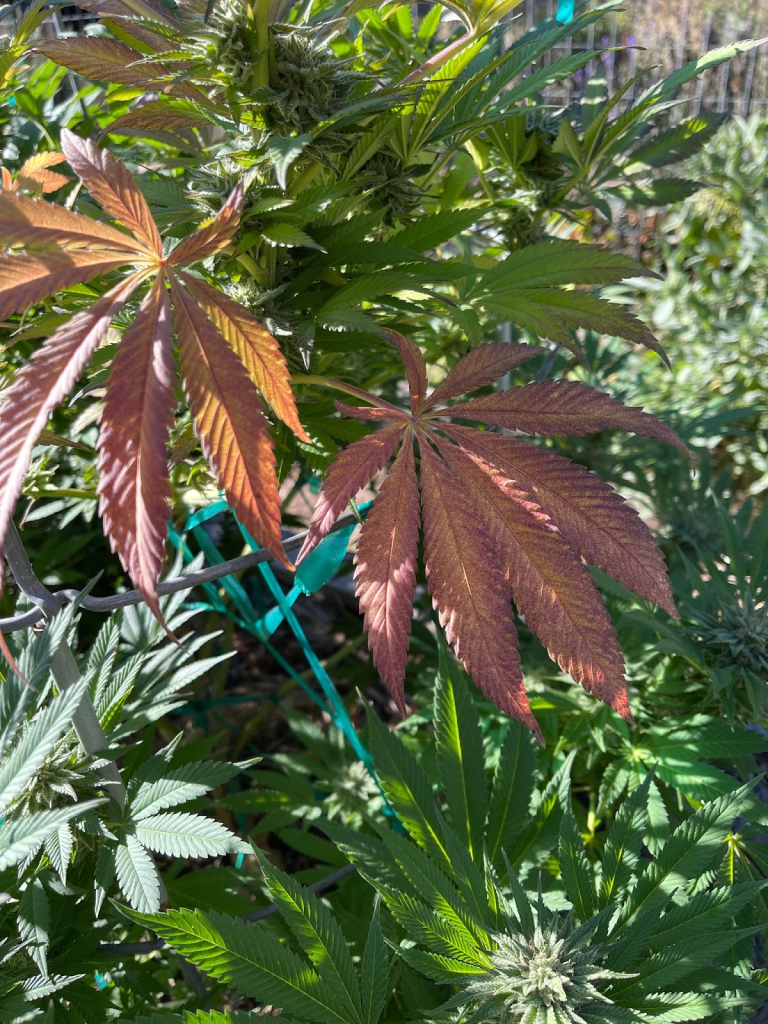
It is during this transition, this turn from summer to fall, when pathogens attack plants with full force. These brilliant colors that emerge when temperatures change are also potentially indicative of where pathogens are impacting the plants. While colors can emerge through temperature changes, they can also emerge if botrytis is present on branches via root mold.
As with other mold, the key indicator is a limp leaf. Colorful or not, when a leaf goes limp, there is a reason.
There are branches with advancing stem rot that require daily inspection and evaluation. Most get alcohol swabs daily. Bee and I are constantly deciding if a particular branch is safe to remain for another day. We are daily evaluating and agreeing on the proper spot to cut, should that become necessary. We are also checking each plant against the projected harvest date, as we endeavor to grow every flower for as long as the conditions allow. But as previously noted, we will not hesitate to harvest early, should a problem arise that threatens a plant.
This has become a distinct possibility, with the remants of a tropical storm streaming up the coast while I write this. As with rain before, depending on how much falls, we might be harvesting a couple of plants early. Specifically, both Fruitcake plants, 18 and 21, are laboring after the third of an inch of rain. As previously written, Fruitcake is not an easy plant to grow outdoors. She has more in common with Granddaddy Purple than most cultivars. She’s clustered, sticky, and tricky. But her medicine is so sublime, we endure and carry on. That said, one or both might come down tomorrow, while you’re reading this blog.
Plant inspection is now paramount. Once a day is the bare minimum, but I prefer two full plant inspections, because a lot can change between morning and evening. I also prefer one inspection in the sun and one in the shade. You notice different things depending on the conditions. Powdery mildew is best inspected in diffuse lighting. The white shades of the pathogen pop when there is no direct light. You can see mold in both conditions, though I find mold easier to spot in direct sunlight because of the brown color. Sunlight definitely helps when inspecting for mold on Fruitcake. With her deep purples and greens, I need the sun to differentiate the colors. Where mold exists within her colors, the brown and purple tend to blend. It makes for a challenging inspection.
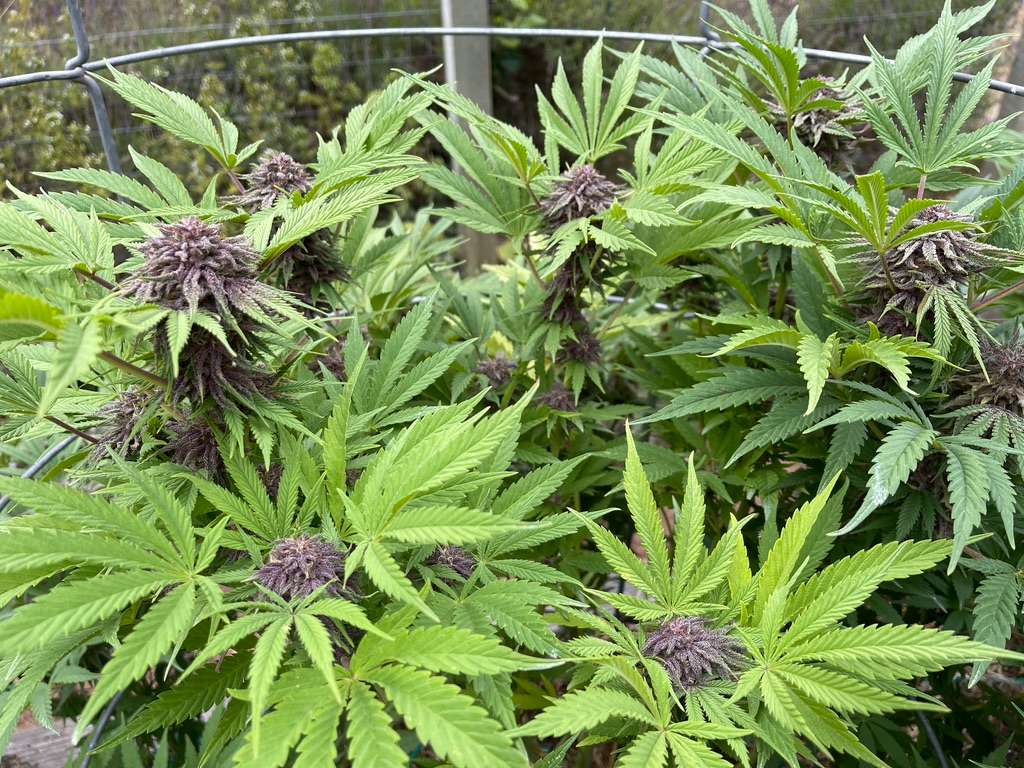
A scoop of purple, please?
I am also in constant inspection of Cherry Punch 15. Curiosity takes me there with every garden visit. I routinely climb the ladder to inspect the tallest flowers. So far, no powdery mildew and no mold, but I know this will change. The big thing is mold. That is the flower killer. I’m going to do everything in my bag of tricks to keep botrytis away from my dry farmed beauty.
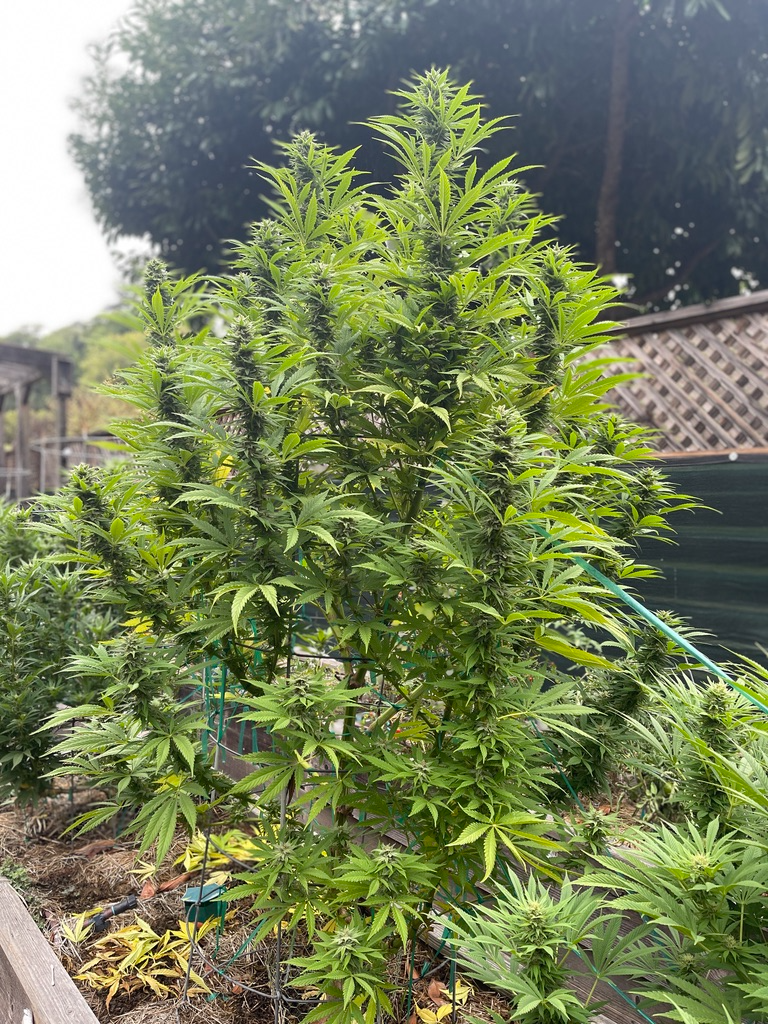
In particular, my attention is being drawn towards one flower. This happens almost every year, where a particular plant produces a specific flower that shows off. This year, I’ve got several plants that are showing off, as you’ve seen from other photos.
But on the backside of Cherry Punch 15, a few giant flowers have emerged, and one in particular. I’ve been watching this one flower for weeks, and she is somewhat obscured when looking directly at the plant. She is surrounded by others. Even so, I could not help but notice that she was showing potential to be larger than I’ve grown before. So, I got out the tape measure.
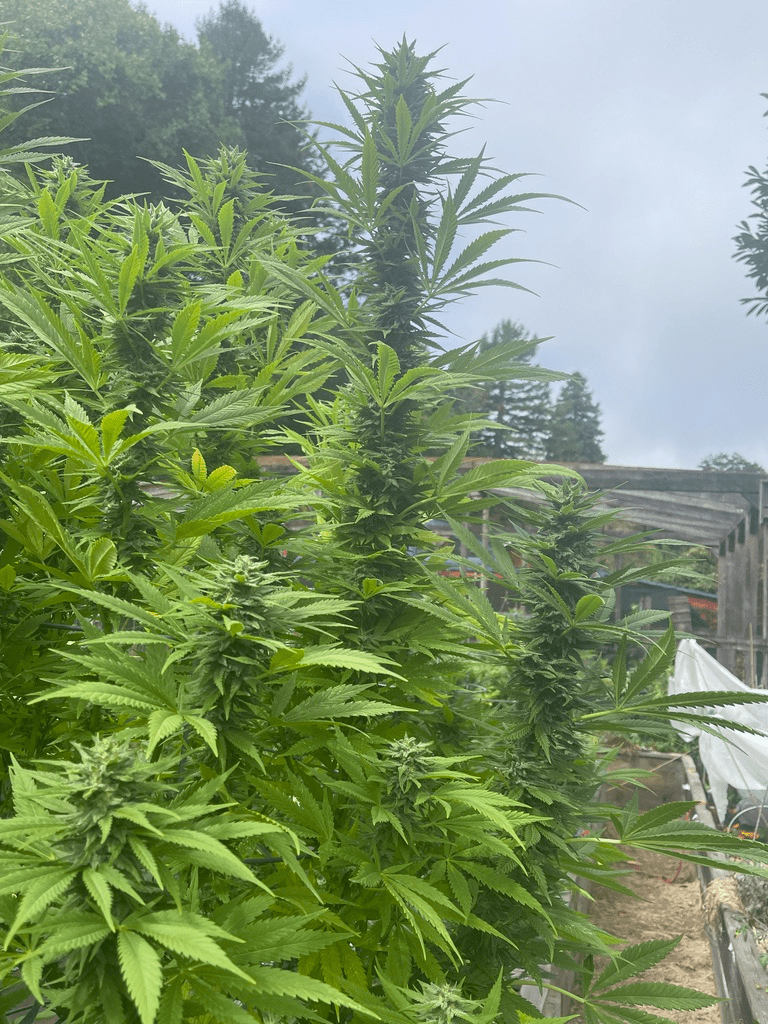
From base to top, this flower is 27 inches long.
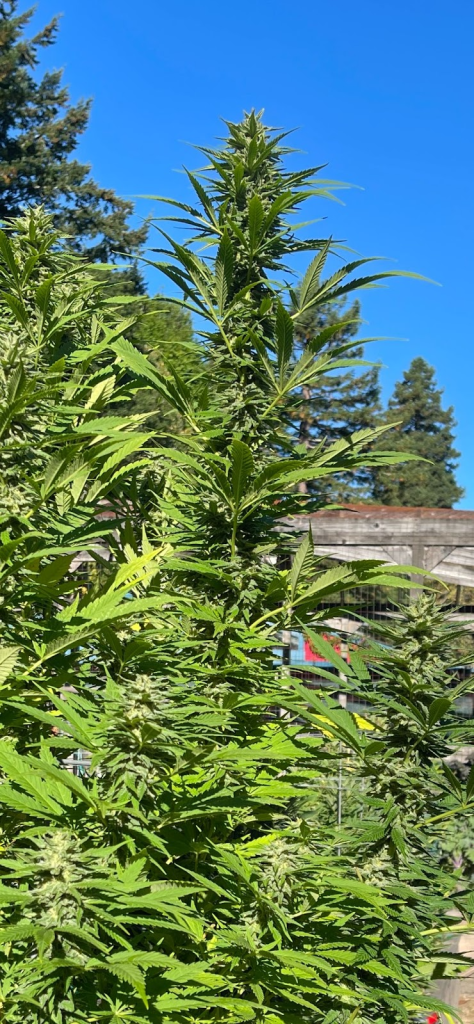
This is the largest flower that has grown in my beds to date. I am climbing a ladder twice a day to inspect all of these tops, because there are other giants growing up there. But this one has taken off. My largest previous flower was 21 inches. Flower size has nothing to do with growing, it’s just luck of the draw. This plant decided to produce a flower this size. It also has nothing to do with dry farming.
Obviously, when inspecting, I want to touch her as little as possible. I don’t want to disturb the trichome production, so when I want to study every side and crook of this flower, I use the large fan leaves without any trichomes on them, to pull the flower into positions for inspection. I also wear nitrile gloves (for every inspection now). It is easy to use the fans for maneuvering the flower. It’s another reason that I leave the fans on for as long as I can.
While this is going on, I am also about to receive test information on the 28 auto flower CBG plants that we sent to SC Labs.
And–we are currently living in conditions that are ripe for a wildfire. Our area is not as vulnerable as others, but it has burned here before. So when conditions exist as they will be today and tomorrow, we are especially mindful. We don’t put fire to anything outside right now. There’s a chance of rain, but there is also a chance for dry lightning, and that is what caused the last fire.
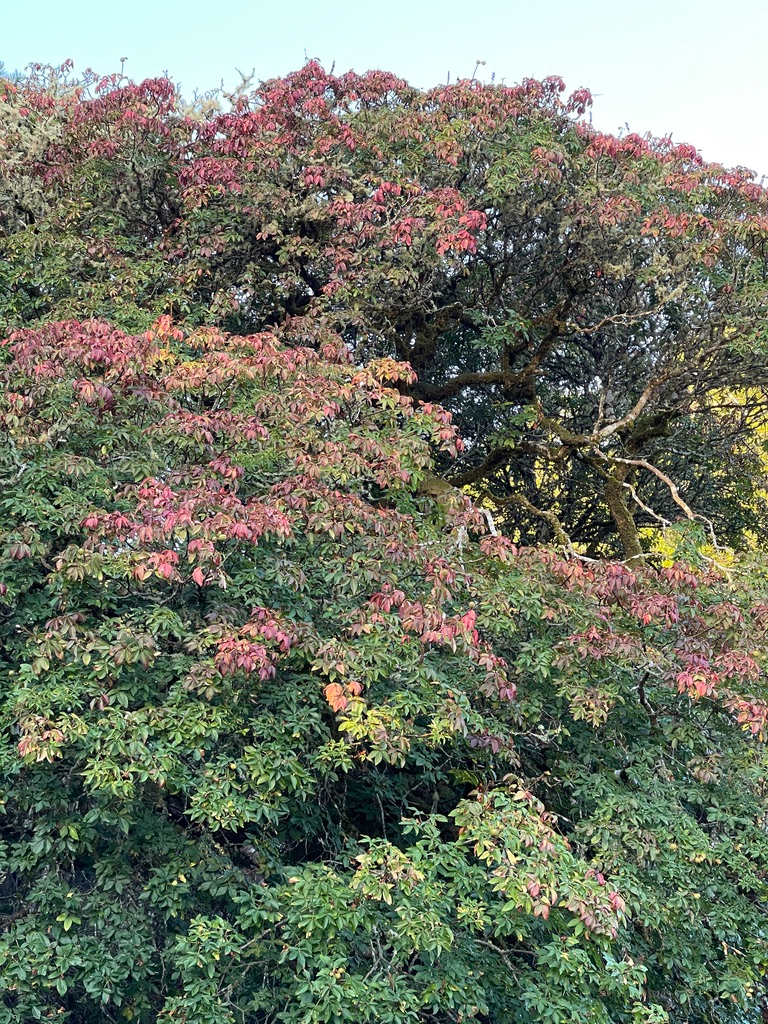
Fall has come to our buckeye tree.
If we knew nothing else about where we live, we would know that the seasons are changing by watching our local birds. Different birds are arriving at the feeders. Migratory birds are departing for warmer winter climates. Gone is a bird whose song is the local harbinger of summer, the Swainson’s Thrush. I won’t hear that song again until late April of next year, when seeds are sprouting in the cottage for a new grow.
Except for the crow family that lives on our property, the entire corvid population out here is moving into fall and winter behavior. Our suet feeder is not being shredded all day, every day.
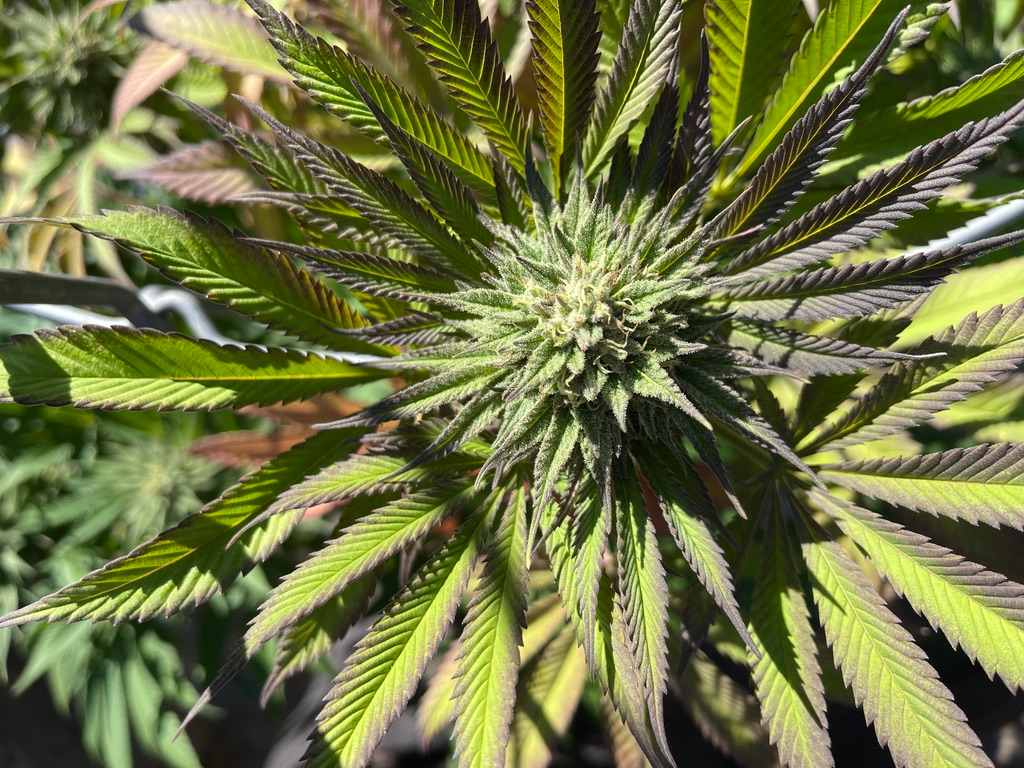
I am entering the portion of the grow, the weeks and days just prior to harvest, where I pace the bed aisles about every hour. I inspect twice a day, but adrenaline propels back out there every hour that I’m home. There are lots of photos being taken, because this beautiful stage of development is only for a few weeks. Flowers are sprinting toward harvest.
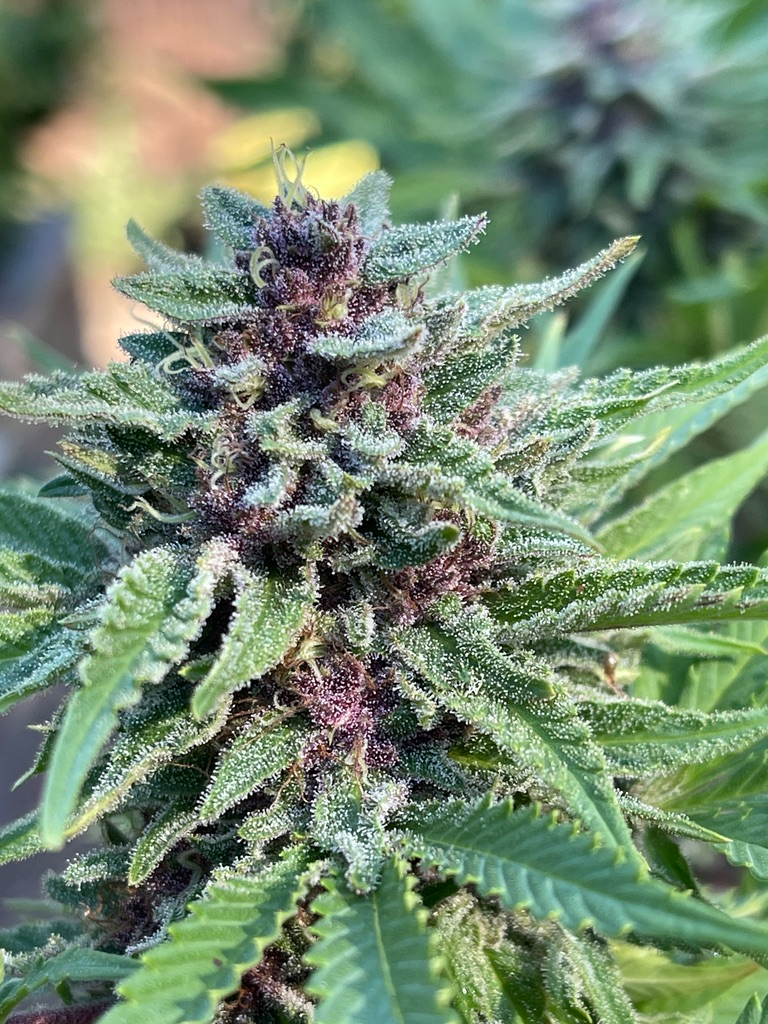
Royal Kush 20–Day 47. First time growing a purple phenotype of this much loved cultivar.
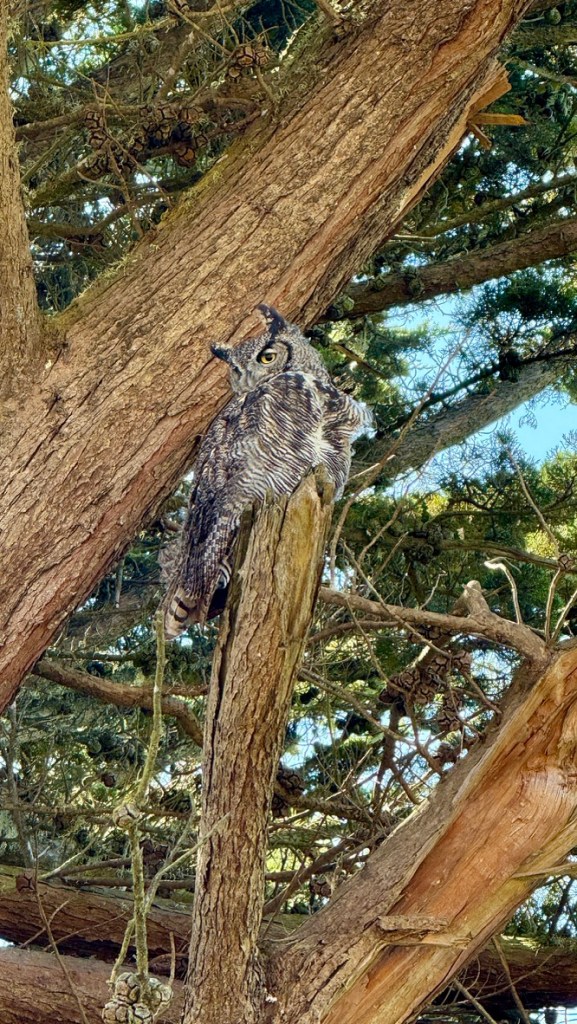
Last note for this week: A wish for safe travels home to one of my old students, and our friend, Ms. N, who travelled all the way from Wisconsin to visit, study and play. Among many highlights, we got to see a Great Horned Owl sitting in a tree near us.
Hey Friends: If you’d like to support jeffreyhickeyblogs.com, please feel free to donate to PayPal @jeffreydhickey.
Or contact me directly with your idea (good seeds are always welcome–and if I grow them, I will get the flowers tested and share with you the results.
Disclaimer: The majority of the links in jeffreyhickeyblogs.com posts are affiliate program links. This means that (most of the time) when you purchase a product linked from my site, I receive a commission.
 Jeffrey Hickey Writes Blogs
Leave a comment