
Rosé still has three weeks to go, but she’s showing off, anyway.
A week ago, we removed a small amount of mold from a few nugs, and I put the nugs into the cottage to dry.
One of the nugs is Purple Punch, which I suspected is not a Purple Punch, but rather an unknown sativa hybrid.
I am happy to report, based on trying a bit of that nug, that I am indeed growing Purple Punch, with or without the purple. Within 30 minutes of sampling, I was chinless and asleep. This pleases me. I want that beautiful lady for bedtime, pun entirely intended.
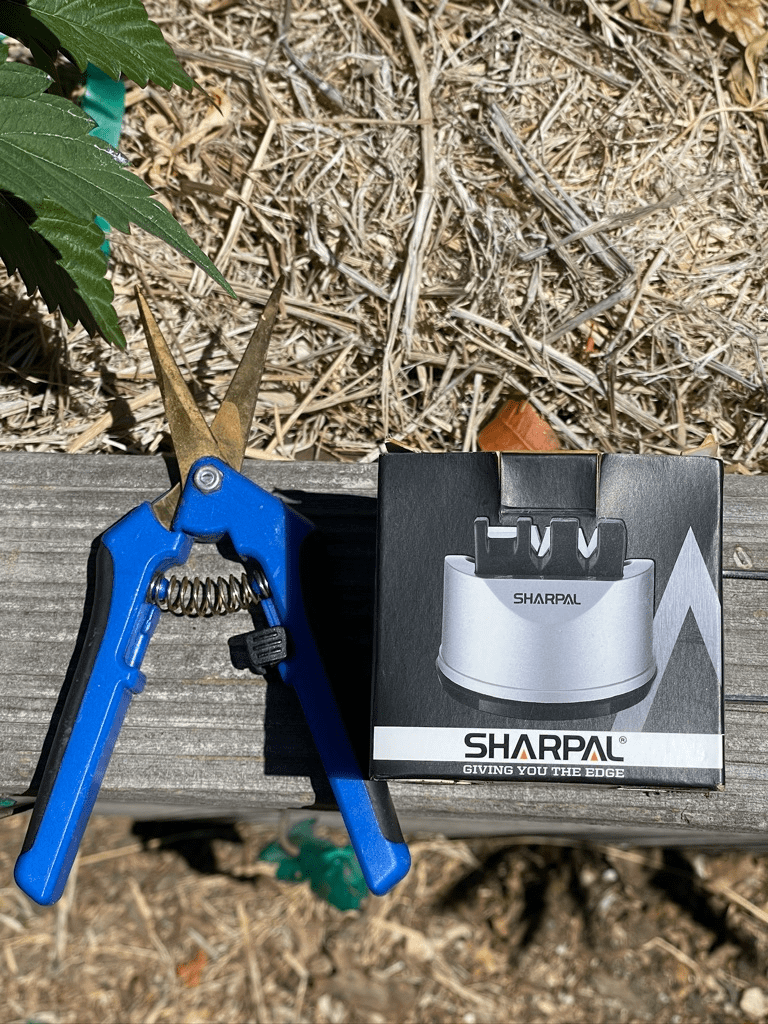
Soon, I’ll take an hour or so and sharpen trimming shears. I used to buy new ones every year. Now I sharpen and will only buy new scissors after all of mine break (and they will). From all the years of knee jerk purchases, I should be good for another decade.
We are maintaining high humidity. This has been some of the highest sustained humidity that my plants have ever endured. There are usually more days where the humidity drops while the temperature rises. This year, we’ve had few days where the temperature spiked. It’s been consistent, and with it, humidity has largely remained over 70% for the entire summer, and continuing into fall.
This has been one of the primary reasons for plants developing and maintaining a previously unseen level of stem rot. It has not been the only reason, however. We’ve certainly had stem rot before, but multiple plants have some form of it this year. It has lasted the entire flowering period.
Bee was here yesterday, to do a thorough plant inspection before harvest. Their goal was to find and remove any and all remaining mold before plants start to come down. They found over 60 small pieces of mold, and almost all of it was from three plants, the two Fruitcake and Purple Punch.
The two Fruitcakes are extremely interesting and beautiful plants, as well as being the worst mold offenders. They are almost acting as companion plants, as they are attracting the majority of the moth worms, and have the greatest amount of stem rot. Bee did some investigative work from close range and discovered that we’ve had a new pest to deal with this year: Flea Beetles.
It’s the first time we’ve seen or dealt with these, and in truth, we won’t really deal with them until harvest is over. We can treat a bit with Dr. Bronner’s soap and with Neem, but once these little leaping insects get inside a stem, there’s not much you can do, except to apply alcohol for mold deterrence.
This seems to be helping. The spread of mold is slow. But these tiny creatures clearly got a toe hold on both of the Fruitcake plants. A large portion of mold damage on both of those plants are being caused by the flea beetles serving as botrytis vectors.
We are treating the affected areas, and removing moldy bits as we find them. Bee and I are in agreement that both Fruitcakes should come down on Day 50, to save as much of that medicine as possible, while making certain to preserve the medicine on all the other plants. Pushing moldy plants to an expected harvest date is a problematic exercise in frustration and futility. It’s also a potential danger to the other flowering plants. Mold spores can spread. Harvesting early is a medicine saver all over the beds.
The very good news is that most of the plants have no mold on them, or so little as to be insignificant. Certain plants have not shown any mold. Stargus is doing what it’s supposed to do, but it cannot prevent the damage from flea beetles, a rogue worm, or high humidity that remains for the entire growing season.
It is a pleasure, however, to pull mold from three different spots on Honey Tsu 16, without having to cut any flowers. That’s the true Stargus effect. A worm landed on a leaf and laid some eggs. Some scat happened and mold followed, but Stargus kept the mold near the leaf and not the flower. It was easily removed by tweezers, with no damage to the bud, or mold residue left anywhere on the flower.

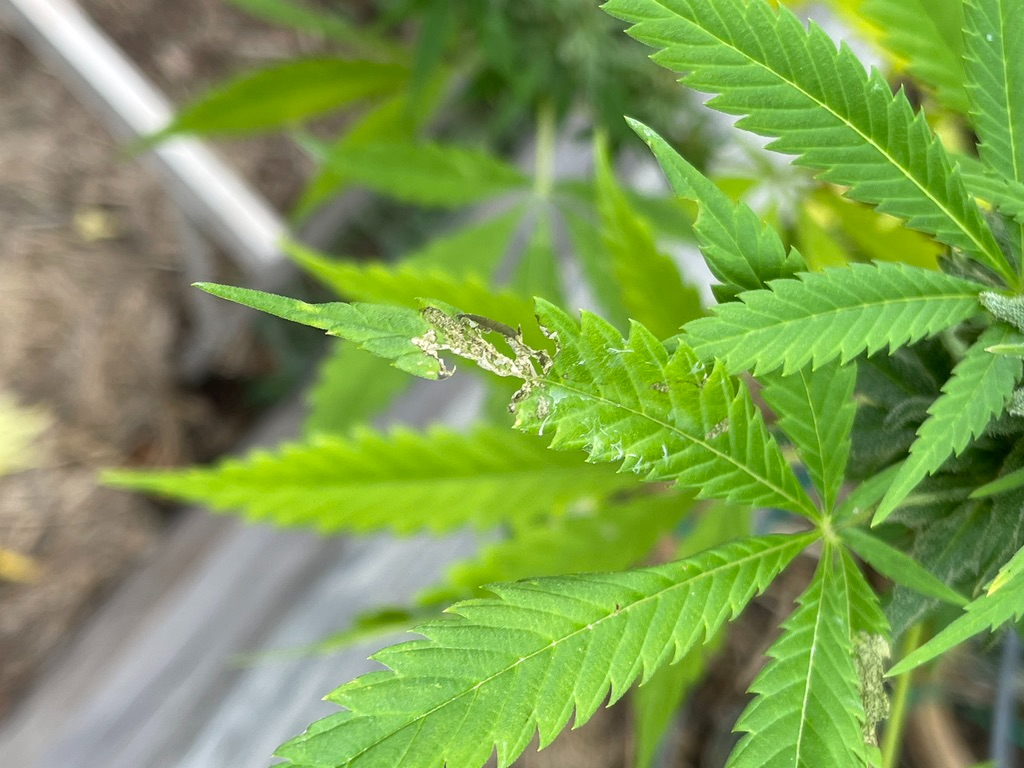
A young worm caught, and the damage done to (only) a fan leaf. I caught six of these in one day on Cherry Punch 15. They seemed to have a particular spot that they preferred for landing and laying. Worms have not yet impacted a single flower on the dry farmed plant. She has 11 days to her harvest date goal of October 5.
The ultimate solution to flea beetles will be the removal of all old material from the growing mediums, all leaves, all stems, all old mulch, anything and everything, before solarizing. The process of solarization will kill all the beetles in the topsoil, along with mites, leaving a clean growing medium to start next year.
Then we’ll have to make sure to start lots of the companion plants that flea beetles prefer and do many soil soaks with both Dr. Bronner’s and Neem. Flea beetles are known to be attracted to thick patches of radishes and basil.
It was a surprise to find both Fruitcakes acting as companion plants. We love this cultivar, but we won’t grow her outdoors again.
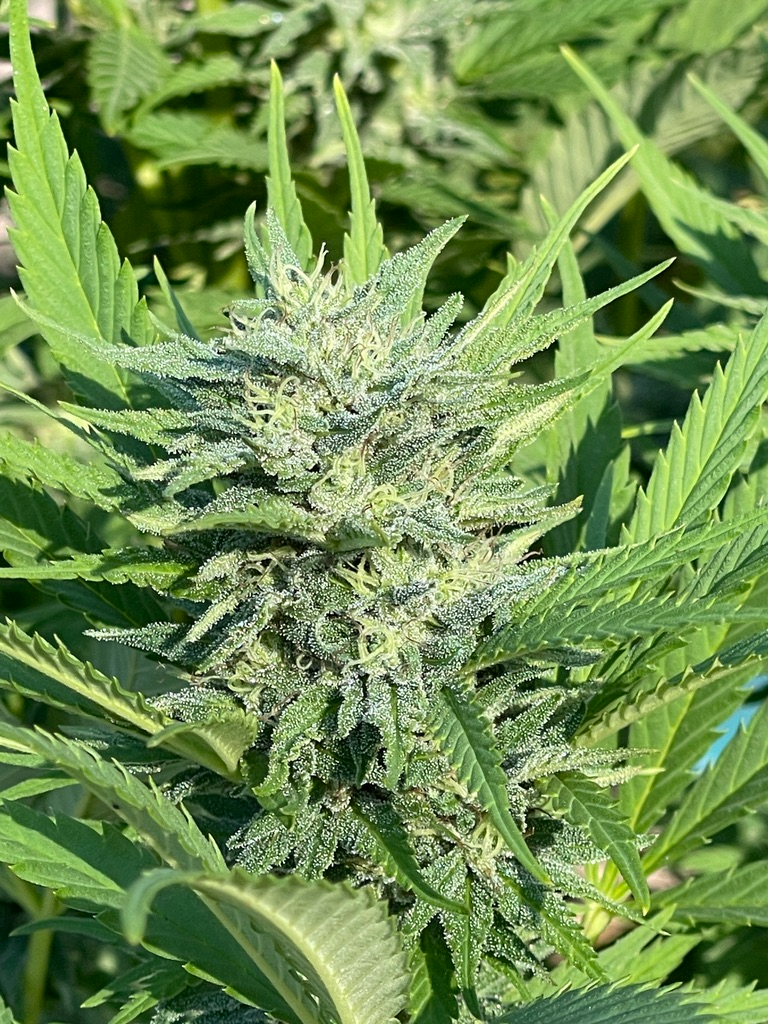
West Marin Mystery–Day 39
Meanwhile, other plants, like the West Marin Mystery, a proven cultivar in our beds, have not shown a single piece of mold. Nor has the giant Cherry Punch 15. Honestly, I will never get used to the lack of mold, though it certainly makes for a pleasant surprise. It shocks me every year to see this happen, where it never happened before.
The grand parade of harvested plants is about to begin. In the last seven days, certain supplies were procured, like hydrogen peroxide for all the washing that is about to happen. Most of the washing will be in the five gallon buckets, because the majority of the flowers will easily fit in there.

But for a couple of plants, the large flower plants, we’ll need the 20 gallon buckets to do the job, and that means a lot more peroxide.
The garden is heavy and sticky right now. It’s impossible for me to compare the stickiness to other years, when I was still watering the plants. But this year seems stickier. Perhaps this is because of so many cultivars that are new to my beds. All the Punch plants for example. But the stickiest, by far, is Fruitcake.
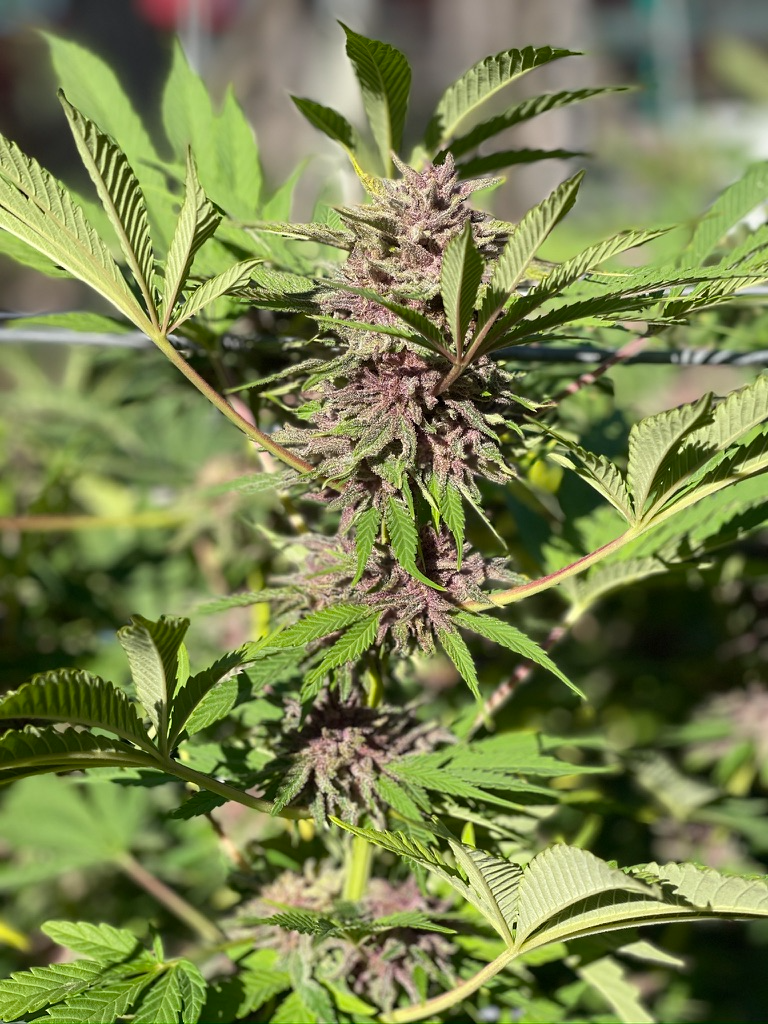
All foliar sprays are finished for the year, except if we need more BT. Our greatest nemesis this year (besides the flea beetle) has been the moth worm. Any powdery mildew found from this point forward will be cut off. Any that remains on each plant at harvest will be washed off.
Trimming trays have been brought out from storage and will be washed.
Large sheets will soon be placed over trimming chairs.
Both the 30X mag lens and the more powerful jewelers lens, have been brought out and are being used for daily inspections. For me, the key to plant readiness is a full trichome. Once they go from clear to milky white, I’m ready to harvest. I generally don’t wait for the amber to show. I want the maximum amount of everything for each cultivar.
I have no problem harvesting early. When in doubt, harvest the plant and save the medicine. Test scores have proven to me that harvesting early does not seriously impact potency.
The first plants to harvest this year will be three full season grows: Cherry Punch 11 on Saturday, the 27th, followed by Royal Kush 20 and Purple Punch on Monday, the 29th. The caveats to all of these is that those are target dates, not guaranteed dates. If the trichomes are not full, I’ll wait. Especially since the mold has been either minor or non-existent on two of the three plants.

Cherry Punch 11–I’m just waiting for all or most of the trichomes to fill. Any day now.
As soon as the first three are down, probably by Monday or Tuesday next week, both Fruitcakes will be harvested as well. By harvesting both of those plants early, we’ll be saving the medicine, and reducing a bit of a drying log jam that’s going to happen when the second batch of plants starts to come down. It’s going to get crowded in my drying room, but less so if the Fruitcakes are harvested early. All of the purple plants will be harvested by early next week.
Plants will come down in fairly rapid succession. Some days might see multiple plants harvested, though I generally don’t like doing that. I have found one plant at a time means the best quality control for that plant. I’ll pick the one that looks most ready under the jeweler’s lens. It’s easy to get sloppy when dealing with more than one in a day, unless the plants are very small. Honestly, it’s getting late in the grow, so I’m partial to savoring every step. I don’t rush unless I must. I’m about to spend days in a chair, first trimming off fan leaves, and then eventually, creating “A” trim flowers for consumption. All the popcorn will be made into FECO.
Nitrile gloves are in house, scissors are about to be sharpened, and a heat wave arrives for a couple of days before the first plants potentially come down. This is all good news and plants will continue producing trichomes right up to harvest.

One more time, before they start coming down.
Hey Friends: If you’d like to support jeffreyhickeyblogs.com, please feel free to donate to PayPal @jeffreydhickey.
Or contact me directly with your idea (good seeds are always welcome–and if I grow them, I will get the flowers tested and share with you the results.
Disclaimer: The majority of the links in jeffreyhickeyblogs.com posts are affiliate program links. This means that (most of the time) when you purchase a product linked from my site, I receive a commission.
 Jeffrey Hickey Writes Blogs
Leave a comment