Whenever I have been faced with an overwhelmingly difficult task, like when my wife suddenly became seriously ill, I have developed strategies for coping. In fact, one of my ways to figure out a course of action for a difficult problem is to imagine the worst case scenario, and come up with a plan for it, should that nightmare come to pass. I know others do this, too.
As an outdoor grower, I have learned the value of contingency plans. I have lived through enough calamitous events to have considered various worst case scenarios. We’ve had a nearby fire where we were almost evacuated. We’ve had drought where our resources were stretched to their maximum. And we’ve had rain to where I’ve had to tent the entire grow. Through these experiences, we have come up with plans for what to do when something bad happens, because bad things can happen when growing outdoors.

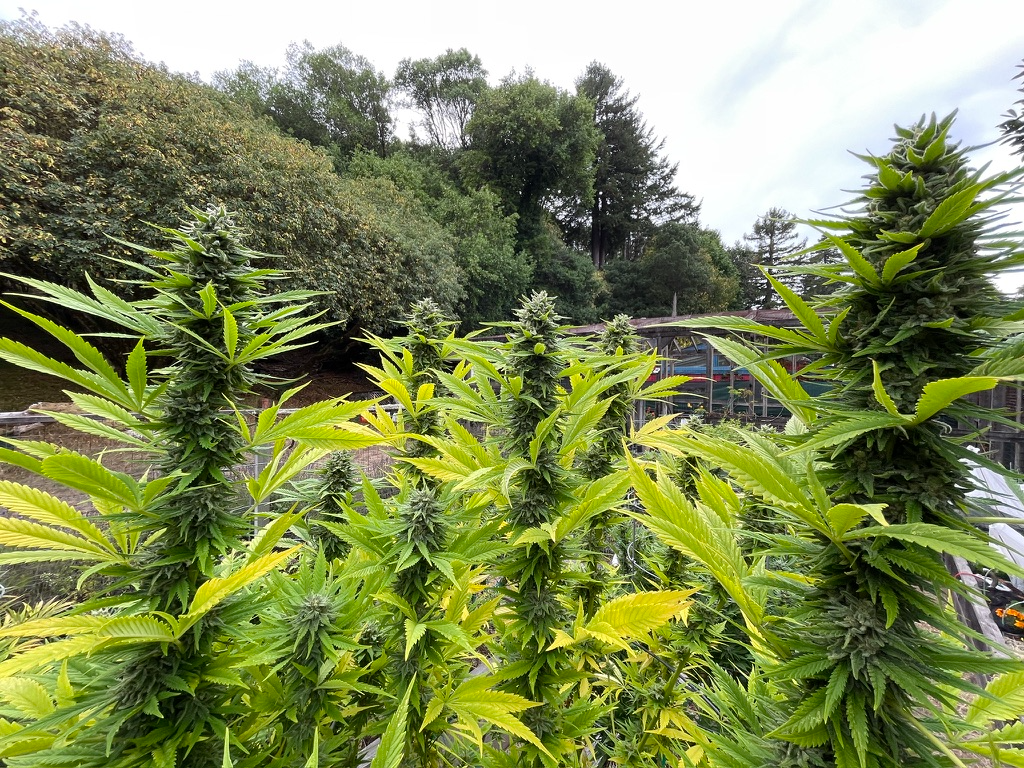
Note the folded leaf in the above photo. A worm was about to be stopped.
In last week’s blog, I detailed about our flea beetle infestation, something we’d never seen before. The two Fruitcake plants that the pests inhabited, will come in tomorrow afternoon for fine trimming.
This particular summer has been noteworthy for the consistency of high humidity. I believe the climate is changing. The summers we’re getting now are different from those even as recently as 5 years ago. Two of the last three summers have had more humidity and more overcast than any previous years. It’s impossible to grow well outdoors if you’re not getting much sun. My crop two years ago was like that. We went 23 straight days without plants actually seeing the sun. Everything but two hemp plants tried to flower early.
This year, we’ve gotten enough sun, (helped in no small part by the supplemental outdoor lighting) but even with the sun, we have been dealing with humidity that has never gone below 70%, except for three days, and then only briefly. I’ve not had a single day this summer where the humidity dropped and remained low for more than a few hours. Most days, humidity would range from 70-85 percent, and then spike much higher at night. During the vegetative phase, I was initially thrilled by this development. Increased humidity in the beds meant more oxygen for the plants and better potential vegetative growth. Higher humidity during veg growth is an advantage to the plants. Bee and I used to talk about finding ways to add CO2 to our grow. We don’t need that now.
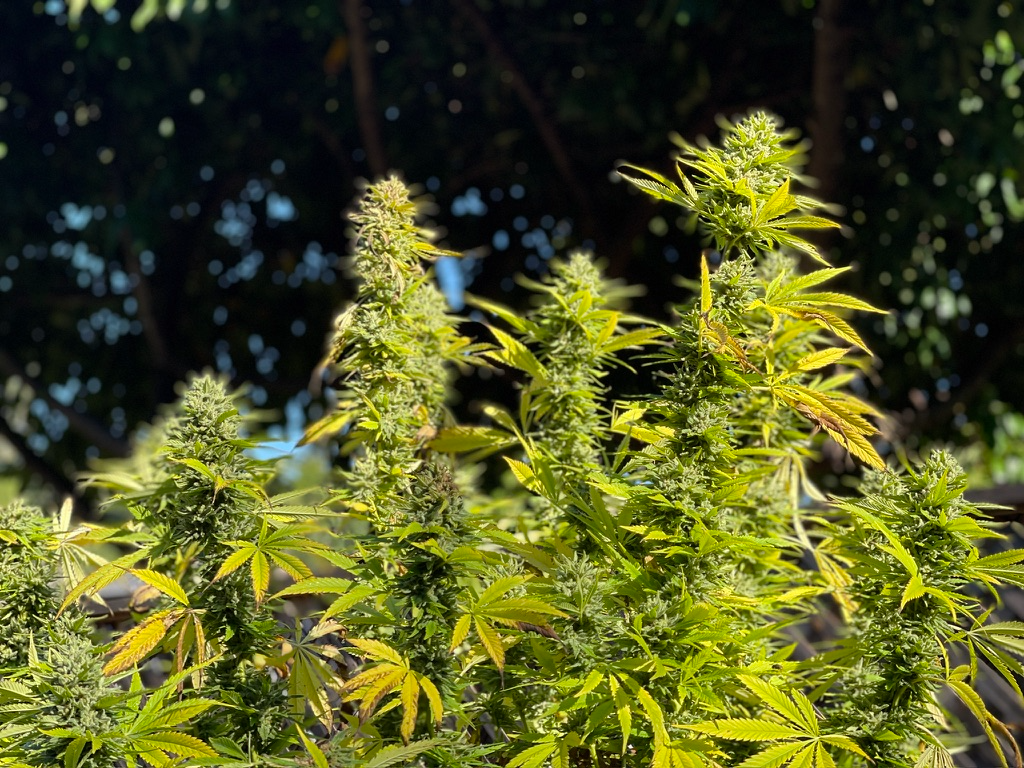
When humidity at this level becomes problematic is during flowering. Flowers do best in consistent conditions. (Like indoors) In addition, cannabis flowers face pest onslaughts. Between worm scat and stem rot, flowering plants endure a wide variety of potential problems. Even under the best of conditions, the changing of season from summer to fall will cause stress to plants because there are increasingly wide temperature and humidity variances from dawn to dusk. For example, this morning was down to 43.1 degrees (6.16 C), and this afternoon, it hit 83.6 degrees (28.6 C). Combine varying temperatures with high humidity and you’ve got the ultimate pathogenic swizzle stick.
And then, it rained on and off, but mostly on, for three straight days. On Wednesday, October 1, it rained all day. It wasn’t raining hard, but it was not stopping. Over half an inch fell that day. A bunch of plants needed to come down immediately. They needed saving. We have seen this before.
Bee arrived at 7:00 a.m. By 7:30, we were each taking down a plant. Bee took Cherry Punch 11 and I took Royal Kush 20. Harvesting, removing fan leaves and washing those two plants took until 11:30. While Bee finished fan leaf trimming on CP 11, I resumed plant inspection and realized that Honey Tsu in bed 16 also needed to be saved. Ten pieces of mold were cut off right then, in the rain, before I could harvest her.
While I took off her fan leaves and washed her, Bee took down the two plants not in beds, the aviary AK-47 and the lavender protected Apple Crumble. No deer took so much as a nibble all season from Apple Crumble, so I have proven beyond any doubt that lavender will protect cannabis from deer.

We hung the last flowers of the day in the drying room at 4:30, but still had to inspect the remaining five plants in beds.
During that inspection, the first piece of mold on Cherry Punch 15 was found and removed. I knew this was going to happen, but my heart sank just a bit.
It continued to rain lightly all night. The remaining plants are soaked to the bone and are at the highest level of mold risk. The sun is going to return for several days, but with it, cold temperatures will finally make their arrival.
Obviously, the steady rainfall changed all harvest plans. This happens almost every year, but this harvest is being particularly challenging, because the weather has been difficult at best. Keeping cannabis flowers healthy during sustained humidity is not a task to be mastered. It is to be endured with an eye on the earliest harvest date.
We cut off a lot of mold before bringing in the plants for leaf trim and washing.
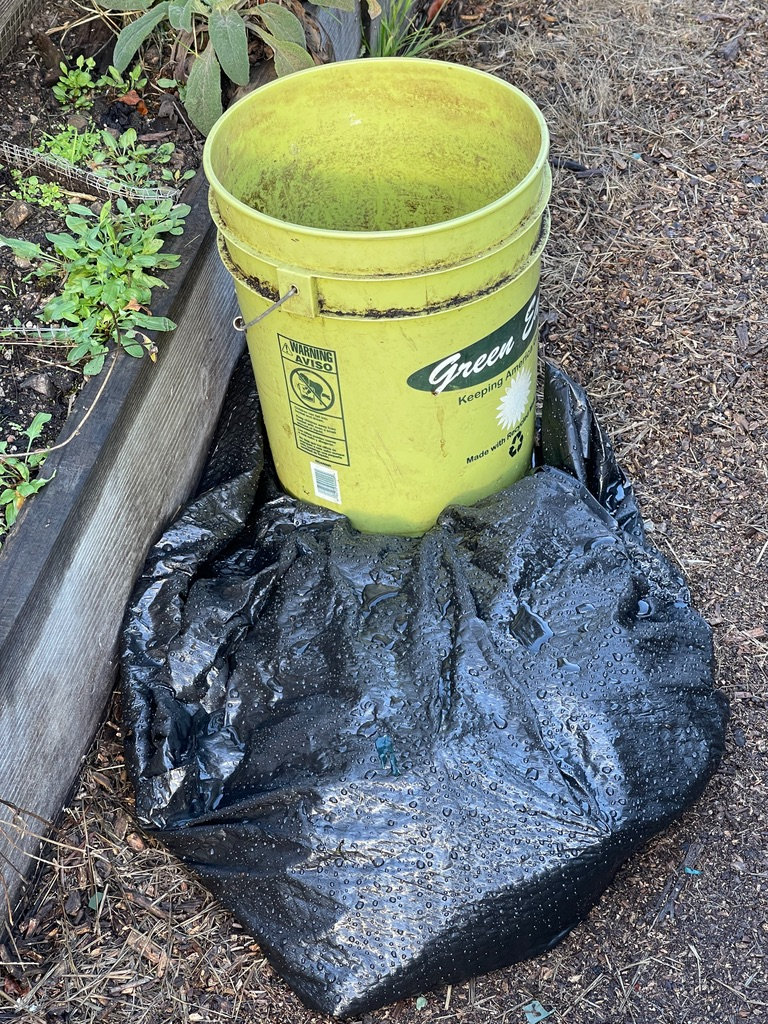
The above bag has moldy bits, stalks, stems, and tops. The bucket is for collecting the mold while taking down the plant. It’s a funny thing about mold, or any other problems I’ve had with a given plant, or with an entire crop some years. Once the dirty work is done, the mold is gone and the plants are drying, I don’t think about the dirty work again. Once I start sampling various cultivars from the grow, it’s pretty much all good. The medicine has been saved from ruin. There’s been some mold, or another critical issue virtually every year I’ve grown. It’s always something. But the beauty of the medicine is such that once consumed, regrets are replaced by relief.
The day itself was wet and warm. It was strange weather for Northern California. It was much more like other parts of the country during summer. While I was washing plants, under a persistent misty rain, I was perspiring.
It was the right call to take down the plants we did on October 1. When I saw the mold on my one and only CBD plant this year, I found a new source of energy to finish the day. The medicine is too good on Honey Tsu to let it turn to mold in the rain. She was three days early, but that’s not too soon.
So once again, I read the long range forecast and 1.5 inches of rain are predicted for next Monday into Tuesday. It looks like the rainy season is beginning as storms start to line up every few days.
With that in mind, I organize the days ahead. Tuesday, trim both Fruitcakes and harvest Cherry Punch 15. Wednesday, trim Purple Punch. Thursday, harvest West Marin Mystery. Friday, trim Royal Kush 13. Saturday, harvest both S. Thai 19, and S. Thai 12. Sunday, harvest Rosé.

All the plants will be harvested by day end, Sunday October 12. All the plants except both Fruitcakes, Royal Kush 13, and Honey Tsu hit their target harvest dates. Nothing flowered early. For me, despite the difficulties, even all the late season mold, this has been a very good grow. Most years, a majority of my plants don’t make their target dates. The same issues impacting previous years were affecting the crop this year, but because I started sooner, and induced flowering to begin a week earlier than usual, I was able to get more plants to their target dates than I’ve ever gotten before. Even a week later would have meant much earlier harvest dates for a majority of my crop, so I’m grateful it has worked out well. It has been an epic grow for me.
Really looking forward to the test scores. I’ll do a deep dive blog on the results.
No time for resting yet. Every day has tasks to accomplish now, tasks that must be completed before moving on to the next. It’s a rote time in the garden, as I move from job to job, each one moving me one step closer to completion, dawn to dusk.
Next week, I continue trimming, while beginning the curing process. I will probably set a date with SC Labs to pick up samples for testing during the first week of November.

Hey Friends: If you’d like to support jeffreyhickeyblogs.com, please feel free to donate to PayPal @jeffreydhickey.
Or contact me directly with your idea (good seeds are always welcome–and if I grow them, I will get the flowers tested and share with you the results.
Disclaimer: The majority of the links in jeffreyhickeyblogs.com posts are affiliate program links. This means that (most of the time) when you purchase a product linked from my site, I receive a commission.
 Jeffrey Hickey Writes Blogs
Leave a comment