
Cherry Punch 15
There’s a lot to digest in my 2025 test scores, and I’m not going to bury the lede. I was most curious about Cherry Punch grown in bed 15. This was my “dry farmed” plant. I stopped giving her water on May 25. She went four full months getting only one quart of compost tea a week and in the final week before harvest, she got a half inch of rain. The rain forced me to harvest her a few days early.
Previously, my highest THC score was 27.40, from an AK47 in 2021.
Cherry Punch 15 has 29.68% THC with 2.5123% Terpenes.
That’s a big jump for an outdoor grow. Further, this plant had the least pathogenic issues throughout the entire season. She had the least stem rot, and she lost the fewest flowers (three). At this point, I can’t claim that the lack of water is the principal reason why she was so healthy and lacking in mold. I need more dry-grown harvests to know that answer for sure, but it only makes logical sense. I’m kind of pinching myself here. 29.68% actually rounds up to 30%. Never thought that I would achieve this score outdoors.
Further, for the curiosity seekers out there, during harvest, I isolated the 28-inch flower that I featured in a previous blog post. I was curious how much a 28-inch flower would actually yield. Looking at it, I had a wild notion it might yield 28 grams – a gram for every inch of flower – which would mean an ounce of cannabis from a single flower.

This one flower yielded 32 grams, or 1.12 ounces. I love the idea of an ounce of weed coming from only one flower.
The thumbnail statistics for each plant are as follows:


Some interesting quirks to this grow–In eight of the 12 plants, the top three terpenes are the same, but in varying order: Beta Carophylene, Limonene and Humulene.
There was no way to predict this before the grow, but this is almost a perfect crop for a cancer patient. Every plant is high in Limonene, so there will be no nausea; high in Beta Caryophyllene, which stabilizes mood and inhibits anxiety: and high in Humulene, an anti inflammatory, anti bacterial, and analgesic, that works in conjunction with Beta Caryophyllene to inhibit the growth of cancer cells. In an interesting twist, Humulene is also an appetite inhibitor. I’ve never grown so many plants with noticeable amounts of Humulene. Cannabis with no munchies? We’ll see how that tracks over the holidays.
One plant, Royal Kush 13, has Limonene, Beta Carophyllene and Valencene as its top three terpenes, which among other things, work to improve the efficacy of chemotherapy. It’s the largest amount of Valencene I’ve had in a plant to date. It’s great to see breeders creating more of this valuable terpene.
There are a number of sativa hybrids that grew this year, and only one of them, West Marin Mystery, has the very powerful terpinolene. It is that plant’s top terpene. Based on that, this plant might have a little anxiety, but the second terpene is Beta Carophyllene, which is an anti-anxiety terpene. Time will tell on that plant. She looks like a good plant for me to take while writing my next novel. She has lots of energy.

Purple Punch
I’m laughing, perhaps a bit ruefully, as I write this, but the terpenes also proved that my fear about the Purple Punch not actually being Purple Punch was justified. She is a sativa hybrid, with barely any myrcene. She would have had a lot of myrcene were she a sleep plant. The only sleep plant I grew this year was Rosé, where the top terpene was myrcene. So, those long skinny leaves I saw growing on the alleged Purple Punch were, in fact, a clue to her being a sativa hybrid. I believe Purple Punch is my only incorrect cultivar this year. Everything else I grew ended up being what they were supposed to be.
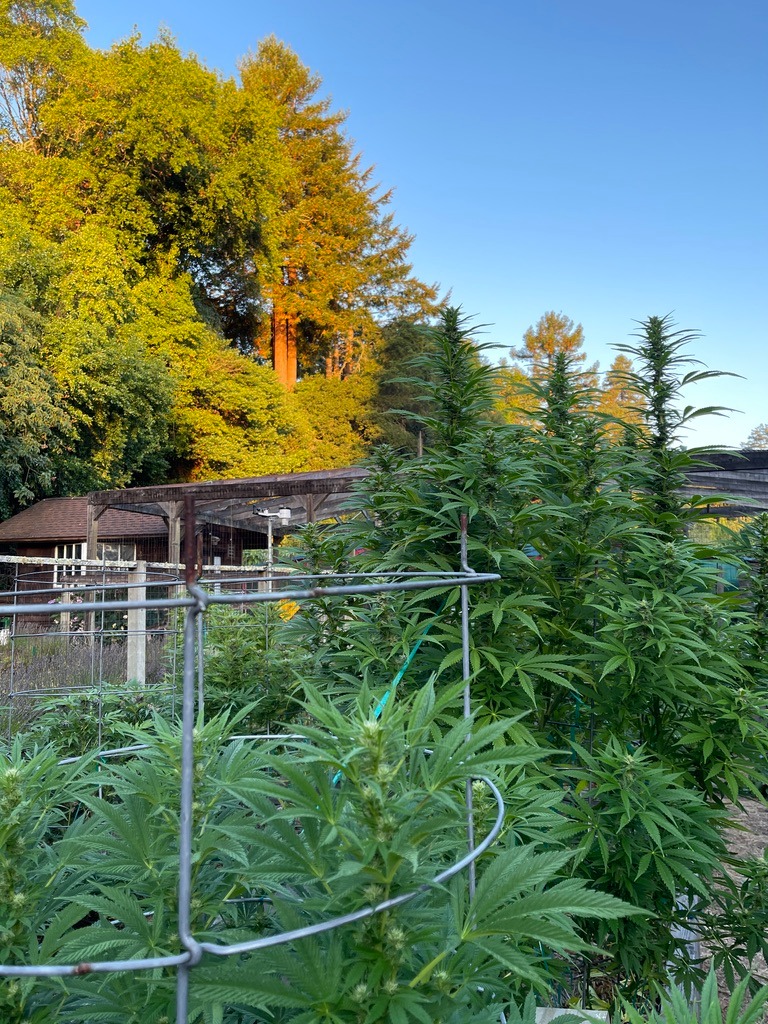
The 2025 grow was a study in contrasts and conflict. It was an outdoor grow made under challenging circumstances. It was the most difficult I’ve had since my second grow, where we lost approximately 40% of our harvest to mold. For the entire six month period of the 2025 grow, humidity remained above 70%. I’ve never had a grow where the humidity remained that high for so long. Literally, the only day the humidity dropped to a “normal” 50% during the middle of the day, was two days after harvest ended.
Humidity maintained at that level is excellent for veg growth, because of the increase in CO2. But it is a potential nightmare for flowering plants.
I followed all my foliar spray protocol, including Stargus to help control botrytis. Some of the plants, including the largest yielding plants, did not experience an increase in mold. This was the summer where pathogen-resistant plants revealed themselves, while other cultivars suffered. Stargus was truly tested.

Fruitcake 18
This was especially true for both of the Fruitcake plants we grew. They had something we haven’t had happen since our second year–an insect infestation. Those plants were overwhelmed by a new predator: Flea Beetles.
We’ve seen them before, but not in these numbers. Something in that particular cultivar caused the infestation. By the time we really noticed it, the beetles had gotten inside both of the plants, causing systemic mold, which is not something you can control by foliar spray. In many cases, systemic mold means the plant gets pulled and tossed.
In the case of both Fruitcakes, we were able to salvage portions of each plant. We were able to mostly isolate the impacted areas through consistent use of rubbing alcohol on the molding stems. On the plant in bed 18, there were limbs where every flower had to be searched, and opened up, to look for mold. As a result, we lost over 50% of the flowers from both Fruitcake plants.

The other thing that was most interesting about this infestation was that it began mostly in stem rot. It took the entirety of the flowering period for the insects and their impactful mold to infest flowers, but because the bugs were internal, those flowers had to be cut and removed. The stems without flea beetles grew, and were harvested normally, with minimal mold.
How to deal with flea beetles in the future?
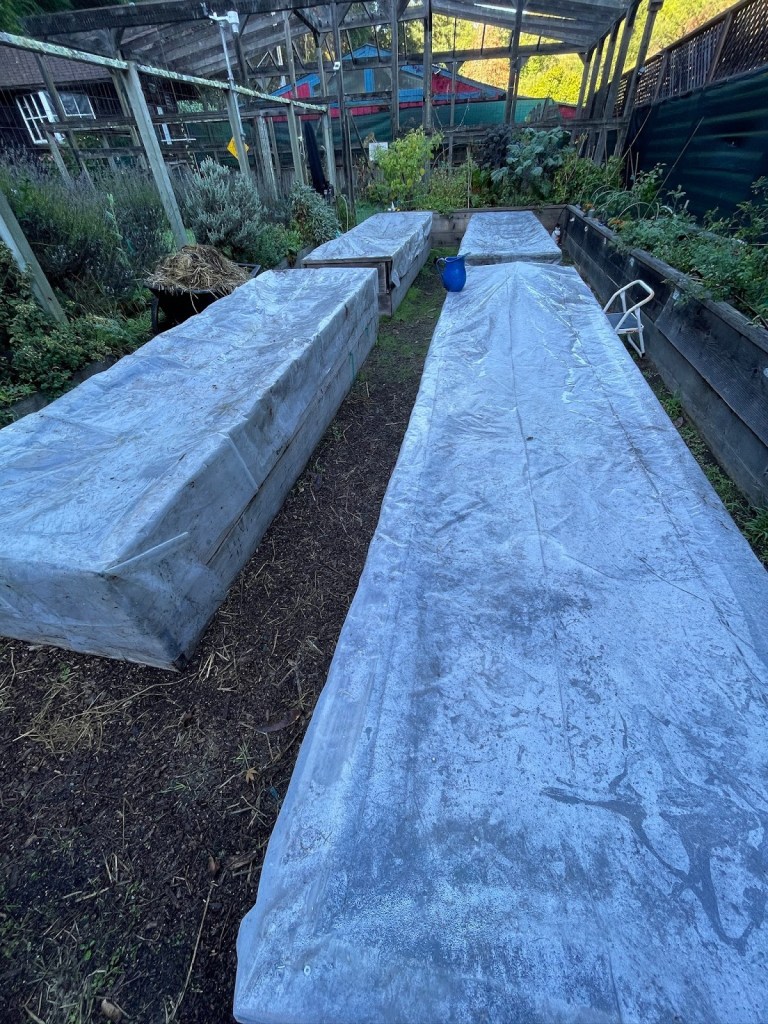
Solarization will take place for over two months. It began November 1.
First, solarize all the growing mediums and kill the insects within that first inch or so of topsoil, including all beetles and mites. Second, in the new year, before planting fava beans for nitrogen replacement, do several soil soaks of both Neem oil and Dr. Bronner’s soap. Both kill flea beetles and are generally good for the soil. In fact, next year, Dr. Bronner’s soap will have their own weekly IPM spray, not only for flea beetles, but also for aphids, which impacted my early starts this year.
It is important to know that Dr. Bronner’s kills aphids – disintegrates them, actually. If you just wash them off, they’ll return. This year, Dr. Bronner’s was primarily responsible for saving my early starts. I made the mistake of planting the feminized seeds too soon. By too soon, I mean I planted them before the predatory insects arrived. There was nothing to thwart the aphids in the middle of April. Just two weeks later, the insect situation was different, but by then, some of the damage had already been done. Even on our largest plant, we lost two potential branches early on because aphid damage weakened them. You cannot make up for that in your eventual harvest yield.
So, there are always lessons learned in every grow, no matter how successful. I love it when a grow teaches me new things. I will never plant cannabis here in April again. I probably won’t start many vegetables at that time of year, either. My plants need the help they receive from beneficial insects, and they don’t get those until May.
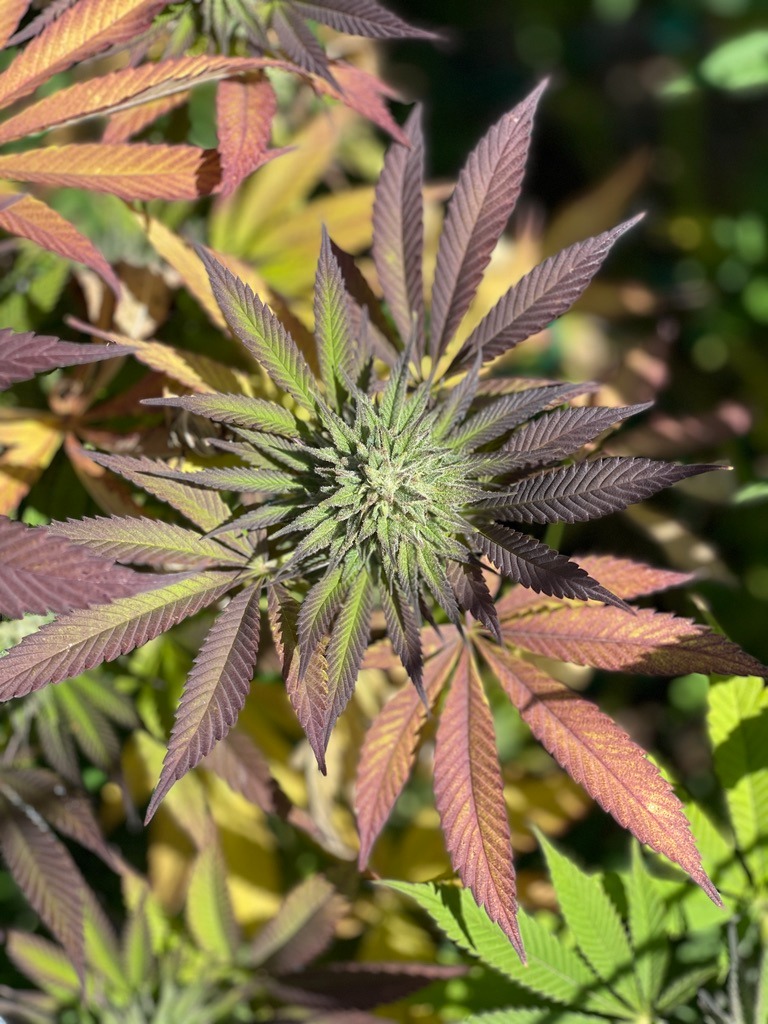
Rosé
Despite the problems that we had, and despite the persistent humidity, this year was an excellent grow in terms of quality. Over the last couple of weeks of sampling cultivars, there has not been a single disappointment. All of us who have sampled have been impressed. We have all been anxiously awaiting the test results.
Of special note to my eyes is Honey Tsu, a CBD plant with a 1.6:1 ratio of CBD to THC. This is literally a perfect sleep plant for someone with chronic pain. It has 6.15% THC, and 9.87% CBD. It’s heavy in myrcene, so it can handle both sleep and pain.
It’s a very good year when the lowest THC score (other than the CBD plant), is 18.27%. Many years, that would have been my best THC score. Since I stopped watering plants for the entire flowering period two years ago, my test scores have risen dramatically.
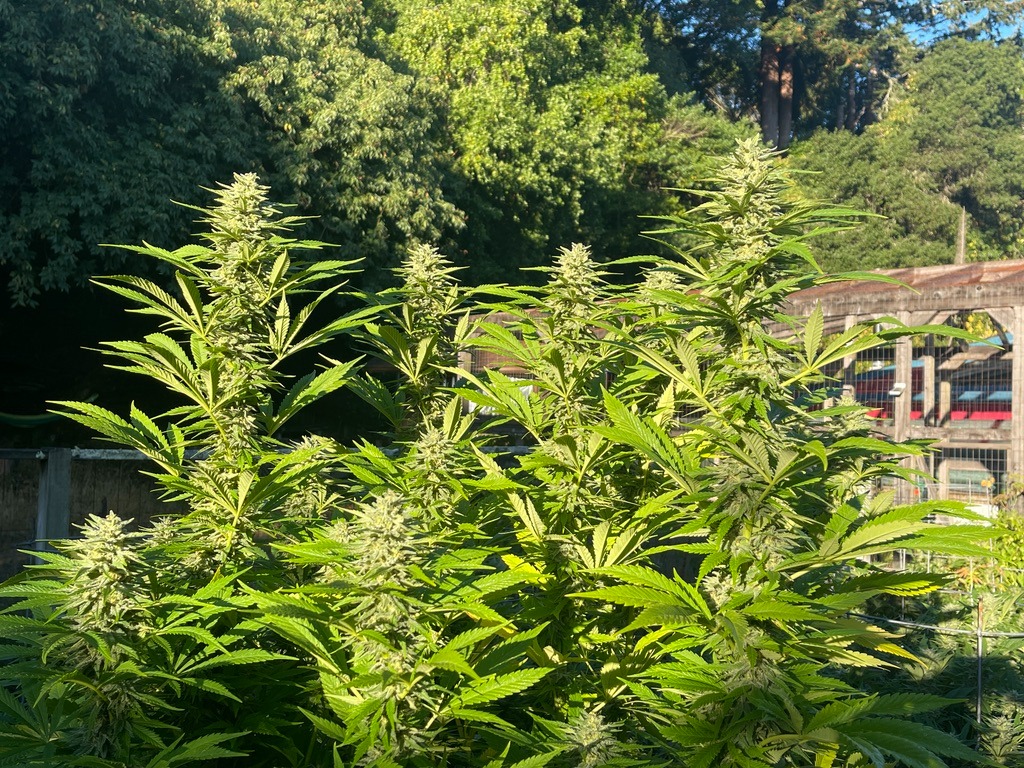
You can never fully predict what you’re going to grow. This year, THC percentages went up and terpene percentages were not as high as last year. This year, because of the constant high humidity, the insect infestation, and the late season rain, almost every plant was harvested early. In some cases, (both Fruitcakes, Royal Kush 13 and Rosé), plants were harvested two weeks early. As I have previously written, looking at the test scores, you can see that THC is not as impacted as terpenes are by an early harvest.
I will be studying these test results and am anxious to do an entirely dry grow next year. Over the winter, I will need to replace my cottage lights and add a lot of soil to the beds. It’s going to be an expensive winter.
Next year, I’ll grow less cannabis plants, and more vegetables, because in our current economy, it is advantageous to grow more of your own, whatever you grow. We will be growing some specific cannabis and a lot of CBG next year. Like every other crop, I know what I’m going to be growing next year while I’m still trimming this year’s flowers.
For each cultivar, I will endeavor to grow them with normal amounts of water for about seven weeks, or until I feel the tap root has reached the mycelium network that lies beneath. I’ll know that we’ve reached that milestone when the plant is about two feet tall. That means the tap root will be below the bottom of the growing medium and stretching into the mycelium under our beds. I will stop watering the cannabis and hemp, and only give them weekly compost tea. In addition to that, they’ll get some runoff moisture from foliar sprays, and some drippy foggy mornings. That’s all the water they’ll get. I’m going all-in on a dry grow.
In the meantime, I’m off to write my 4th novel. If you want more information about my fiction writing, look for the links in my previous blog, Endings Are Beginnings. I have written some very fun stories, folks. Check them out.
Your support is appreciated.
See you next year.

Hey Friends: If you’d like to support jeffreyhickeyblogs.com, please feel free to donate to PayPal @jeffreydhickey.
Or contact me directly with your idea (good seeds are always welcome–and if I grow them, I will get the flowers tested and share with you the results.
Disclaimer: The majority of the links in jeffreyhickeyblogs.com posts are affiliate program links. This means that (most of the time) when you purchase a product linked from my site, I receive a commission, which helps support the blog.

 Jeffrey Hickey Writes Blogs
Leave a comment