This is the second of these, where I respond to reader questions from over winter.
#1) I’m going to grow outdoors for the first time this year. Should I grow clones or seeds? I want to try seeds, but clones seem to be easy to find in my area and you have indicated that seeds are not always what they say they are. Where do you buy seeds?
For a first time grower, and maybe for the first two years of growing, I would grow mostly if not entirely clones. Essentially, that is what I did. It gives you a couple of years experience before trying seeds. Learn how to grow, learn what strains work best for you and yours. Clones are also great because they are what they claim to be. I’ve never grown a clone strain that wasn’t the cultivar described. On the other hand, I’ve grown too many seeds to count that were not what they were supposed to be. There is a significant quality control problem when buying seeds.
Having said that, there are downsides to clones. They don’t grow as large as seeds, they are less resistant to local pathogens and so are much more susceptible to disease. Given that I live in a pathogen rich part of the world, I am much more successful growing from seed than from clone. There is also no way I could dry farm clones, because they don’t have a tap root.
Where to buy seeds is a tricky question, and there are few that I recommend. One is based in Western New York: Her Seed Bank. There are lots of places that sell seeds, but they are dependent on the breeders. I have bought good seeds and bad seeds from reputable seed companies. It’s not their job to provide quality control for breeders. . I’ve been more successful buying from companies that sell just a few strains. Those sellers have relationships with the breeders, so what they sell tends to be as advertised. An example of that would be Royal Queen Seeds.
My best success with seeds has been when I have sourced seeds directly from other home growers.
So, it’s always a little bit hit-or-miss with seeds. Last year, I grew only one strain that wasn’t what it was supposed to be. I grew a Purple Punch (a sleepy time plant) that turned out to be an unknown sativa hybrid. Those were from seeds that I purchased. Other seeds I grew from last year were directly from local growers and breeders. All of the local seeds were what they were supposed to be.
So . . . if you want to grow seeds, volunteer to help some local growers and see if you can barter some seeds from them.
I realize that what I’ve written here and in the past about buying seeds is not encouraging, and I’m sorry for that. I am certain that there are many legitimate seed sellers who do their best to vet the products they offer, but it’s a nearly impossible task. Sellers depend on the information provided to them by breeders. Sellers cannot know for certain what they are selling, unless they make it themselves. An example is the CBD Trifecta, made and sold by Humboldt Seeds. This is high quality CBD medicine, and I’ve not had an issue with their quality control. Other smaller companies also might offer their own seedlines and I would trust those more than larger commercial seed sellers.
Another piece of advice for growing with seeds: Try to find seeds that were created in weather environments similar to your own. Resist the temptation to grow strains from geographic regions entirely different from yours. For example, if you live on the northwest coast of North America, you would be wise to not grow sativas that thrive near the equator. In other words, learn to grow the strains that will grow well outdoors in your area. Talk to other outdoor growers for local recommendations.
If you need to grow CBD or CBG, I would stick with Hemp companies. In my experience, they have been far better than cannabis companies at quality control. Also, they test their seeds, so you can be relatively certain of what kind of medicine you’re going to buy. Hemp is not as good as cannabis as far as terpenes, but hemp is rock solid on cannabinoids. If you need a CBD or CBG portion for your home dispensary, I would go large in hemp and then try cannabis CBD plants along the way. I have had great success with Oregon CBD. In the cannabis world,I know that Humboldt Seed Company makes the CBD Trifecta, consisting of Honey Tsu, Love Lucy, and Harle Spice. These are all legit medicinal plants. We use both Love Lucy and Honey Tsu all the time. I do not trust any large seed seller offering the following CBD strains: ACDC, Harlequin, Sour Tsunami, Ringo’s Gift, or Harle Tsu. The last three ACDC I’ve attempted to grow had little to no CBD, and were super high in THC. Clearly, not ACDC plants.
To review: Start with growing clones and then branch into local seeds after you’ve made some contacts. Try to grow seeds that are known to grow well in your area, or type of weather. Save growing exotic strains for when you are more experienced.
2). What kind of soil should I buy?
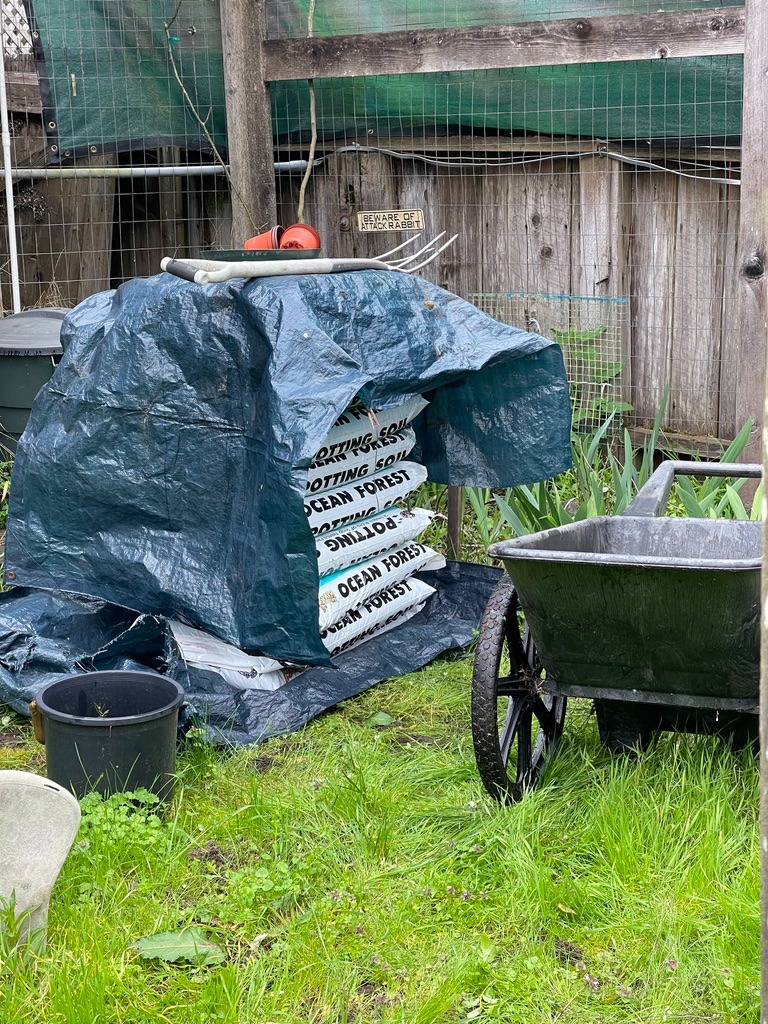
I buy Fox Farms Ocean Forest. I cannot speak about other bagged soils and what they have or do. This is the only one I’ve used in all my growing years, simply because it works well for me, and it matches with my preference for fertilizing with material from the ocean. I used to buy it online, but I try my hardest to make most of my growing product purchases in local stores. Online is convenient, but I like supporting local businesses in our industry; especially those who are willing to work with me. If I notice a good online price for soil, I’ll print a copy of the sale item and show it to my local store. If they can match it or better it, they get my business. They may not want to give me that much of a discount, but they likely will, in order to get the order. I’ll get the price I want, and not have to pay for shipping. Buying soil is not a casual expense. You can get ripped off if you don’t comparison shop.
For example, I recently bought 30 bags of Ocean Forest. I looked online for the best pricing. It varied wildly. I could have easily and unknowingly paid hundreds of dollars more had I not checked around. I finally found a store about 20 miles from me that was a full dollar less than the best online price I’d found. I didn’t have to take an online sale item with me to get the better price, because they already had the best price.
Now, I get it at the price that I need and that business gets a big order, along with a recommendation from me. Friedman’s Home Improvement in Petaluma, CA is where I got the best price.
I use sea based fertilizer for my soil. I follow what the native people did who inhabited my land for tens of thousands of years. I also prefer fish over scat based fertilizers. Historically speaking, there’s way too much urine in scat based fertilizers, and that is bad for your soil.
There is only one scat fertilizer that I would use again and that is horse scat. One of the best and cheapest ways to rebuild your soil and fertilize it is to contact a local horse ranch. They have scat everywhere. Ask if you can get a truckload of scat. We did and the ranch was happy to drive it over and dump it on our property. We then covered the scat with a tarp for one whole year. That was the year I built our first group of beds. The scat turned to compost during that year, and when I finally used it, I mixed a layer of scat with a layer of native soil, alternating each until the bed was full.
That was some serious soil, without urine. After a year under the tarp, everything harmful was dead. Nothing smelled funky, either. It cost nothing, and was the perfect starting soil for our garden. I would highly recommend this, if you’ve got the time and are a fan of both saving money and long game strategies. If you’re thinking of growing next year, get the horse manure under a tarp this year.
Need to emphasize something here: Do not try to grow using fresh horse manure. It needs to compost for a full year before it’s ready to grow healthy plants. It takes a full year to kill any and all live bacteria. Fresh manure could have live bacteria that you do not want in your soil. It’s the same reason that I never use live bat guano. I always dry it out completely. You never want live bacteria in your soil.
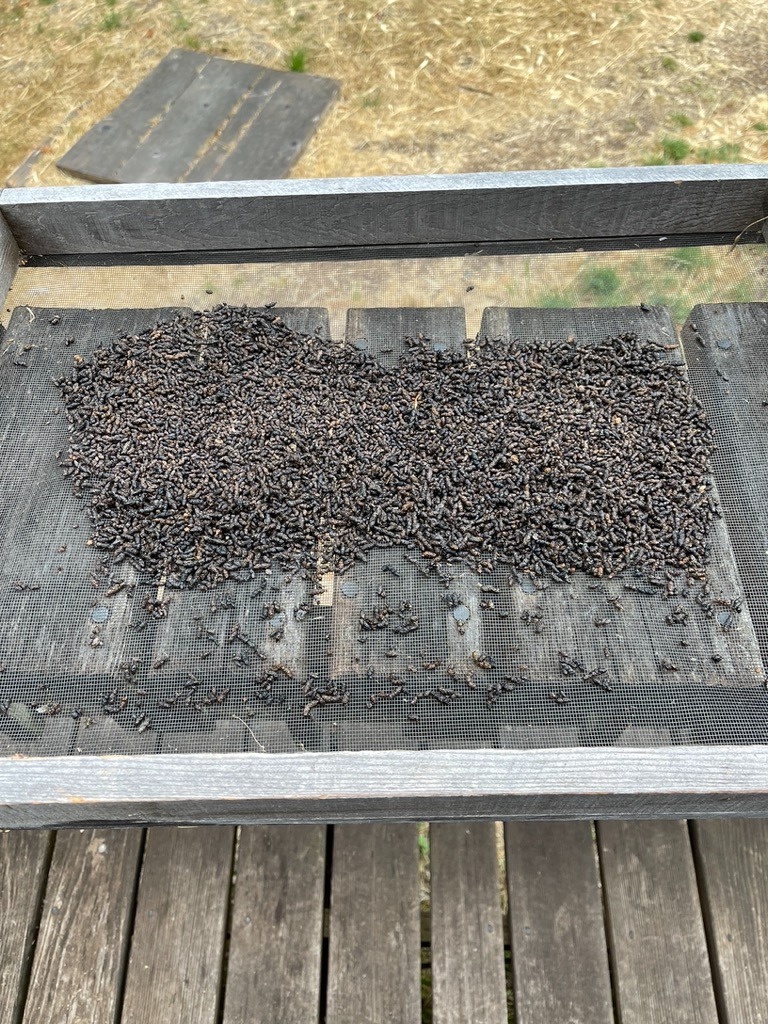
Addendum to this answer: To all those who write to me about specific products and what I think of them, please understand that I only use the products that I write about. I don’t know anything about products other than those I use, or have previously researched for the Home Grow Program.
Also, it is my understanding that feces based fertilizer does not have nearly the urine content that it used to, and if true, I’m glad. But I’m sticking with salmon, kelp and micronutrients from the Sea of Cortez.
3) I’m a young adult who wants to enjoy cannabis. So far, everything I’ve tried has made me super paranoid. What’s your advice for someone like me?
The only honest way I can advise you about cannabis is from my own experience, which might be different than yours. You should read my blog, Terpenes, which will give you more insight. In general, look for strains high in the terpene, Beta Carophyllene. It is the anti-anxiety, mood stabilizing terpene. Strains that are historically high in that terpene will be safe and free of paranoia.
Try to find cultivars high in Beta Carophyllene and low in Terpinoline, which I have noticed causes me anxiety. This change has helped everyone I know who previously complained about anxiety and paranoia from the plants I grew. No one is complaining about that now.
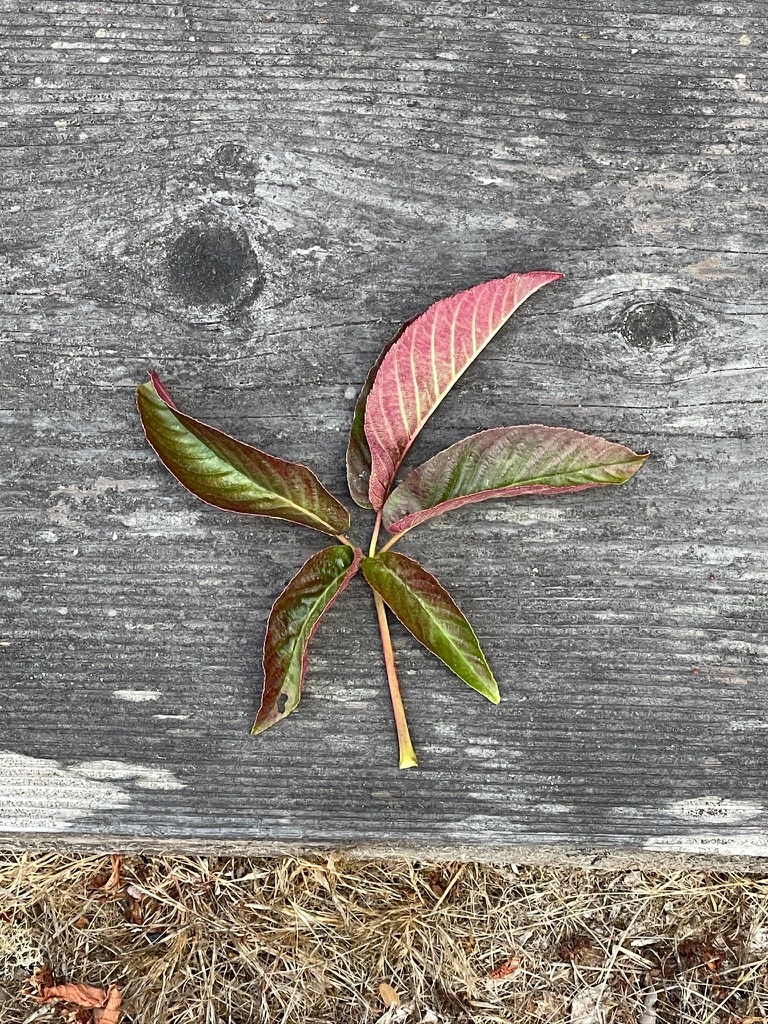
4) Have you dealt with the flea beetles from last year’s grow?
Time will tell. I recently finished solarizing over winter, and that is the first step in dealing with any soil-based pest. Based on visual inspection of each bed, I see no flea beetles currently, They were likely cooked to death during solarization. But I want to take other steps to assure I don’t have that problem this year.
I recently planted about 1,200 fava seeds. When they sprout, I’ll begin weekly foliar sprays for the plants and the soil. One spray will be Dr. Bronner’s soap, and one will be Neem oil. Dr. Bronner’s is for both flea beetles and aphids and the Neem is entirely for flea beetles. I want a protective coating on plants and a layer on the topsoil to greet any visitors who want to call that bed their home. They are not welcome.
BTW, Dr. Bronner’s soap disintegrates aphids. Just washing them off is useless. They come right back. Hopefully, not this year. And the same Dr. Bronner’s soap I use to kill aphids is used to mop my drying room floor and walls.
During the cannabis and vegetable growing season, Dr. Bronner”s has become one of my weekly foliar sprays. Hopefully, I’ll only have to use Neem until cannabis begins. We’ll see.
5) You’ve written about “finding your own dose” and I really like the sound of that, but the process of finding out still scares me. I’m afraid of overdosing, which has happened to me twice. I guess my question is . . . what is your advice on this?
Excellent question, and part of the personal journey for each cannabis user, what can be a fraught journey until it gets settled.
I have four doses that I use:
- A writing dose (this same dose is effective for working outside)
- An entertainment dose
- A sleep dose
- A CBD dose
My wife makes me pills for each of these doses. The pills are made from FECO and MCT oil. To find my dose, she had to make pills of various strengths until we found the ones that work for me. Now, she only makes my pills for my specific needs. It took a couple of years of trial and error to find the right doses, but I’ve got them now, so my dose is always the right dose.
I have overdosed numerous times, prior to knowing my dose, though not for many years now. As anyone who has overdosed knows, it’s no fun. But we have found that when it happens, a dose of anything high in CBD, but very low in THC, will bring that overdose down to a manageable roar. It takes less than an hour to work, and it definitely does work.
A common sense rule of thumb when taking edibles or ingestibles of any kind is to have something on hand that is high CBD, low THC, just in case. Having this as insurance allowed me to be bold when trying to understand my dose. BTW, you don’t want CBD that is also high in THC, because then you’d just be adding more THC to an overdose and hamper what the CBD is trying to do.
I don’t discuss percentages or milligrams. To tell you what I take would be irresponsible on my part. Your own dose is something you will have to discover on your own. Keep the CBD tincture handy.
I’m truly sorry to be vague when I’m usually quite specific. But my advice on this has to remain relatively vague. You have to fill in the blanks for yourself. It’s a liability issue.
Some folks, having overdosed several times, will only smoke flowers, despite the injury it can cause lungs.
Speaking personally, I’ve never been as satisfactorily high from smoke than I have from pills or tinctures. And my lungs have been grateful, too. My pills take me there.
6) What’s the best strain so far from your harvest last year?
I only recently got pills for everything, so I can’t completely assess each strain just yet. But I have noticed something interesting about the Cherry Punch 15 plant that I dry grew to just under 30% THC outdoors. Those pills last a long time. I don’t notice it being more powerful, just that it lasts longer. And it is truly a 50/50.
Eight of the 12 strains are high in Beta Carophyllene, so there is a serious lack of paranoia and that makes it a very special harvest.
So I’ll stick with Cherry Punch being my favorite, also because it’s probably the easiest strain I’ve ever grown. A beginner can grow a Cherry Punch and dazzle everyone they know.
7) What is the ideal water pH for cannabis?
6.6 to 6.7 is the best water pH for cannabis. In my experience, that’s a good pH for tomatoes, tomatillos, shishito peppers and many other things that we grow in our garden.
8) How much is a good yield per plant?
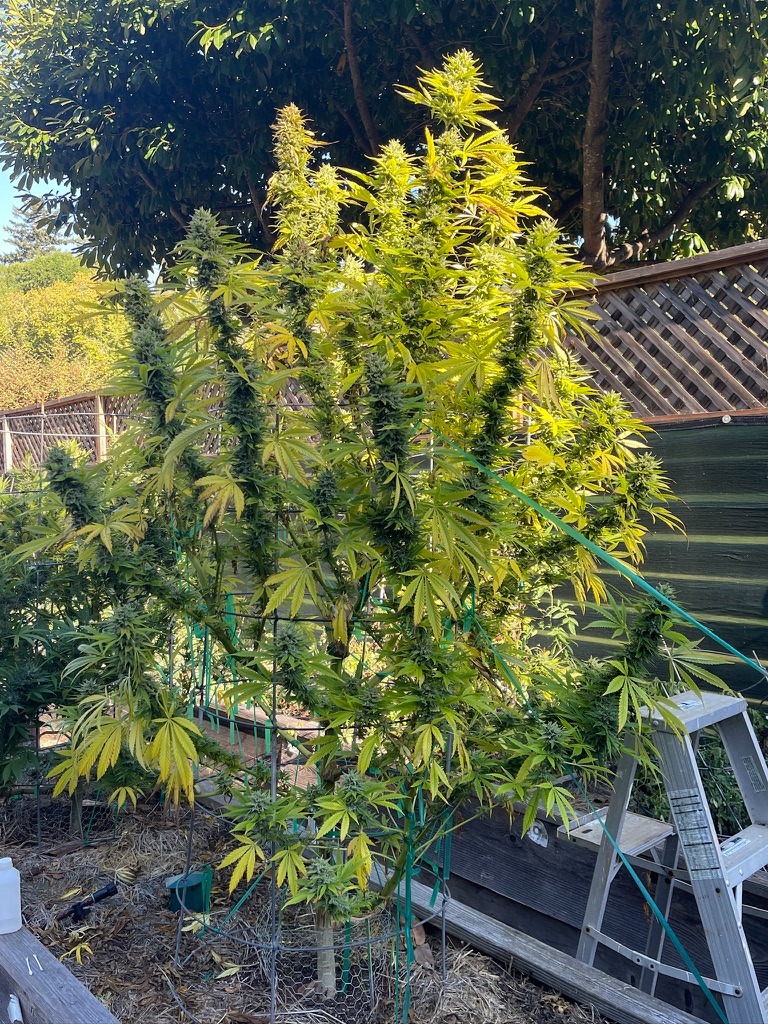
This depends on what cultivars you are growing, the year you grow them, and the quality of the seed you start with. In my raised beds, I’ve grown individual plants that yielded as much at 2.76 pounds, or as little as 98 grams. Outdoors, my goal is always a pound per plant, but many cultivars are not designed to produce that much. And some years, I can’t get my plants to grow that large. There are too many factors that I cannot control, like the amount of sun they get per day. One year, just after I planted my sprouts, they went 22 straight days without seeing the sun. All but two plants tried to flower early. That was a difficult grow.
So, yield is variable, depending on conditions. As discussed elsewhere, to maximize our yield, we choose training over topping. Indoors, we would choose topping, because the environment is controlled. Outdoors, we choose training, because topping would cause crowding and that easily leads to pathogenic issues. We train to open our plants up to more sun, which allows for inner growth to grow more like outer growth.
In my opinion, the key is to grow a healthy plant to its fullest potential, no matter the seed or yield.
But a word of caution–give your plants enough space to grow as much as they want. One of the most common observations and criticisms I’ve made about other grows I’ve seen is how close together the plants are. I understand they are trying to grow more with less space, but when cannabis is crowded, nothing grows well, because the roots have conflicts with other roots. Give your ladies room to grow. You might surprise yourself and grow a larger than expected plant. It has happened to me.
Survive and vote.
Hey Friends: If you’d like to support jeffreyhickeyblogs.com, please feel free to donate to PayPal @jeffreydhickey.
Or contact me directly with your idea (good seeds are always welcome–and if I grow them, I will get the flowers tested and share with you the results.
Disclaimer: The majority of the links in jeffreyhickeyblogs.com posts are affiliate program links. This means that (most of the time) when you purchase a product linked from my site, I receive a commission, which helps support the blog.
 Jeffrey Hickey Writes Blogs
Leave a comment