
One day several years ago, Bee and I were pruning a Harlequin plant together. While we pruned, Bee said, “I’m getting hungry for pesto.”
At that moment, I suddenly agreed, “That sounds great.”
It was around noonish, so we were probably a little hungry, but that isn’t why we both wanted pesto to eat. We could smell the terpene myrcene on our vegetative Harlequin leaves, and it reminded us of basil, in which myrcene plays a role as one of that plant’s unique terpenes.

Basil
In cannabis, we talk a lot about terpenes. Every standard cannabis test includes a breakdown of all the terpenes present in a plant, and the total terpene percentage. A total of 1.5% terpenes in a plant is considered good or normal. Two percent is considered excellent. Three percent is off the charts. Most cannabis plants fall between 1.5% and two percent. Over the years, mine have mostly fallen into this range, but the last two years, I’ve grown five plants well over three percent, with a top terpene percentage of 3.975%. It is my opinion that this jump is due to my complete removal of watering during the entire flowering phase.
I believe that a more complete understanding of terpenes is the future of cannabis.

Terpenes are biological compounds that grow on many (but not all) plants. On cannabis, small amounts of terpenes exist during the vegetative phase, but terpenes develop fully on the trichomes during flowering. Hence, the odor.
Terpenes are entirely responsible for the smell and taste of cannabis.
Terpenes are at their most potent just before harvest, when the trichomes are full and milky white. They begin losing potency, just like everything else, once the trichomes turn amber.
Terpenes are the third component in the “Entourage Effect,” which is the accumulated effect of THC, Cannabinoids and Terpenes, accounting for the way a person feels when they are on cannabis.
Terpenes are the reason my wife and I choose to make FECO (Full Extract Cannabis Oil) as opposed to other extraction methods that cook too warm to preserve the terpenes. It makes no sense to me to spend six months carefully growing plants, only to destroy the terpenes.
The precise number of terpenes in cannabis is not known, but it’s certainly in the hundreds. There is a general consensus that there are around 50 terpenes present in most cannabis. In all of nature, there are known to be over 200,000 terpenes, so this world is vast and varied.
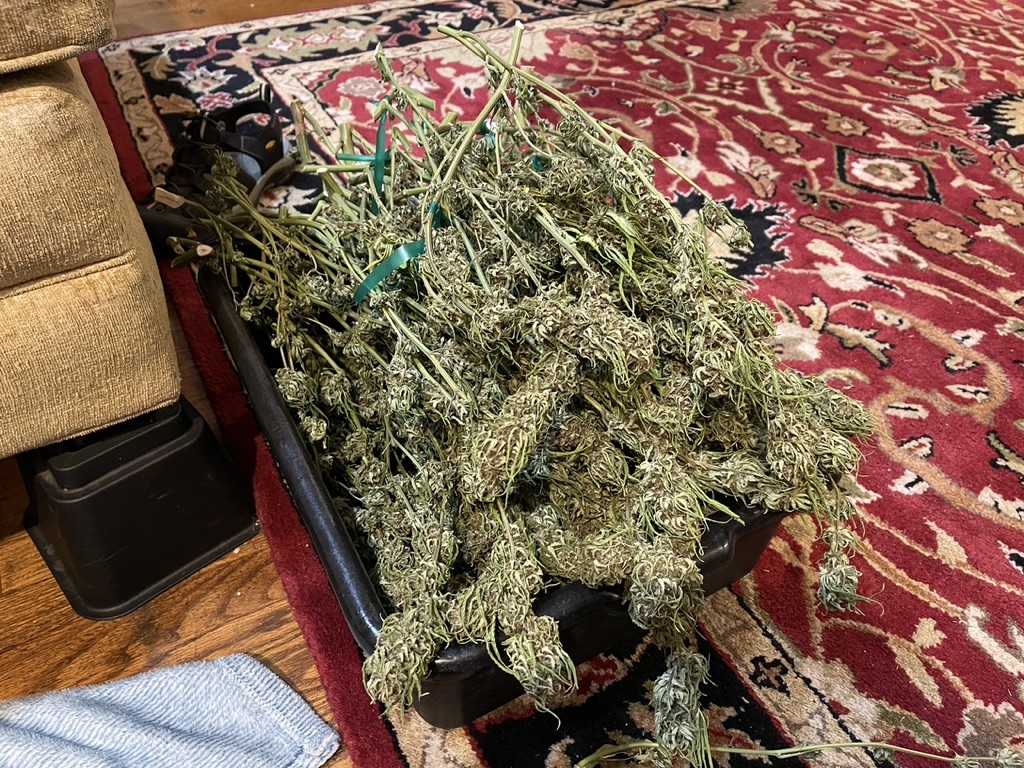
Over the past ten years, I’ve tested almost every plant that I’ve grown. So I’ve gotten to know terpenes as something much more than what you smell and taste. I am beginning to understand how these terpenes work as the vital third part of the Entourage Effect. Without tangible test results to compare against my observational and participatory data, I’d be just another stoner taking educated guesses.
Let me give an example. One of the most common criticisms of cannabis is that it makes people feel anxious and/or paranoid. We have all been there. I associate this largely with that clown car feeling I get from most sativas. That “mind racing,” “can’t turn it off” cycle of madness and mayhem.
Of course, some of you thrive on that feeling and I get that. In small doses, it gives me energy. For others, this might also be a function of getting older, because we crave things that don’t make our anxiety rise.
Anxiety inducement is not in all cannabis, though, so there must be a prevalence of a terpene or terpenes that hasten, or even cause the anxiety. I looked at the terpene profile of the strains I’d grown that made me feel paranoid, and there was a pretty common terpene at or near the top of the list: Terpinolene. This is a powerful terpene with a wide range of therapeutic possibilities. It is an antioxidant, anti-inflammatory, antimicrobial and antifungal terpene. Depending on your body chemistry, it can produce effects that vary from mildly uplifting – euphoria-producing, even – to calming and relaxing. It’s known in nature as a “shapeshifter” terpene. But, generally, in cannabis there’s lots of energy in Terpinolene, and it is common to sativa cultivars and sativa hybrids. It also usually doesn’t show up in large percentages, which might help mitigate some of the associated anxiety. But it is potent. When Terpinolene has been the predominant terpene in plants I’ve tried, I have experienced anxiety.
Another plant I grew – West Marin Mystery, a cultivar that is not commercially available – had Terpinolene as the second strongest terpene. Beta-Caryophyllene was the most prominent, known for its potential anti-inflammatory and mood-stabilizing effects, the plant equivalent to a lot of fresh ground pepper.
When I ingested that plant, I got tons of energy, but without the paranoia or anxiety. This was the effect on me, and does not mean others would have the same response, but this was clearly a sativa dominant hybrid that I could take for creative purposes. I felt both stable in my mind, and also very inspired.
I acknowledge that it may only be my unique chemistry that reacted in this way. But subsequent to this, many others who have sampled this plant independent from me, have come to the same conclusion. Energy, but no anxiety.
When I look at the test results and the projected Entourage Effect, the overall prediction is one of both energy and comfort. To date, this has tracked as accurate for every person I know that has tried this plant.
Could it just be us? Of course it could. But this has been a diverse group of people, in a range of ages, who don’t all know each other, and their reactions to the plant have come without prompting or pre-conditioning.
So, for those who don’t want to be paranoid, terpenes are worth checking out. Try a strain where the highest terpene is Beta Caryophyllene, or Limonene. See how you react. For the record, there are plenty of sativa hybrids without Terpinolene.
Another common thing that people use cannabis for is to stop nausea. There’s more than one way to address that via cannabis. CBD is one way and will handle most nausea. But for something like Chemo, what I’ve seen work best is Limonene, another pretty common terpene found in many varieties of cannabis, both upbeat and sleepy.
I could go on listing terpenes and what we’ve seen them do for us, but the point of this blog is to pique your interest, and get you learning about how terpenes affect you. Because your body chemistry is different from mine, your experience is liable to not be the same.
The future of this plant is the understanding and practical application of the terpenes. I have believed this since early in my growing years, and the evidence I’ve seen has only reinforced this belief. Test results literally provide the science.
Without test results, I cannot trust anyone who says, “This cultivar will always give you the same high.” I understand they are describing a particular phenotype, probably a clone, and perhaps for a majority of people, that statement might apply.
But humans have complex bio-chemistries. Not everyone’s chemistry is the same, and it only needs to be slightly, imperceptibly different, to have a huge contrast in how they respond to any particular cultivar.
That said, in my experience, the more I know about terpenes, the better I understand how to use each and every plant that I grow. It’s not the THC, or the Cannabinoids that tip the scales one way or another on the Entourage Effect. It’s the terpenes.
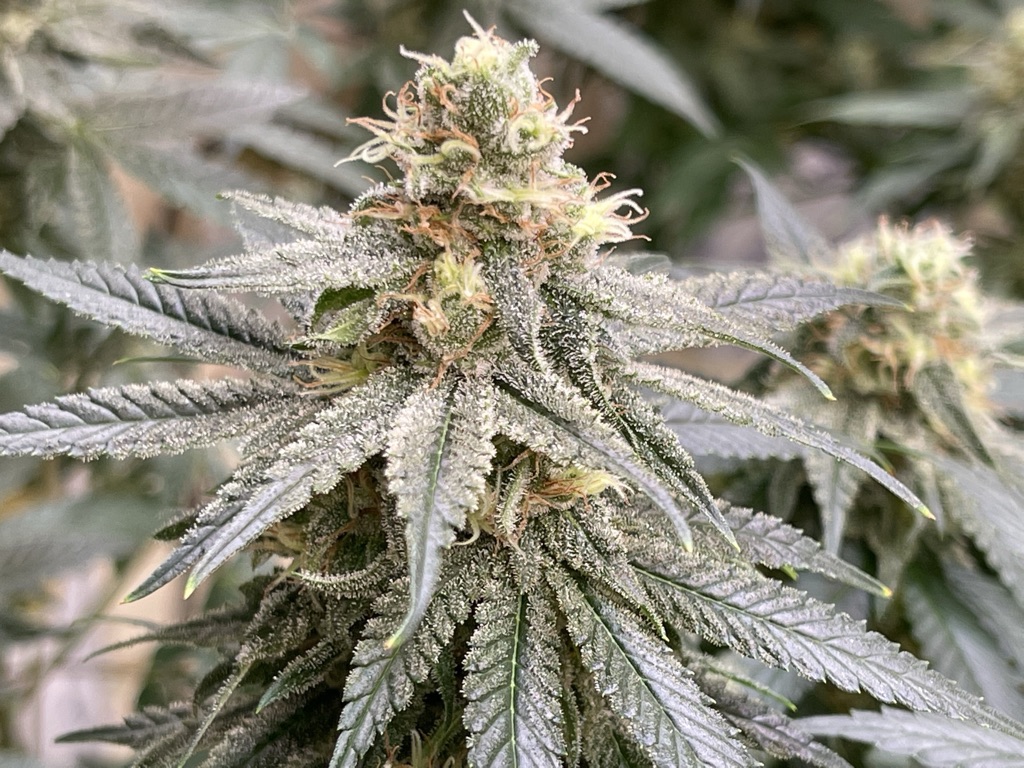
To review: The smell, taste and many (not all) medical effects of the plant are all based on the terpenes. So, it only makes sense to understand the terpenes inside each and every plant that you grow will give you much greater knowledge in how and when to best utilize the medicine.
I did a deep dive into my test results one year, to see if there were strains in our closet that we were using incorrectly. Specifically, we were getting low in sleep meds, so I wanted to see if there were some strains that we weren’t using much, and why. Perhaps there was a hidden sleep strain in there.
Turns out, the cultivar, Rainbow Kush, can go in either direction. It can be an uplifting and euphoric 50/50 with strong analgesic properties. It can also be a body relaxing sleep plant. It depends on the pheno. We have grown seven Rainbow Kush. Five were uplifting, and two were sedating. We only discovered both of the sedating plants by looking at the test scores, and recognizing that no one in our family was using this particular plant for energy. Another thing, don’t assume that just because a plant grows very large, that she is more of a sativa hybrid, or 50/50. The largest plant we ever grew was Rainbow Kush in bed 18, a 2.76 pound sleep plant. I kept trying that plant in the evening, and could not make it through a movie. The same thing happened with the Rainbow Kush we grew last year. It is now a wonderful sleep plant. Very gentle and soothing – not a hint of euphoria.

October 19, 2020, harvest day for RK18, a 2.76 pound sleep plant.
Let’s stay with Rainbow Kush for a moment, but this time RK14. This is my favorite Rainbow Kush that I’ve ever grown. It’s uplifting and mildly euphoric with a very relaxing bottom end. But she has one more gift specifically for me. A couple of years ago, I hurt a spot on my back, the upper left side. It was muscular, and it prohibited me from reaching with my left arm. I tried CBD on it without much effect. Then I decided to simply get baked and hopefully forget about it, or just not care as much. About an hour after taking a Rainbow Kush 14 pill, my back pain was gone. I could reach again with my left arm. I was surprised by the relief and not sure if I could trust it. After about six hours, the pain returned as the pill waned and I took another. Within an hour, the pain was once again gone. Subsequent to this, I’ve hurt other spots on my back and now, I just take the RK14 pill and it goes away.

RK14, a THC plant with terpene based analgesic pain relieving ability.
I’ve studied the test results on RK14 and what I’m seeing is that my pain is being handled by the Pinenes, both A Pinene and B Pinene. I think the specific muscle pain in my upper left side is being handled by A Pinene. The Pinenes are two of the top three terpenes on that plant. Both have strong analgesic properties. The other is myrcene, which also has anti-inflammatory properties.
This was and is a unique experience, because the pain relief comes from a THC plant, with less than 1% CBD. This is not THC or CBD that brought me relief. It’s clearly the terpenes.
And yes, terpenes are a cannabis enhancer. I’ve had both pesto and mango salsa that definitely got me higher than before I ate.
A friend of mine is currently undergoing chemotherapy, and nothing seemed to stop the vomiting until he got some cannabis high in Limonene. The plant in question has a full one percent limonene and all it took was one hit for the nausea to stop. Again, this is not THC or the Cannabinoids. It’s a terpene.
Terpene knowledge goes hand-in-hand with testing plants. Once you have test results, and you know what the terpenes will do, you can become much more predictive with how a given cultivar will make you react. This has nothing to do with cannabinoids or THC strength.
It is important to add this point: The effects of the terpenes I’m writing about here are from plants on which the terpenes grew naturally. The amounts of terpenes generally found on cannabis or hemp plants does not pose a threat in terms of bad effects.
Bad potential effects from terpenes can come from high concentrations of them, usually through manufacturing. Terpenes are serious compounds and should be treated with caution. They are not casual additives.
However, our own experience has actually shown that terpenes can occasionally grow on a plant in an unusually high concentration. We grew a Ringo’s Gift (a CBD plant) one year that had a myrcene percentage of five percent. It actually grew that way. At that level, myrcene is a sedative. We have not seen a result like that again.
But it underscores the obvious: Without test results, you cannot possibly know what you’ve just grown.
Test results are imperative in understanding how to best utilize your plant’s terpenes. Without them, all you can do is guess. If you are trying to use cannabis as medicine, the only way that can be achieved is by testing what you’ve grown and learning what those test results mean. It’s not complicated.
And once you start learning and making the connections, your knowledge of your plant and your craft will dramatically grow.
THC and the Cannabinoids are fantastic partners in the Entourage Effect. In particular, CBG has incredible medical potential. But what my research is showing me is that the most interesting and varied factors in cannabis, on a plant-by-plant basis, are the terpenes. Most cannabis plants have little CBG, but they all have 1 to 4 percent terpenes. When people speak of this plant as something magical, it is my opinion that terpenes are where the magic lies.

Hey Friends: If you’d like to support jeffreyhickeyblogs.com, please feel free to donate to PayPal @jeffreydhickey.
Or contact me directly with your idea (good seeds are always welcome–and if I grow them, I will get the flowers tested and share with you the results.
Disclaimer: The majority of the links in jeffreyhickeyblogs.com posts are affiliate program links. This means that (most of the time) when you purchase a product linked from my site, I receive a commission.

 Jeffrey Hickey Writes Blogs
Leave a comment