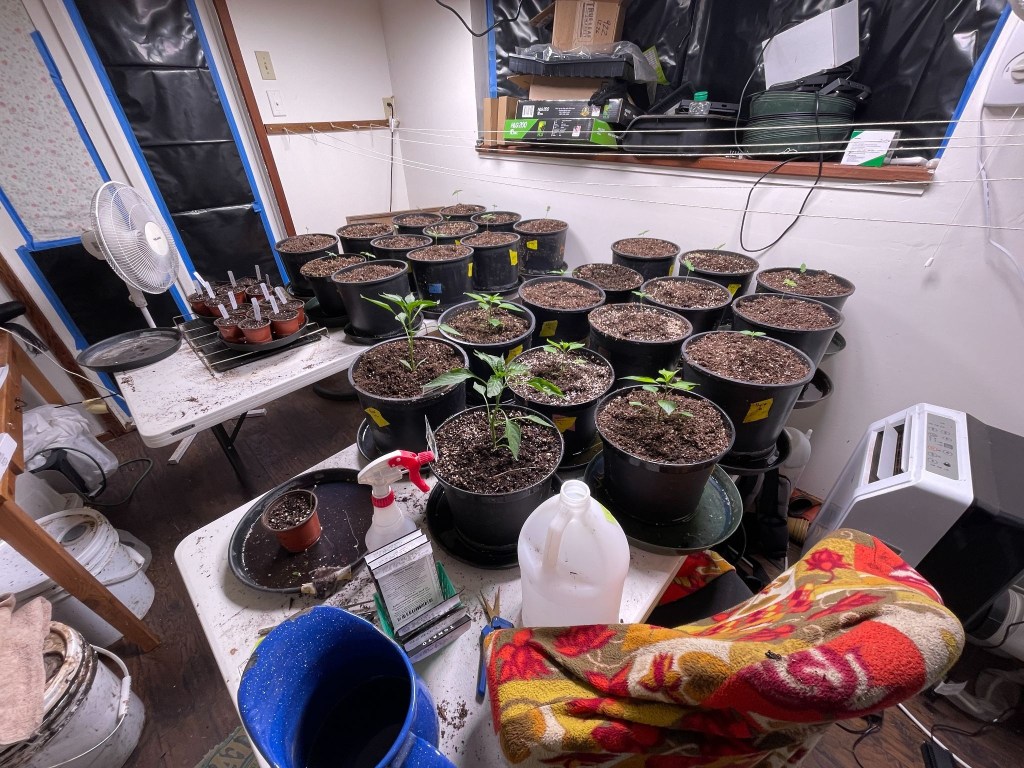
I’m pleased with my new cottage lights. I don’t need anything too fancy. I got the HLG Rspec 200, two of them. I just needed something to get plants started and growing. The first thing I noticed is how little heat comes off these lights. The AC isn’t going to have to work nearly as hard. Lights are hooked up to the timer and away we go. I’m tempted to grow a plant indoors over winter using these lights. I’ll be thinking about that this season while everything grows outside.
I used old tube lights prior to this purchase. Used them for ten years, which is a lot longer than I was told they would last. But I only used them for six weeks out of every year. These are my first LED’s. Plants start to go outside into beds on May 6, starting with all the feminized plants. Veggies will be next, followed by the regular-seed cannabis a few days later (providing they are sexed). Last year, we were reminded that no plants, cannabis or vegetables, should go outside until May around these parts. No matter how beautiful the weather is in April, it’s too early. The predatory insects have not yet arrived to help protect the plants, and everything needs heat. So the veggies remain in the cottage, too. We’ve got various pepper plants – shishitos, and poblanos – along with a bunch of tomato starts, celery, tomatillos, peas, and cucumbers.
A reminder: I take feminized plants outside to beds at five weeks, not six. I’ve had several feminized plants try to flower by six weeks, or try to flower as soon as they were transplanted at six weeks. No such problems when I plant them at five weeks. Feminized plants do not like being stressed. You have to be very careful with them, or they’ll either flower early or go hermaphrodite, which must be removed immediately. We don’t like putting too much stress on feminized plants until they’ve gotten comfortable in one of our beds. Despite the somewhat tricky timing of feminized plants, resist the temptation to plant feminized before five weeks. The roots are not bound enough yet, and the soil is liable to crumble during the transplant.
To the surprise of no one, I’m already planning next year’s grow. It will be all feminized, which means two things: I’ll only have to use one table in the cottage for growing cannabis, and no sexing. The other table can be dedicated to vegetables. As prices continue going up for food, growing our own is not just a luxury. It’s becoming imperative.
In my evolution to improve, I made a small but important decision concerning seeds. Instead of starting them in wet tissue on a warm mat, I bypassed this method and just put seeds into soil inside containers. I started the regular seeds in small cups and I started the feminized seeds in 3-gallon pots. I put a small piece of tissue over where the seed is and I keep that tissue soaked in my peroxide solution until I start seeing sprouts.
I’ll admit, it was nerve wracking on day three, when absolutely no sprouts had emerged. I couldn’t see anything popping up from the soil. With this method, I didn’t know if any of the 28 seeds had sprouted.
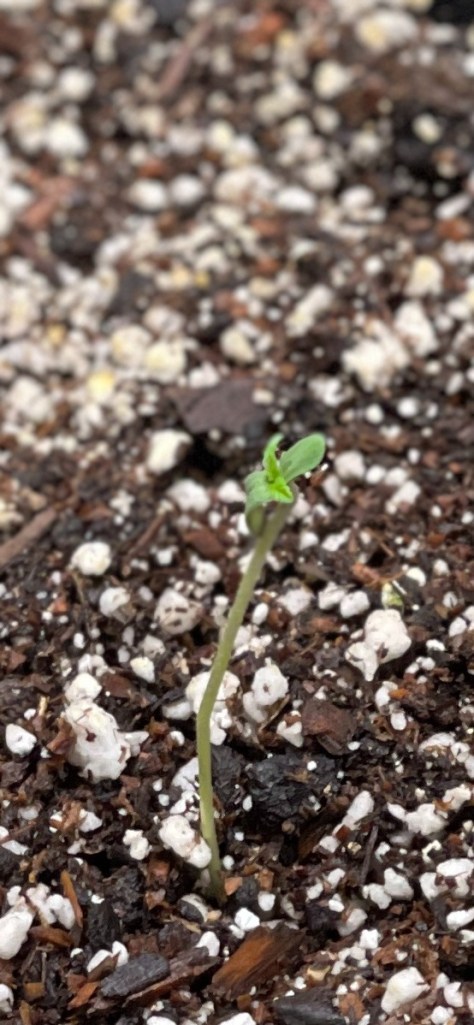
They literally all emerged on day four. It took approximately 100 hours for sprouts to poke through the soil. All twenty-eight seeds appear to have sprouted, and I don’t think I’ll use tissue alone to start seeds again.
The main reason for this change is my desire to reduce transplanting. Ideally, I only want to transplant one time. The less transplanting, the less opportunity for damaging roots. Some stress is beneficial for plants, but not a lot. Roots are not meant to be plungers when being placed in soil. They need to be treated gently, and that’s a challenge to do during the transplanting process.
So, I’m eliminating the first transplant completely. I wet the soil first, then I put the seed in, crown on top. I submerge barely beneath the topsoil. I spray with my peroxide water and cover with a tissue. The tissue is to keep any bacteria from touching the seed. Once it sprouts, I remove the tissue, but keep spraying with the solution. Keep the reservoirs full, so there is always moisture in each pot.
Away we go.
There is one change to the lineup. I’ll grow two White CBG, not three. I will grow as much CBG as I need every year. But instead of a third CBG, I’m growing a feminized OG Kush that was sent to me as thanks for my blog. I truly appreciate this gift. It’s the first one that I’ve received from a reader. It comes from Royal Seeds, so I trust that it will be what I’m expecting. I’ve never grown this cultivar before, and I’m excited to try it.
Both of our bat houses are quickly filling. I can tell that by the amount of scat captured below the houses. None of this guano will be used this year. I’ve got two years worth that has been dried and is ready. This year’s guano can dry the entire summer and be ready for next year.
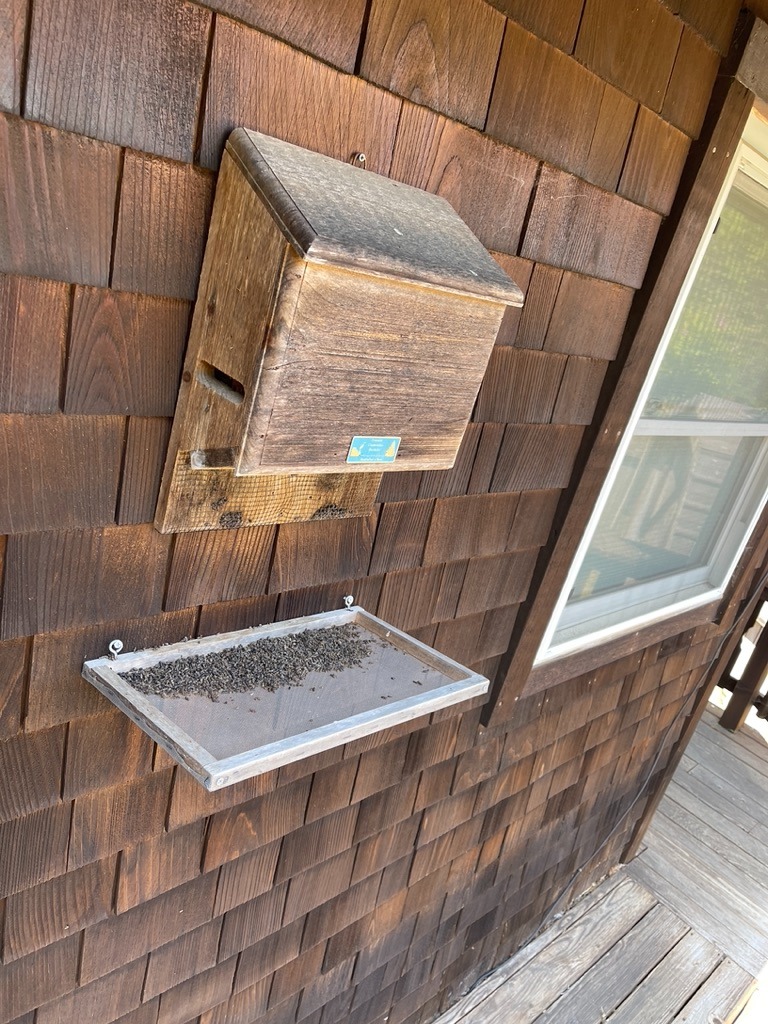
A reminder: Never use live guano, because it’s full of bacteria. Dry it first before using.
Six days after starting seeds, I started two more, a WCBG and a Cherry Punch. Back ups are needed because I don’t like the way two of my sprouts are looking. They might be fine, but I’m starting two more for insurance. If we end up with an extra plant, I’m inclined to dig a hole and just plant it next to the lavender. I already know the deer won’t bother it, and I’m interested in what native soil could do for a plant. We’ll see.
Also had a harsh reminder to clean the filters on both my Air Conditioner and the dehumidifier in the cottage. I noticed the AC was laboring yesterday and it was because the filter hadn’t been cleaned since last year. Oops. I decided to clean the dehumidifier at the same time and that was a good choice, since it was filthy. Both of them were not ready for this year’s grow. Automation still requires basic maintenance. And now, the cottage is humming, using less electricity than I’ve ever used, due to the change in lights.
One thing I had to adjust, however, were the lights. I had them a little too dim and the starts were showing some legginess. Once I adjusted the brightness, and especially the height of the lights relative to the plants, everything began to grow as normal. Live and learn. I’m an experienced outdoor grower, but I’m just now learning about LED lights. I will admit that it’s a rush having new lights.
While waiting for sexing, Karen and I decided on a little closet project. We decided to transition our dispensary of old cultivars that no one is going to smoke anymore. Specifically, we pooled all of our old sleepy time flowers and popcorn into one huge batch of FECO. This included many strains, some commercially available, some only local. But what a potpourri! It includes Ultimate Purple, Bubba God, Blacklight, Oak Kush, Grandpa George (one of my all time favorite strain names) and Hindu Kush. Karen will make pills and tinctures from this called Ultimate Sleep Blend.
This will effectively make the old medicine usable and it also frees up some closet space for flowers in the future. As anyone who has seen my flower closet will attest, it’s full. We’ve got some large cultivars to grow this year, so it’s time to free up some space and keep everything fresh. It’s also time for Karen to make a killer sleep pill from all that old, CBN-rich weed.
For new growers, know that as cannabis ages in your closet, it develops more CBN. Older weed is not great for smoking, but it is still valid medicine. In particular, sleep strains only grow sleepier over time.
We’ll also pull some old 50/50’s and sativa hybrids for a more upbeat combination pill. I see this as primarily being for me to microdose for when I’m writing.
So, we’re making a lot of old flowers and plants become useful again, while creating closet space for the flowers yet to come. After ten years of growing, this is overdue.
April 13
This morning I made the last transplants into 3-gallon pots. There are 21 total plants in the cottage, not counting the vegetables that are getting started. The complete roster includes:
8 Rośe
5 Love Lucy
2 White CBG
2 Banana Papaya
2 Cherry Punch
1 Queens Special One
1 OG Kush
I also had to start two more WCBG seeds because two didn’t make it. One is doing very well, but the other two opened and did not survive. One of the two extras is sprouting, so I’m just going to go with two for now. I’ll be growing WCBG every year from now on, and perhaps even in the cottage over the winter, so two plants are enough. Two plants are what I grew the last time I grew CBG and this should give us more than a pound to work with come fall.
From subscribers and others, I’m hearing about many growers with hard financial strain. I know growers who have lost their farms. Cannabis and hemp cultivation is not cheap, even when you work mindfully. In the blogs I write, I have shared cost cutting tips on some of the most expensive aspects of growing. And there are other ways to be mindful about where money is going.
Over this past winter and into spring, while everything else has been going on, I’ve been trying to save money through behavioral changes in my home. We have decommissioned our hot tub. It was Karen’s 40th birthday present, and we’ll never use it again. Her autoimmune illnesses prevent her from soaking in a relatively clean, warm, petri dish, and I have my own issues that no longer benefit from it either. No matter how clean you think it is, having multiple people use a hot tub creates a petri dish; especially for anyone with autoimmune or lung issues. There are many reasons for never using a hot tub again that I won’t be going into here, but the benefit that caught us both off guard is that it is saving us about $220 a month in electricity. That’s how much it cost, just to keep it on when no one was using it.
That’s not chump change. It’s like finding money on the ground. Or in the water.
So it got me thinking, what else could I do to save us money? Electricity seems to be the key; especially in California. So while Karen was gone visiting her mother, for a month, I took this experiment a step further. I basically stopped using the electrical lights in our home, using motion sensor lights most of the time in the dark, and having curtains open during the day. This cut another $200 from our electric bill.
So, we learned how to save about $400 a month from these two changes. That has made a profound difference for us as retired folks, as we try to survive the stress that our horrific failing economy is causing us. It’s cool to find ways to save money simply by behavior modification.
April 14
For the second time in my career, while snipping the cotyledons from a sprout, I cut off the head of the plant. Not proud to admit this, but full disclosure demands it. I’d just successfully snipped cotyledons from five plants in a row and was obviously a little careless. Glad there’s so many Rośe sprouts.
April 20
I used to start seeds on 4/20. Now, I’m starting them three weeks earlier and that has made a huge difference in my grow. In conjunction with some supplemental outdoor lighting, I no longer have any issues with early flowering plants.
After several sunny prep days working in the beds, today was rainy. More soil was purchased and poured. A bed map is being created to show what will go into each bed. In addition to cannabis starts, the cottage is now filling up with vegetables that need to be kept warm until they get planted outside next month. Also discovered, despite the rain being only minutes from starting, that it’s now light enough in my part of the world to walk to the cottage without a flashlight, before 6:00 am. The growing season is nigh.
Got a great tip about Regalia and Stargus from one of the scientists who invented those two products. His tip was this: Before you transplant your plants into your outside beds, dig the hole you’re going to put them in and then create a foliar spray combining Regalia and Stargus. Soak the hole with the spray. Drench it with Regalia and Stargus. The thought here is that when you transplant, one of the first things your plants will absorb, on a root level, will be Regalia and Stargus. This is different from spraying it on the plants. This method gets the product inside the plants at a very early stage. This should add to the plant’s own ability to ward off pathogens. It makes so much sense, I’m definitely doing it this year.
Here is a quick shout out to My Four Sons, the makers of my battery powered foliar sprayer. I’ve been using this sprayer for many years, and when I encountered a problem with my unit this year, they were quick and accurate with help. It was a battery problem, diagnosed over the phone, and a new battery was heading my way by the end of day. I’ve ordered two parts from them over the years, and they’ve always arrived faster than scheduled. But this phone call was especially impressive. The problem was diagnosed in minutes and the solution was on the way. I’m about to do my first foliar spray of the year in my beds, thanks to My Four Sons. Tip of the hat, folks.
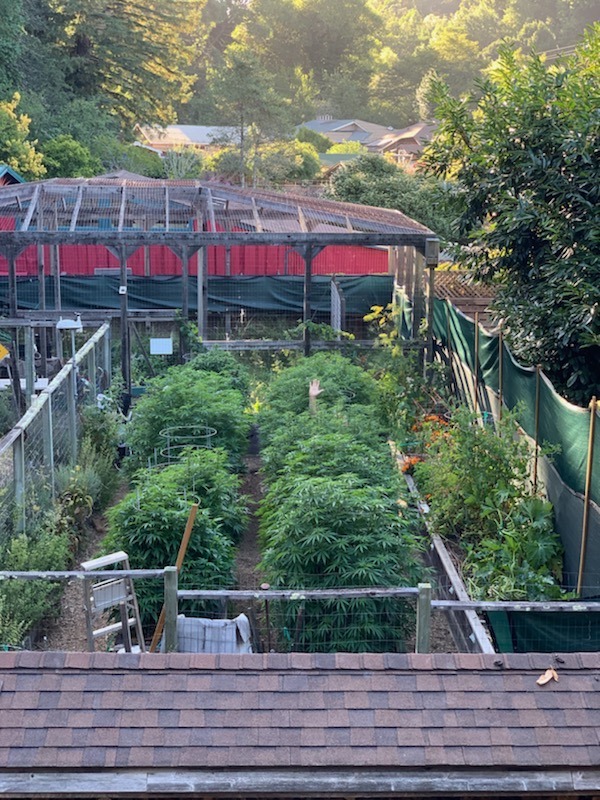
Can you imagine trying to do foliar sprays every day on a crop this size, with a one gallon manual pump foliar sprayer? I did it for several years. It would take me three hours to do a single spray. Now, it takes me less than half an hour. Bliss.
Happy 4/20, everyone. Hope you fired up something tasty. Plants start going into the beds on May 6. Regular seed plants go in on May 12. Veggies will be taken to beds throughout the month.
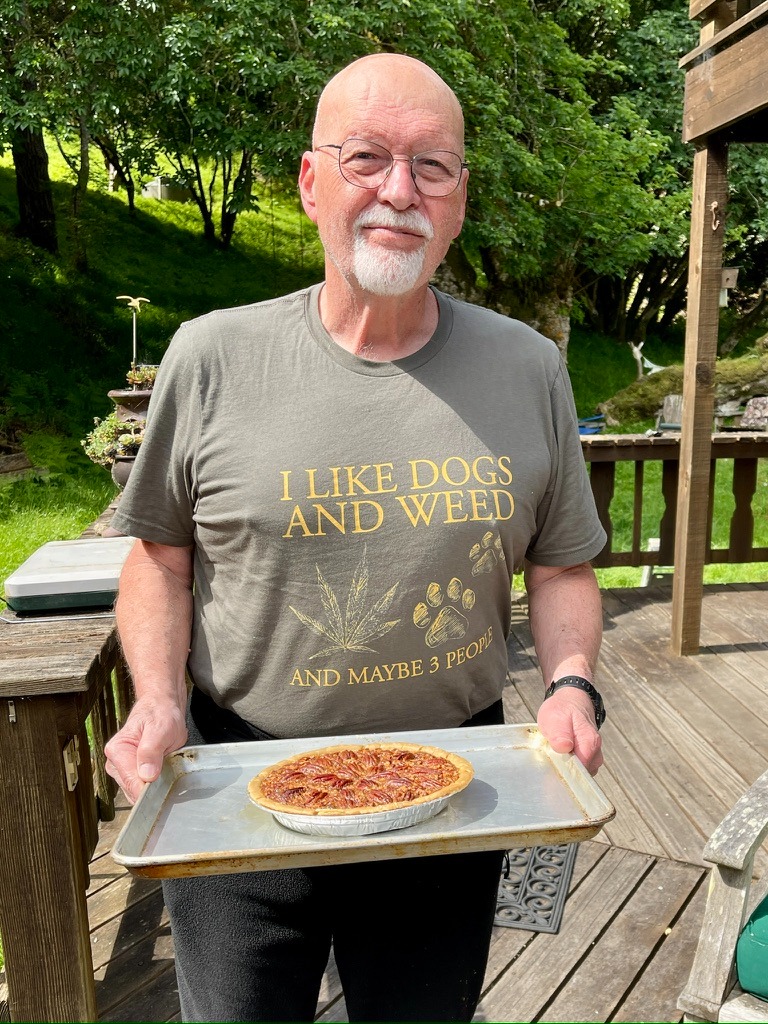
I turned 69 a few weeks ago. The entirely appropriate tee-shirt and pecan pie were my presents.
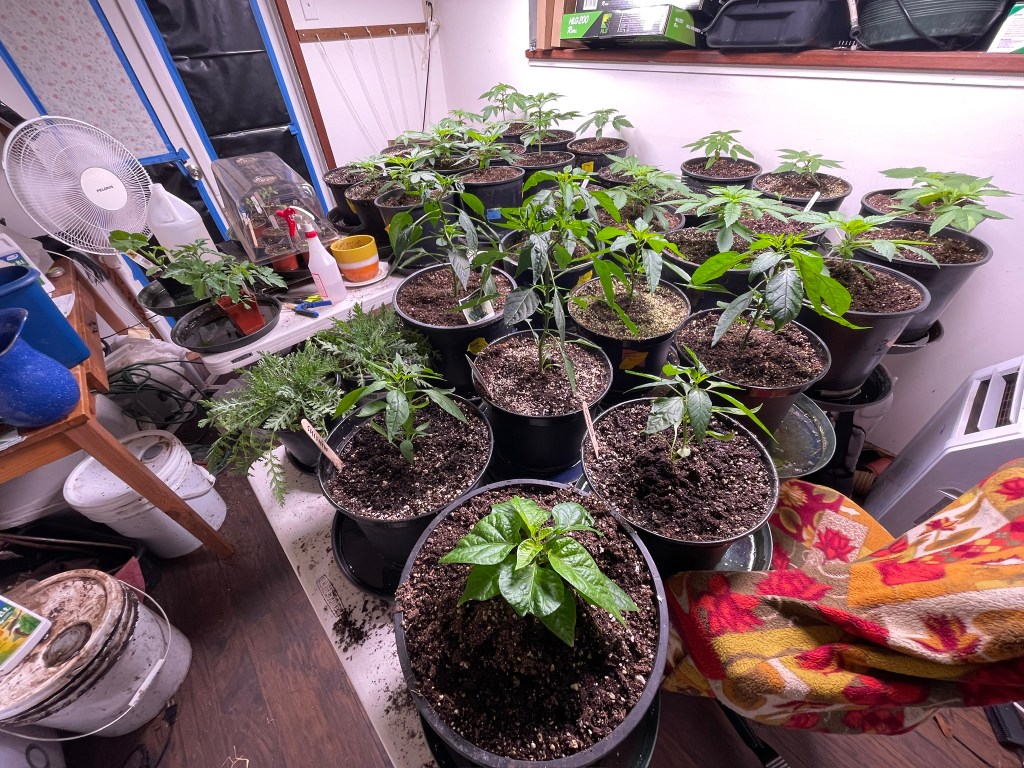
The first compost tea just began brewing.
Survive and vote.
Hey Friends: If you’d like to support jeffreyhickeyblogs.com, please feel free to donate to PayPal @jeffreydhickey.
Or contact me directly with your idea (good seeds are always welcome–and if I grow them, I will get the flowers tested and share with you the results.
Disclaimer: The majority of the links in jeffreyhickeyblogs.com posts are affiliate program links. This means that (most of the time) when you purchase a product linked from my site, I receive a commission, which helps support the blog.


Leave a Reply