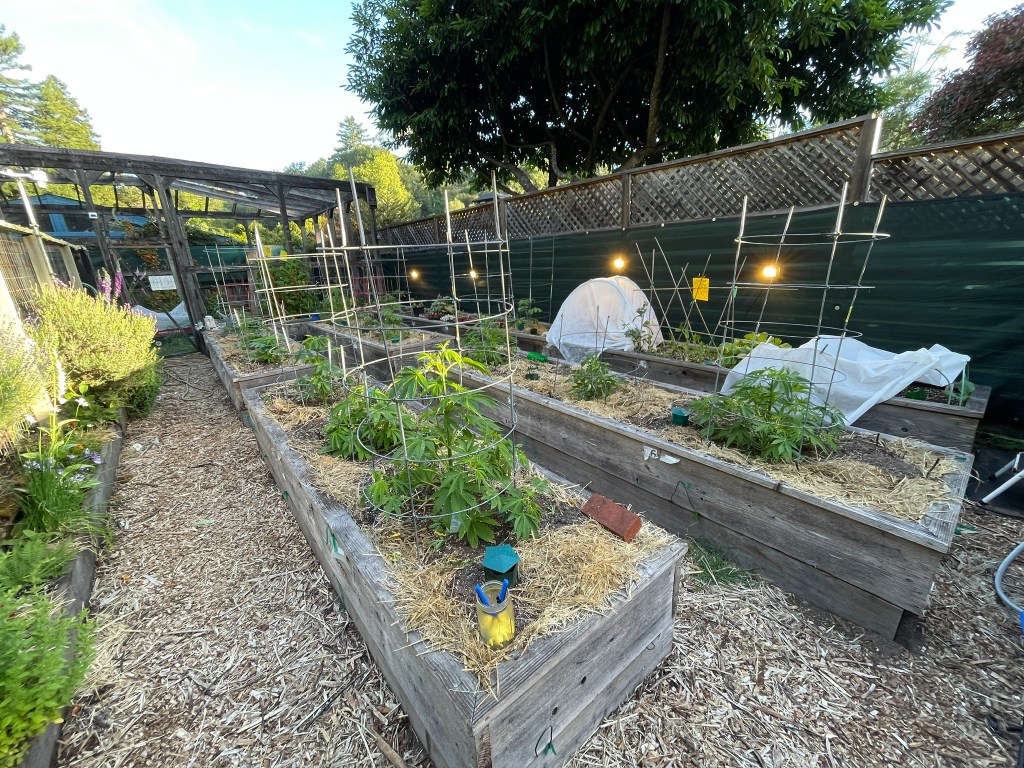
At long last, my dry grow begins.
I’ve been hinting at this for years, both in blogs and with students. I have long opined that I could grow a crop without weekly watering, only giving a quart plus of compost tea every seven days for most of the grow. I have been testing this for several years now, first noticing that my plants seemed to require less water than anyone else I knew who was growing.
I started reducing the amount of water, and then, I completely eliminated water for the entire flowering process. That was the first big step and my plant test scores exploded as a result.
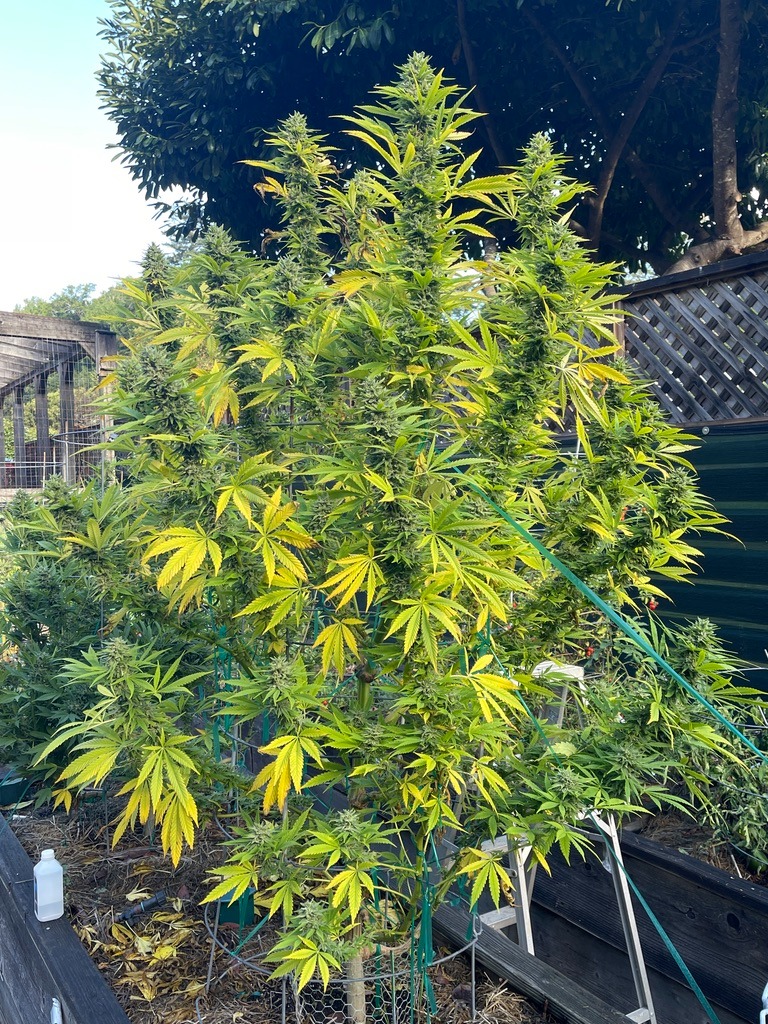
Cherry Punch 15
I wondered how much farther I could push my obvious water advantage, so last year, I picked one plant to cut off from weekly water, Cherry Punch 15. Her last water was May 25, and she wasn’t harvested until the first week of October, over four months later. By eliminating weekly watering, I wondered if that would further increase my test scores. I also wondered if this action could potentially damage the plant, or in some way limit her growth.
I assured myself that should I witness evidence of the plant needing water, I would water her.
But that did not happen. Cherry Punch 15 was virtually void of mold or any pathogenic activity. I’ll need to grow this way more to know for sure, but it seems that a lack of water might decrease the likelihood of pathogens. It makes sense.
For those who don’t follow this blog, I’m sure you’re wondering what is the secret behind this magic trick of starving cannabis from water.
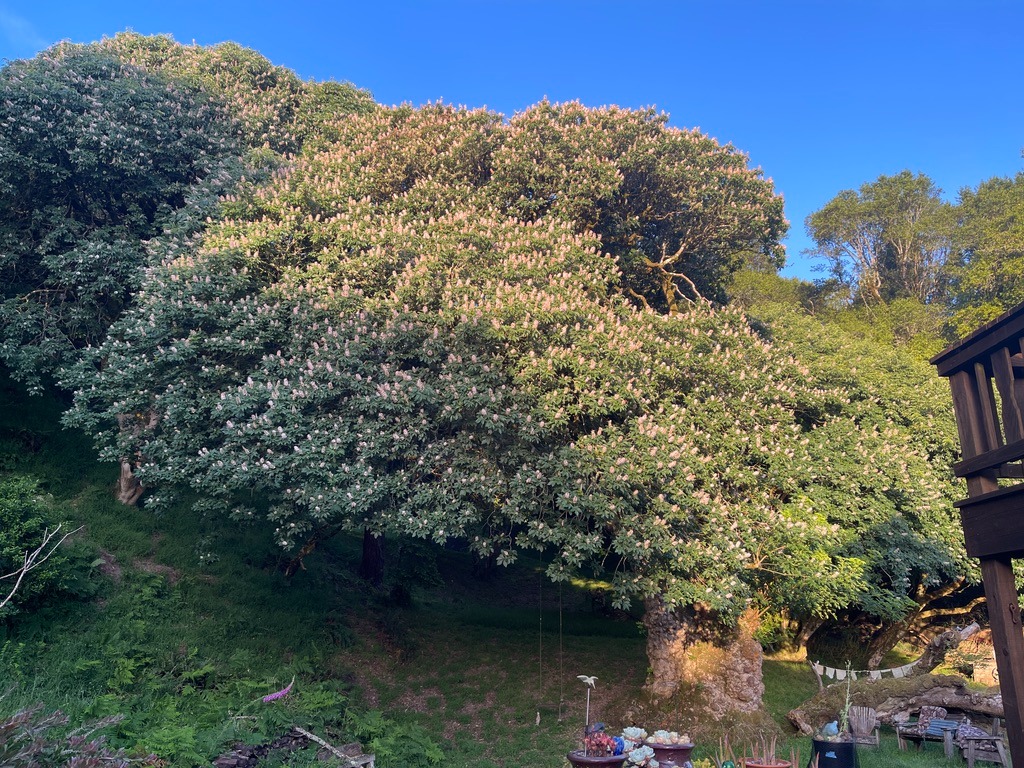
The secret is mycelium, because I live next to an old, large tree, adjacent to a largely unsullied forest and wilderness. I have a massive mycelium network under my property. Once the tap roots of my cannabis plants reach the mycelium, I don’t have to provide water. The mycelium will regulate how much water each plant receives until harvest is over. Mycelium has very thin threads that easily feed roots. The plant and the fungus are involved in an exchange. The plants receive moisture and nutrients from the fungus, and in return, the mycelium receives sugars, fats and carbohydrates, which it cannot produce on its own. The mycelium makes certain that each plant gets the moisture and nutrition it needs to flower and finish. The fungus essentially becomes an extension of the roots. I provide the nutrients on a weekly basis (via compost tea) for the mycelium to dole out to the plants.
Last year, Cherry Punch 15 grew over six feet tall. Her THC score was 29.68%, which rounds up to 30%. Her terpene score was 2.5123%. I’ve grown much higher terpene percentages, but that’s my top THC score ever.
She had two pieces of external moth scat mold removed from her prior to harvest, via tweezer. That’s all. One of her flowers alone harvested over an ounce of cannabis.
She was one of the cleanest and easiest grown plants I’ve ever had. Those factors sealed the deal on me making the next grow fully dry. Full disclosure, however–Cherry Punch is one of the easiest plants to grow. Very little pruning was involved. She has large inner nodal spacing.
Currently, my plants have been getting watered once a week, just like always, and they are showing no strain, no sign of needing water during the seven days without.
Visually, it seems to me that I could cut water from all of the plants in beds right now. I’m almost certain that two of the plants, Banana Papaya 11 and Banana Papaya 22 have reached the mycelium, and I’m tempted to stop watering them today, May 25, the same date that I stopped Cherry Punch last year. In fact, we’re supposed to get at least a tenth of an inch of rain on May 27. I think that rain might be it for both of the Banana Papaya plants.
For the rest of the cannabis and hemp, I’ll wait one more week and then probably stop watering a majority of the crop on June 6. A couple of plants, both Rośe, might take another week before I feel confident.
The determining factor is plant height, relative to the bottom of the growing medium. I have to believe that the tap root has reached below the bed bottom and is being lured deeper into the loam by stringy white fungus fingers. Some of my guesses are determined by the height of the plant, while evaluations of smaller plants are based entirely on visual inspection. So there is some guesswork involved, but the real key is how the plants look. If I see a plant obviously in need of water, I will water her.
Once I stop watering, plants will receive moisture from the weekly compost tea, runoff from foliar sprays, and finally, condensation from foggy or drizzly mornings. I do live in a rain zone. We average over 40 inches of rain every year. We get many inches of rain per year that never even show up on the doppler. For example, I awoke this morning (May 26) to discover that 0.04 of rain fell overnight. Everything is damp. And occasionally; especially in the fall, we get hard rain, which can lead to early harvest.
Plus, this is potentially the start of an El Nińo event, with consequences to be determined over the next two grows.
So the plants will not exactly be starved from moisture. But if possible, they will go four months without getting any plain spring water, only weekly compost tea.
What is in my compost tea? Glad you asked.
I make aerated compost teas, the ones that bubble for two days prior to pouring. My ingredient list is simple, but has some wiggle room for variation.
Five gallons of spring water (pH 6.7)
½ cup of Humic Acid
One cup of molasses
A pinch of Sea 90 mineral salts
Horsetail, cut into small pieces, to release as much silica as possible into the tea.
Raw mycorrhizae (a tablespoon)
Smelly plants like mint and lemon verbena, because deer don’t like smelly plants.
Dried Guano
Pura Vida Grow formula (during vegetative phase)
Pura Vida Bloom formula (during first five weeks of flowering phase)
If I’m in the vegetative phase, I can add as much of my captured bat guano as I want. Because it has been dried and all live bacteria is dead, I can use as much guano as I want without causing nitrogen burn. Twice in the vegetative cycle, I’ll add a cup of Pura Vida Grow formula instead of guano, but be careful with nitrogen. Less is more effective with cannabis than more. If you’ve grown fava beans over the winter, your soil is already nitrogen rich. Don’t combine a fertilizer with the guano, for example. You could end up with some leaf burn, or leaf curl. One of the reasons I add the Grow formula is that it also has potassium and phosphorus, which all flowering plants will eventually need. I give higher doses when it’s flowering time, via Pura Vida Bloom formula, but cannabis plants enjoy getting a taste of potassium and phosphorus, even during the vegetative cycle. Again, not too much, just a taste early on. In earlier years, before supplemental outdoor lighting, my plants would teeter on flowering early every year. Consequently, I avoided anything with potassium or phosphorus until plants were starting to flower. Now, I can add these ingredients earlier, and proactively, which is a better way to grow.
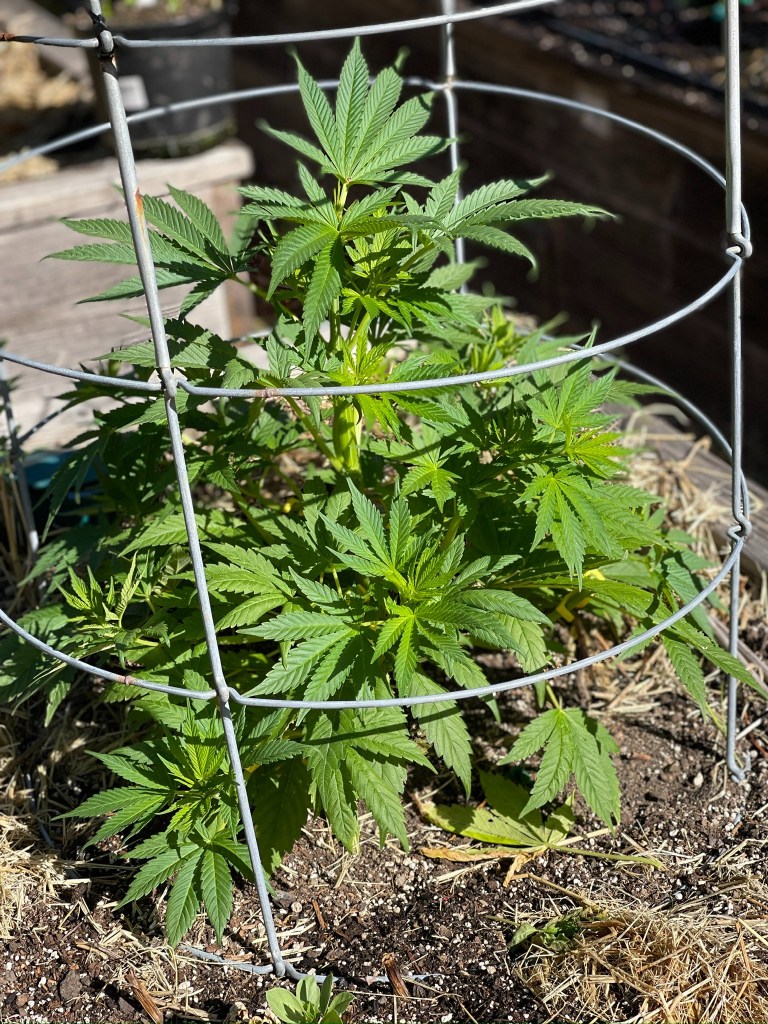
A lovely Love Lucy.
By the way, my tomato plants will receive similar treatment. Once about 3/4 of those plants have flowers and a few pieces of visible fruit, I’ll stop watering them for the rest of the year. That’s how you get super sweet tomatoes. I expect we’ll still be harvesting them before the end of November.
Let’s take a few moments to discuss the ingredients listed above. I used to enjoy asking students why we always use humic acid in teas, because no one ever knew why. The best answer I got was, “Because everyone tells us to.”
Humic Acid is a crucially important ingredient in my tea; especially during a dry grow. It is another viable component in effective soil building and it performs three critical tasks. First, it works to help open the plant’s stoma, in order to uptake more nutrients. (In this way, it is similar to mycorrhizae) Second, it will isolate any bad things, like metals in your soil and will work to prevent them from interacting with your roots, until you can flush them out. Third, and most important for me, humic acid helps moisture to evaporate more slowly. It can decrease evaporation by as much as 30%. For someone dry farming, this is gold.
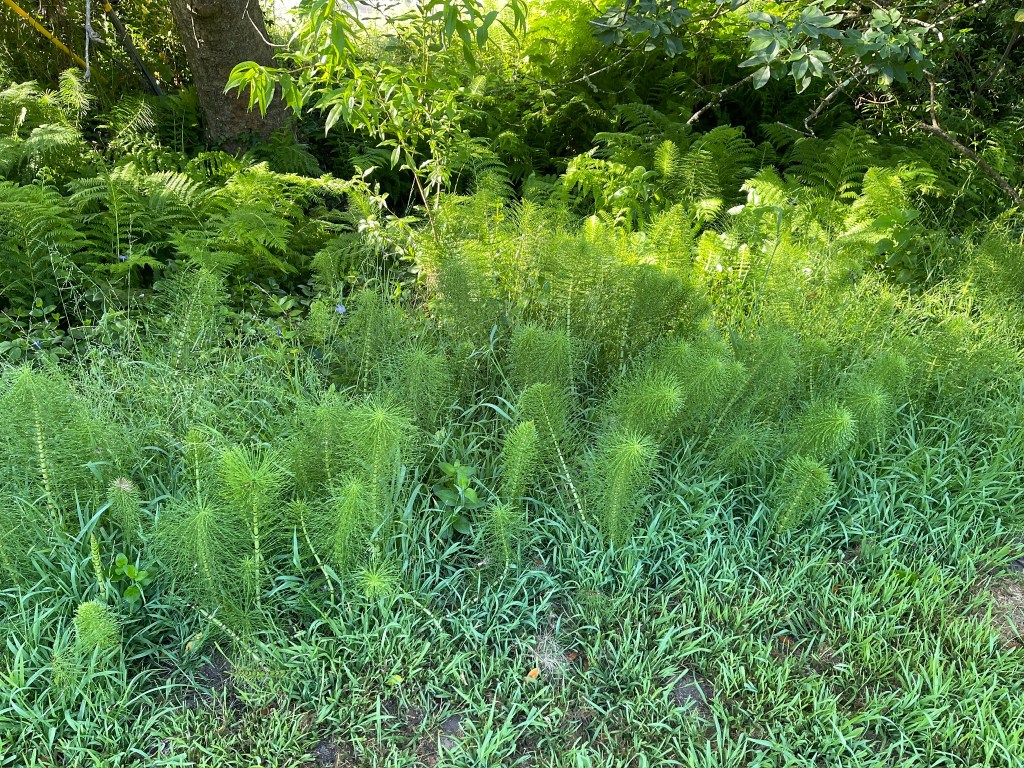
By the time you’re reading this blog, most of this patch of horsetail will be bubbling in my tea.
Horsetail is a silica rich plant that grows wild in my part of the world. It’s non-native and invasive as hell. It’s also one of the most valuable plants I’ve ever encountered for compost teas. Plants rich in natural silica are stronger and healthier, with more natural resistance to pathogens, and with a miraculous ability to heal from breaks. As recently as a few days ago, we had a branch break on one of the Banana Papaya plants. Because all my teas are high in silica, we know the plants are full of it, too. Consequently, when the break occurred, we applied honey and reattached the broken branch with plant tape, pushing it tightly together. After about three days, we removed the plant tape and the branch was healed. It was the silica that did it. I cannot say that bottled silica has the same impact as that which comes directly from a plant, because I have not tested it.
Silica is not considered an essential ingredient by some, though it is essential to me. It is akin to giving my plants a super vitamin, one that gives them powers they would not normally possess. Silica strengthens cell walls, and makes stressful grows a bit easier for the plants. I would say silica is absolutely essential when attempting a dry grow.
Raw mycorrhizae is something I literally scrape off our ground. Sections of our property are in the shade, with lots of wood bits. The fungus attaches to those wood bits. If I find a nice chunky piece with fungus on it, I’ll use that piece for more than one tea. The fungus does not wash off in the tea.
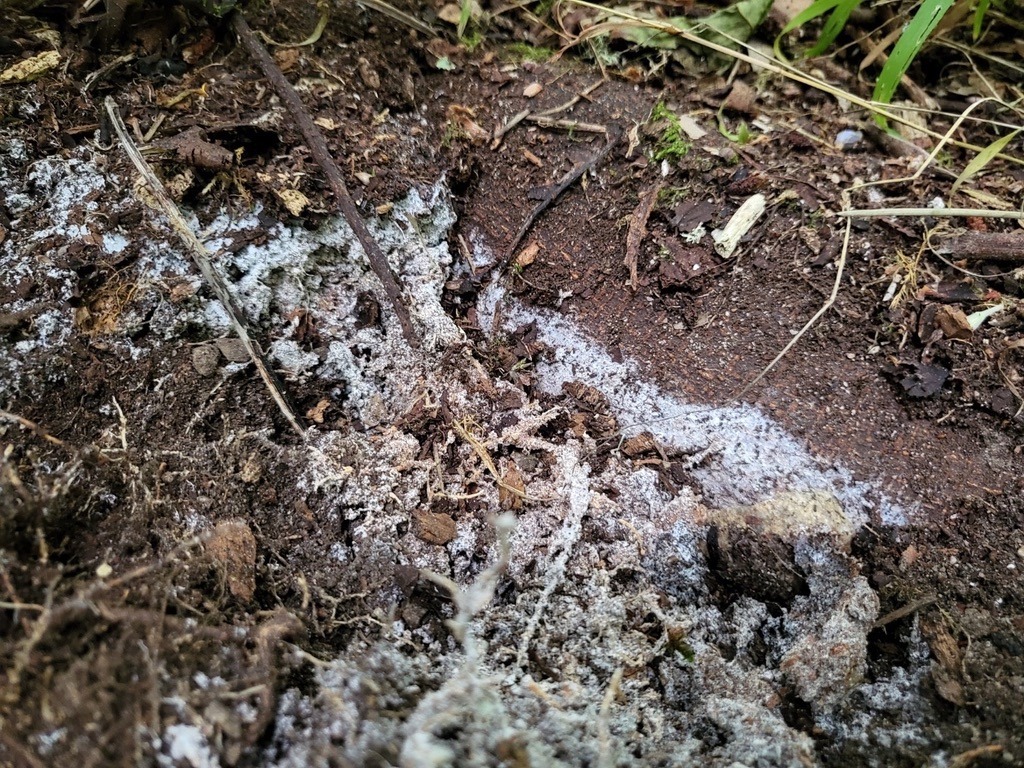
Raw mycorrhizae on the ground.
We’ve been using raw mycorrhizae for the last three grows. You can visually see how it allows the plant to receive more nutrients simply by observing the center stalk. We’ve noticed that after adding mycorrhizae, the stem tends to get thicker all the way to the top of the plant. Branches are thicker. We have also used too much mycorrhizae. In one case, branches swelled to the point of cracking. Now, I use it once a month and all the plants benefit from an increase in nutrient uptake.
Sea 90 adds micronutrients not found anywhere else in the world other than the Sea of Cortez. I’ve always considered it the final ingredient to my ocean based fertilization. It is my final fixer for the plants.
I’m giving the plants as many tools as possible to uptake more beneficial nutrients, while limiting the amount of water they receive, and thereby reducing the potential for pathogens, which crave moisture.
In this regard, last year was incredibly instructive. We had humidity that remained above 70% for the entire grow. Battling humidity like that is problematic at best. Last year, the humidity inspired a colony of flea beetles to attack three of our plants, and impact several others. We’re dealing with them proactively and aggressively this year via foliar sprays, but while it was going on last year, we had to notice how Cherry Punch 15 was not impacted at all. No flea beetles were ever found in her bed.
The full IPM (Integrated Pest Management) program has begun. Companion plants are everywhere. Beneficial and predatory flies are making babies on cannabis plants, always a good sign. A few flea beetles have been seen, but weekly foliar sprays of both Dr. Bronners and Neem oil should keep them under control. Reminder–spray the soil when using Neem for flea beetles. You’ll get them right when they emerge from the ground. The same is true with the foliar sprays, Grandevo and Venerate. With an aggressive program of foliar sprays, and a bed full of predatory insects, pests will be controlled.
So far, the weather has also been different (better) this year. We’re getting variable humidity, more typical of summers here. Daytime humidity is staying around 60%, which is perfect for vegetative growing.
A deep lower, inner, pruning happened yesterday.
We got 0,73 of rain last night. We’ll see if that’s the last pure water they receive this year.
I’ll keep you posted as this dry grow develops.
Survive and Vote.
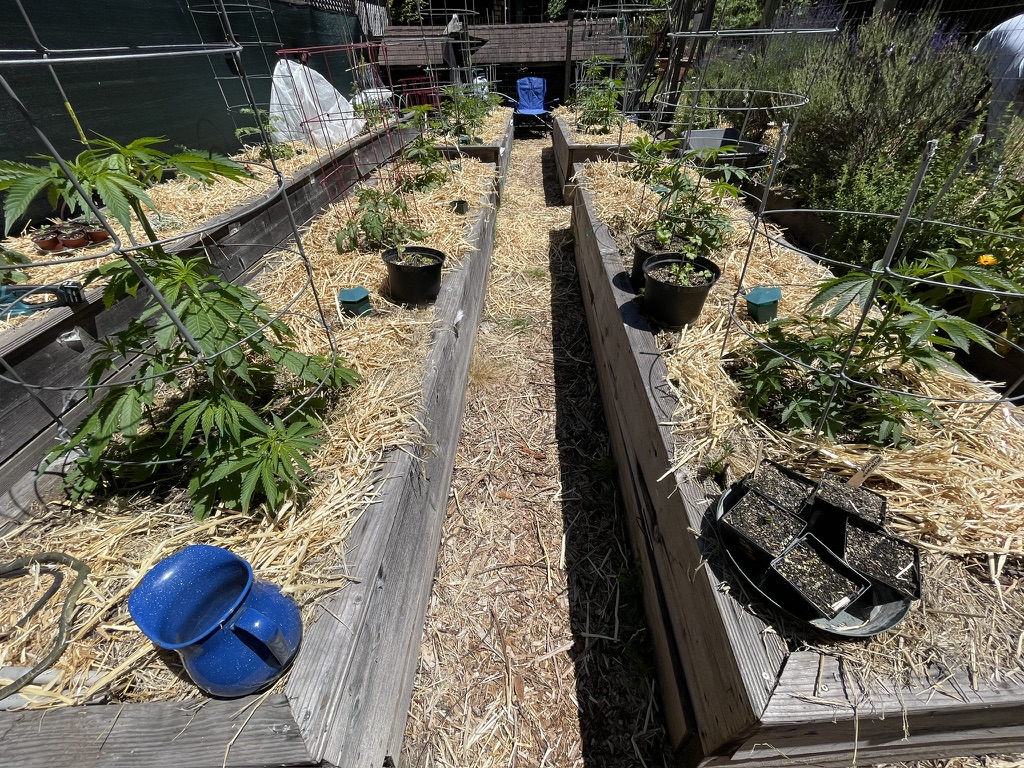
Hey Friends: If you’d like to support jeffreyhickeyblogs.com, please feel free to contact me directly with your ideas (good seeds are always welcome–and if I grow them, I will get the flowers tested and share with you the results.)
Disclaimer: The majority of the links in jeffreyhickeyblogs.com posts are affiliate program links. This means that (most of the time) when you purchase a product linked from my site, I receive a commission, which helps support the blog.


Leave a Reply