
Last year was far from a perfect grow, with an unexpected outbreak of spider mites and humidity that remained above 70% the entire summer.
This year, we were determined to not repeat last year, no matter the weather. So far, so good, and the weather has cooperated. We are basically averaging about 68 degrees during the day (20c), with humidity between 55% and 65%.
These are literally perfect growing conditions. And I’m able to capitalize on the conditions better than ever before. The main reasons are the lights, both indoor and outdoor. The indoor part of the grow was the easiest I’ve ever had, and we started more vegetables than we’ve ever started indoors.
Everything is now in beds, or otherwise planted in native soil in the aviary. Flowers are forming for fruits and vegetables. Everything planted is taking shape. But the biggest difference for me as a grower is this: During the vegetative phase, because these lights don’t allow my sun challenged plants to flower early, I’m able to give them richer and more complex nutrition.
In past grows, before these lights solved the early flowering problem, I would not use any formula with phosphorus or potassium during the vegetative phase, because all the light challenged plants needed was a hint of those nutrients to start flowering. Now, I can make them part of each tea, and the plants are healthier as a result.
There have been a few Western Cucumber beetles nibbling on the bed plants, but they have mostly been munching the plant we’ve got outside the beds, next to the lavender. Thankfully, I’m finally able to spray Grandevo, which is an effective deterrent to Western Cucumber beetles. If you are having a difficult time with this prolific pest, the key is to find what the beetles are actually looking for: Cucumber Vine. Once they discover that vine, they leave most everything else alone. But until they find it, or it can be shown to them, they can defoliate crops. If this insect is suddenly clustering on your plants, you need to cover them immediately (after removing the beetles). Cover the plants with that sheer, white cloth that lets light through, but not insects. Keep them covered until the beetles fly off for another destination. They will leave if they are unable to access the plants. That plant cover has saved us more than once.

This tent is protecting vegetables and lettuces, primarily from leaf miners, though they will be included in my IPM sprays starting next week. Insect season is ramping up. So far, the foliar sprays are keeping pace.
Right now, I don’t have any problems with pests in the beds. Plants are growing at their top rate, about an inch a day.
The plants look like they used to look at the end of July, because I didn’t put them in beds until June. But now that I’m planting in early May, the extra month of veg growth is going to mean more large plants. In particular, the new cultivar, Banana Papaya, in beds 11 and 22, look to be very large plants. On June 10, the plant in bed 11 reached rung six on the Texas tomato cage. Both plants now have the third parts put on the cages and I expect they will reach near or above the top. This cultivar seems to be capable of seven to eight feet in height. Can’t wait to see the flowers she produces.

Banana Papaya in bed 22 has real size potential.
We are aggressively pruning the bottoms and inner growings of the cannabis, the leaves that are not going to lead to anything. We’re doing the exact same thing with all the tomato plants, removing the low growth and all the suckers that will never produce fruit. This pushes more top growth from each plant, and allows for larger flower production.

So far, despite some night time humidity, there has been no pathogenic activity. At this time in the grow, pathogenic activity is predominantly powdery mildew. I have not seen a single leaf so far. I’m watching this closely, because of the pre-planting foliar spray I did of Regalia and Stargus. I soaked each of the planting holes with a foliar spray of both just prior to planting, so that the roots could ingest both products and create a level of resistance and possible immunity from within. I’d never tried this technique before and it simply makes too much sense not to try.
June 22
The day after Solstice and sunset will be one second shorter than yesterday. This is the week I begin a larger and more aggressive pruning campaign. We have a saying around this time, “If it’s inside the cage, it needs to go.”
We train our plants to grow out and then up. We stretch them to the max on the outside of the tomato cages, so that there is more room for inner stalks to actually receive the sun. These are stalks that don’t usually get very much light. This is why we prefer training over topping outdoors. We want less crowding and more space for the best available flowers to grow.
But there is a lot of inner growth that can be removed, because many inner flowers will not get enough sun. Those must go. Let the energy go into the bigger buds and don’t waste your time on tiny flowers. You’ll have plenty of them.

Rośe 21 post prune–She will get several prunings. The extra circulation and space for air helps guard against pathogens.
Right now, removing all the lower, inner growth will also cause a burst of growth from each plant. This same technique is true for both cannabis and tomatoes. We’re removing the lower branches that will never produce fruit.
It has been since May 25 that any of my bed plants got water. The two plants in black sacks still get water, though I am tempted to stop watering the lavender plant, Special Queens One, because it appears her roots have escaped the cloth sack and are diving deeper. She might be under mycelium control by now.
Tomato plants are about one week from being cut off from water as well. They are becoming covered in flowers, or buds yet to be flowers. Once I start seeing fruit, the water stops for the rest of the growing season. Then, in about six weeks, we’ll start picking tomatoes and I imagine we’ll still be picking them in November.

Tomatillo Row and flowers are quickly emerging.
One month from today will be the last day the supplemental lights go on. There are four-six more weeks of vegetative growth, before plants start to flower. I have fertilized the plants with almost every compost tea. There has been Grow formula, dried guano and lots of horsetail. There have been two teas filled with mycorrhizae. At this point, they don’t need more fertilizer. They need basic teas with molasses being the key ingredient, along with the simple sugar provided by fallen fruit from local trees. They are all still in full vegetative sprint, buoyed by the longest days of the year. There will only be about a seven minute reduction in growing time over the next month as our conditions almost hold in place.
The forecast right now is for rinse and repeat days. Foggy mornings, sunny afternoons. Lower humidity than last year, but plenty for veg growing.

Take a look at the beautiful training by Bee along the tops of Banana Papaya 11. This is the classic training technique of topping once, and then training the new growth to the sides, which then allows for more inner growth on top to develop into full on top flowers. This technique substantially increases top flower formation.
We are back to almost exclusively plant tape, because the clips we use to stress train were rendered dangerous to the plants after we used mycorrhizae. The stalk and branches expanded in thickness and those stress clips were not meant for that level of stress. We tried them on Banana Papaya and she rejected most of the clips, while one snapped a top. So we pulled all clips immediately and training will be old school, with plant tape only.
The plant next to lavender had been getting demolished by insects at night. We discovered it was sow bugs emerging in the darkness, defoliating fan leaves.

The beer traps get some, but not all sow bugs. So we called upon an old technique, wadded up pieces of newspaper. If you put wadded up pieces of newspaper in with the plants, sow bugs will crawl into the crevices of the paper for warmth. They can then be removed from the area in the morning. Works like a charm. We also removed the worst defoliated leaves and now the plant is recovering nicely and growing very well. She will be the largest plant we’ve grown in a cloth bag.
So right now, it’s prune, train, foliar spray and once a week compost tea nutrition. The extra month of veg growing time should take these plants much closer to their full size potential for growing in my beds. Everything appears on course so far for the dry grow.
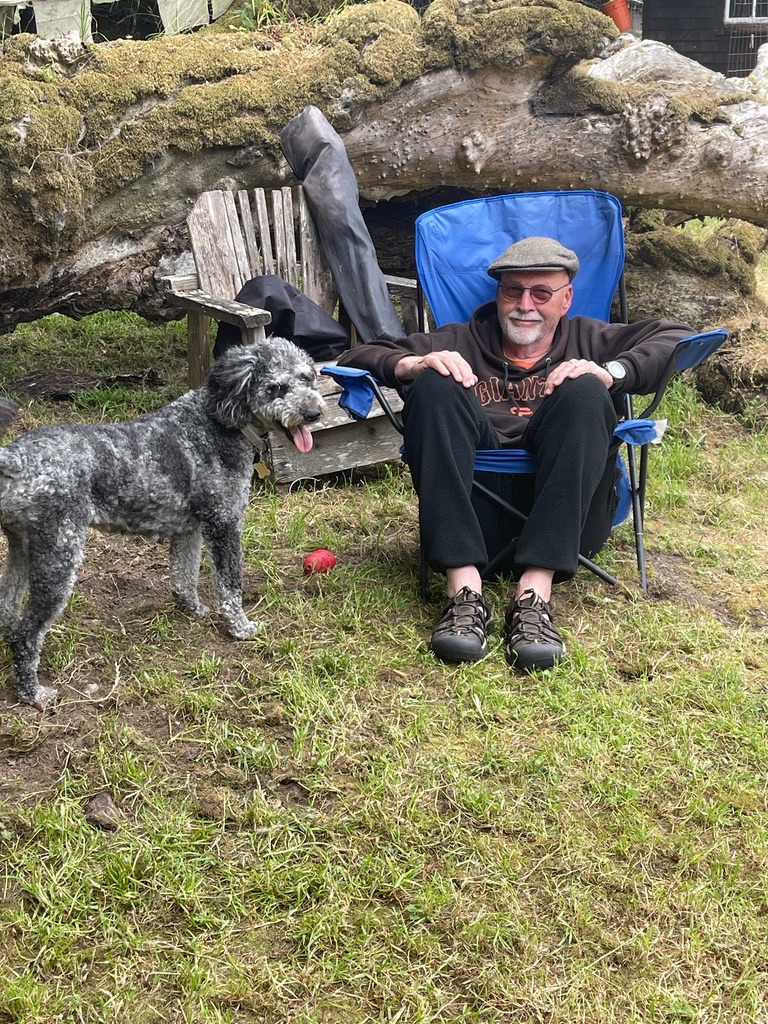
This is Misty, our new rescue Aussiedoodle. She’s our bestest girl, and is trying her hardest for the uncredited role of plant forebeast.
Survive and Vote.
Hey Friends: If you’d like to support jeffreyhickeyblogs.com, please feel free to contact me directly with your ideas (good seeds are always welcome–and if I grow them, I will get the flowers tested and share with you the results.)
Disclaimer: The majority of the links in jeffreyhickeyblogs.com posts are affiliate program links. This means that (most of the time) when you purchase a product linked from my site, I receive a commission, which helps support the blog.


Leave a Reply