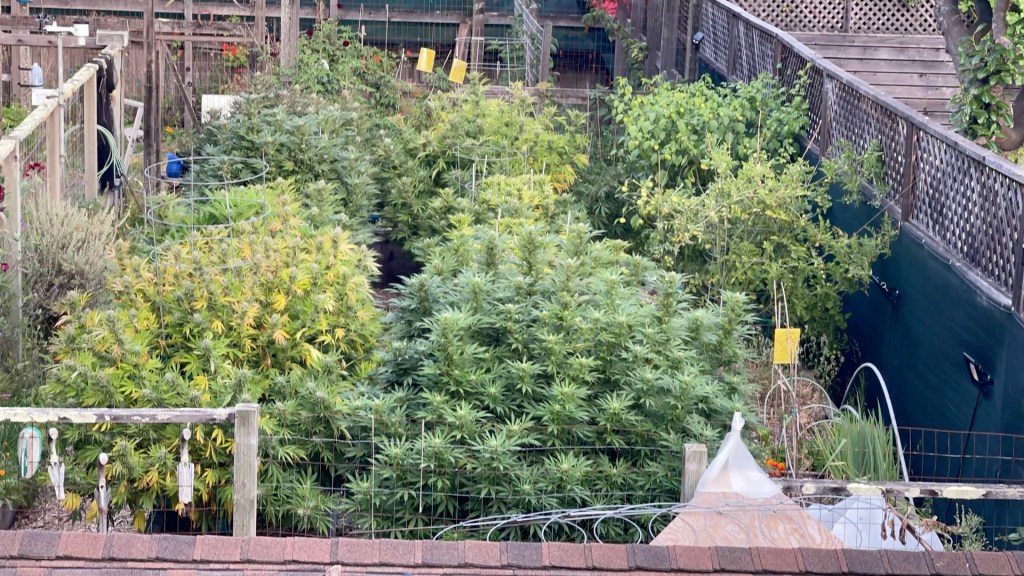
It is September 16, and this morning, there are now six plants drying in the cottage: Two Banana Papaya, two White CBG, OG Kush and Special Queens One.
Of those six, Banana Papaya 22 was the last to be harvested. We thought she’d be the first, but she was stubborn about filling trichomes and I was not going to harvest her until her trichomes were milky. In the final two weeks before harvest, the mycelium cut off all water and in classic fashion, the plant cannibalized itself, draining moisture from fan leaves top to bottom. It was a text book example of how a plant should finish in a dry grow.
Here she is on August 29:
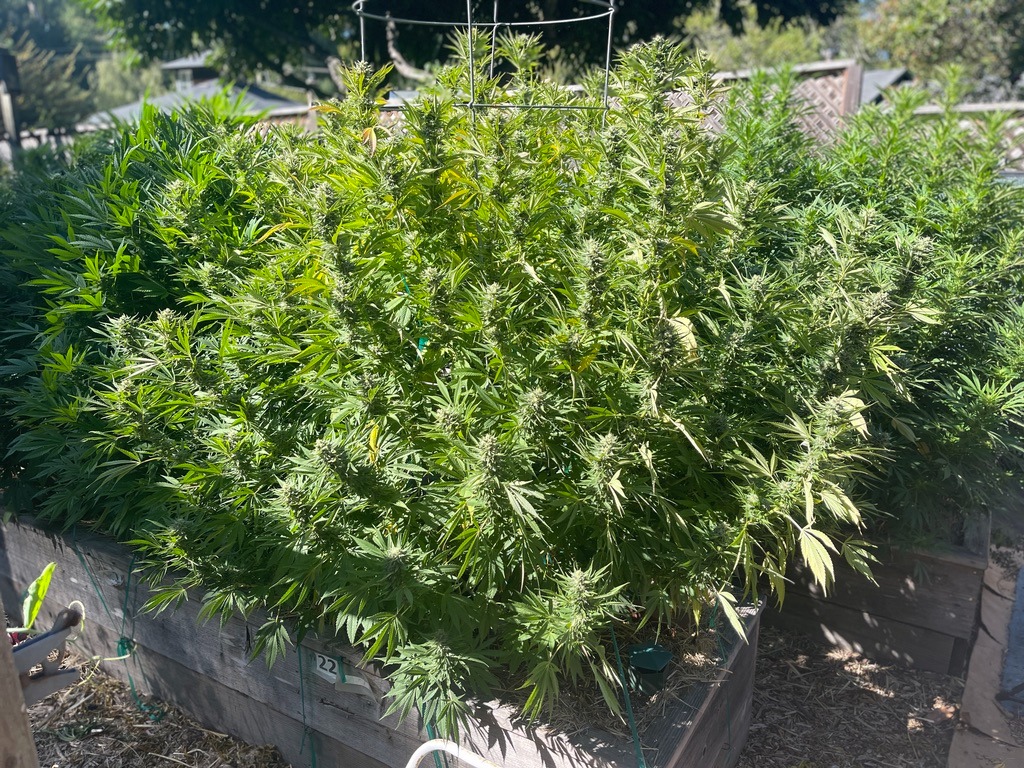
And here she is on September 14, the day before she was harvested:
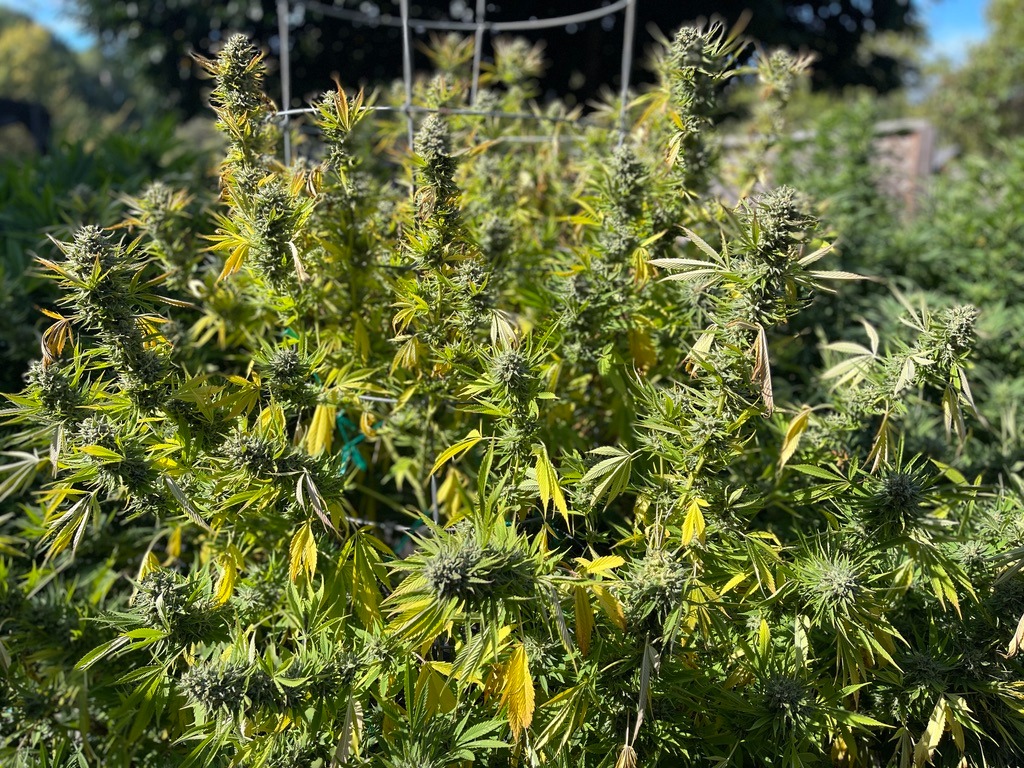
She was practically begging to come down. She lasted to day 67.
But before BP 22 came down, we had decisions to make on other plants. We anticipated that everything would get to its scheduled harvest date, but of course, that did not happen.
We had a significant rain event September 2 and 3. Over eight tenths of an inch fell. For plants that had not received pure water since May 25, this was a shock, probably very pleasant at first. Plants love water. Of course, given the size of most of the plants, the majority of that water soaked the plant, but not the soil. Most of the water never reached the beds.
But this significant rain activated otherwise dormant, or barely showing stem rot on a couple of the plants. Stem rot is the result of two things in our garden: 1) Something removed that strips bark, like a fan leaf removal, if that strip is not sealed with honey, it opens the door for pathogens. 2) Specifically, in our case, wounded flesh on a plant is an invitation for our new enemy, flea beetles, to infest a plant. They crawl under the skin and corrupt the area. If there’s no additional moisture, small pieces of stem rot are not a big deal. But when it rained, everything pathogenically that required water burst to life. If a plant had a weakness, that weakness was quickly revealed. Two plants began to develop stem rot issues that impacted portions of flowers from the inside.
We long ago learned that when this happens, you can thwart the mold with rubbing alcohol for a little while, but eventually, you’re going to need to harvest to save the medicine. The plants we brought down early were all within a week of their harvest dates. In fact, all of them took at least eight weeks. So, they were not tremendously early to harvest. And as our test results from last year prove, early harvests do not seriously impact test scores.
So, after harvesting the small plant next to the lavender (once again, with no deer nibbles), we took down Banana Papaya 11, and then the next day, OG Kush 17. These were long harvests, with hours of inspection prior to washing.
During all of this, I am deeply grateful to Bee for all their help. As we neared completion on BP22 yesterday, I noticed it had taken the two of us over seven hours to harvest this plant. Without Bee, it would have taken me 15 plus hours. I know this, because it has happened before.
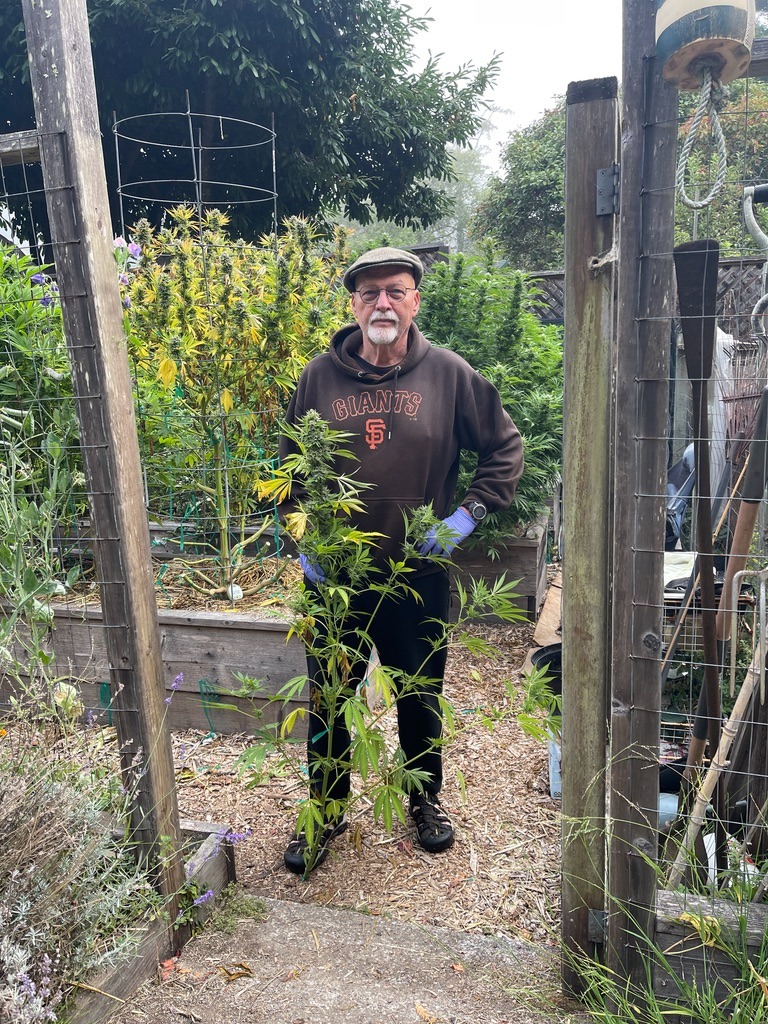
I had to grab a pic of how much this one BP stem had to grow to get enough light to flower. That stem is over four feet long.
On top of that, the day before harvesting BP22, Karen and I got the most recent Covid vaccination. For a couple of days, entirely during this harvest, we ached.
But as I’ve said to other growers over the years–Everyone has excuses for not doing the work. We kept going until the sixth plant was hanging in the cottage.
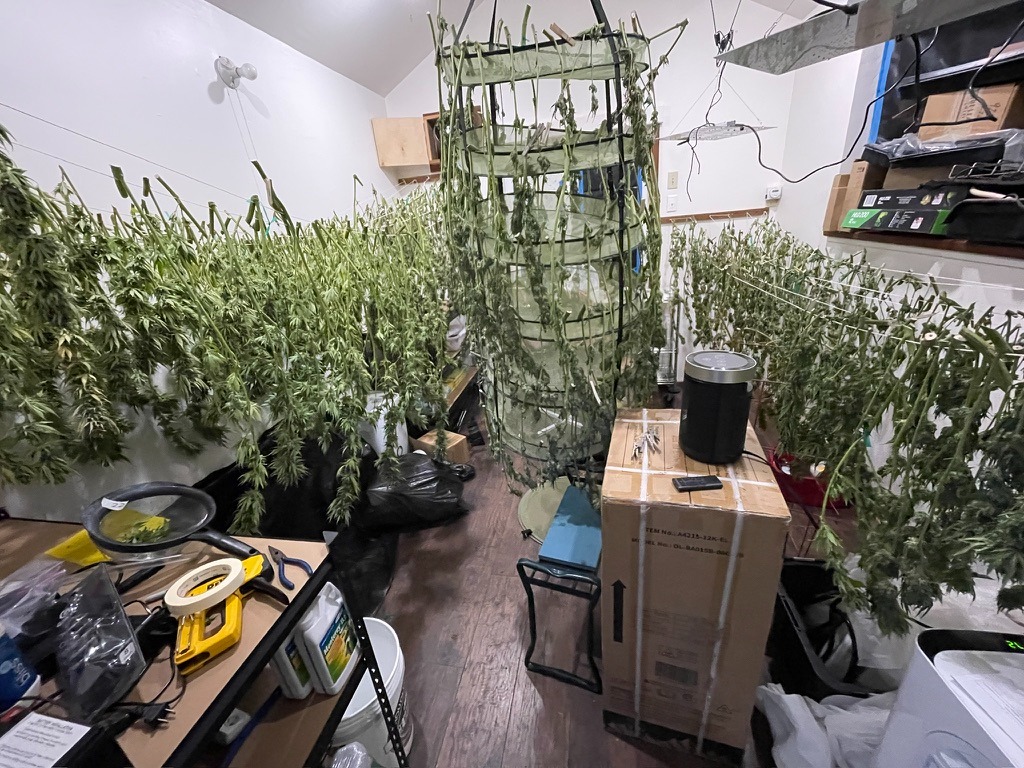
That’s a full house, folks. Six plants are currently drying. Four are on the lines, one is still on a small, red cage, and the largest CBG is hanging from the rack in the middle of the room. I truly love the versatility of the rack. You can hang flowers all around for proper orientation, or you can place them flat on the mats, which is where we’ll put obvious popcorn to dry. Another advantage is that it moves in the breeze, exposing all sides of every flower to air circulation from fans.
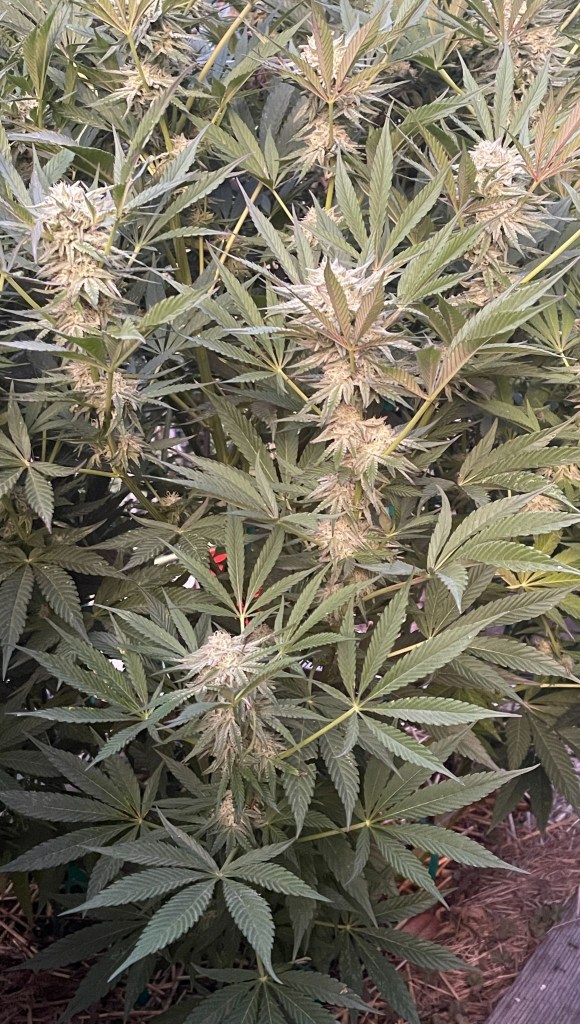
OG Kush 17 on harvest morning, the definition of a frosty plant.
Compared to other plants we’ve had with mold, both of these had light mold. If we’d waited another week for their harvest dates, there would have been much more botrytis. We saved the vast majority of medicine from these plants before a pathogenic outbreak.
Then, we got to the last three, the two white CBG and BP22. On all three of these plants, there was no more than trace mold. Mind you, WCBG 20 is well over a pound, with huge colas, and there was no mold. Banana Papaya had mostly yellow and brown crisped leaves remaining, but no mold. We’re pretty sure she’s about two pounds. She lasted to day 67 of her flowering. That’s the longest I’ve ever let a plant flower.
What little mold we saw on these three plants could only be called Stargus mold. It was botrytis that had attempted to grow in proximity to where the foliar spray had been applied. In typical Stargus fashion, it gathered the mold and shoved it in the opposite direction of the flower. Mold was removed almost entirely by tweezers.
BP 22 was a five tomato cage plant. Only the largest plants I’ve grown take five tomato cages to bring in. She’s probably two plus pounds.
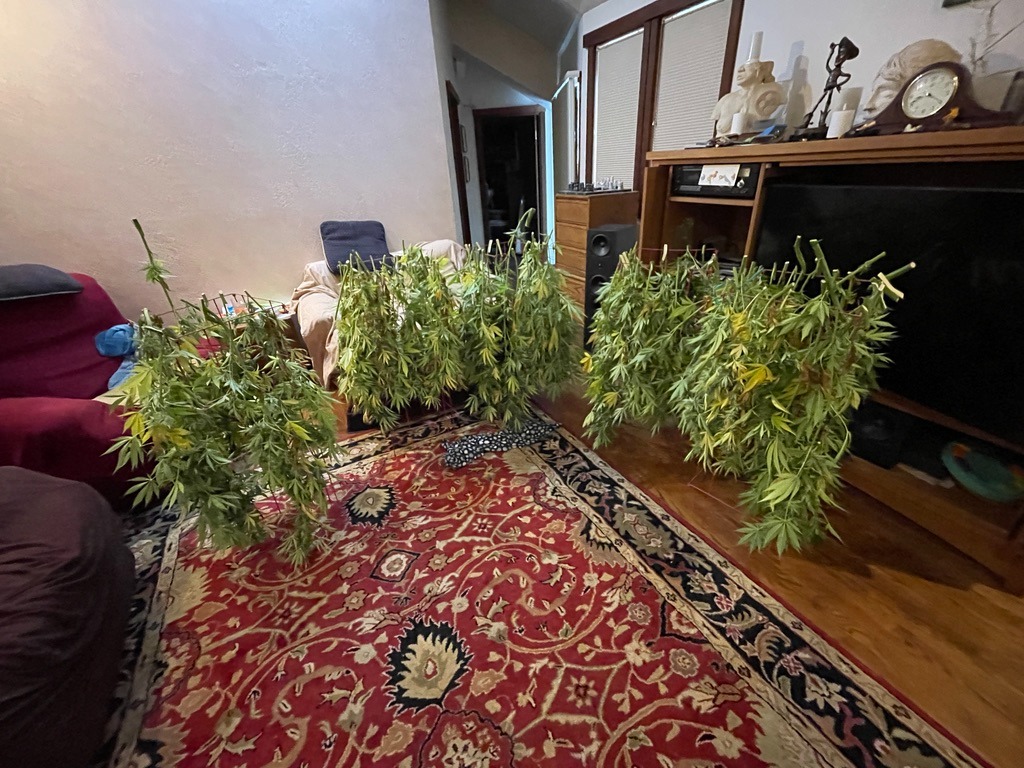
Ready for fan leaf removal and then washing.
Of the remaining four plants, two are Love Lucy, a CBD plant, one is Rośe in bed 21, and the last plant will be Cherry Punch in bed 18.
Now that BP22 is removed, we can finally photograph the monster that grew in bed 16. This is LL16.
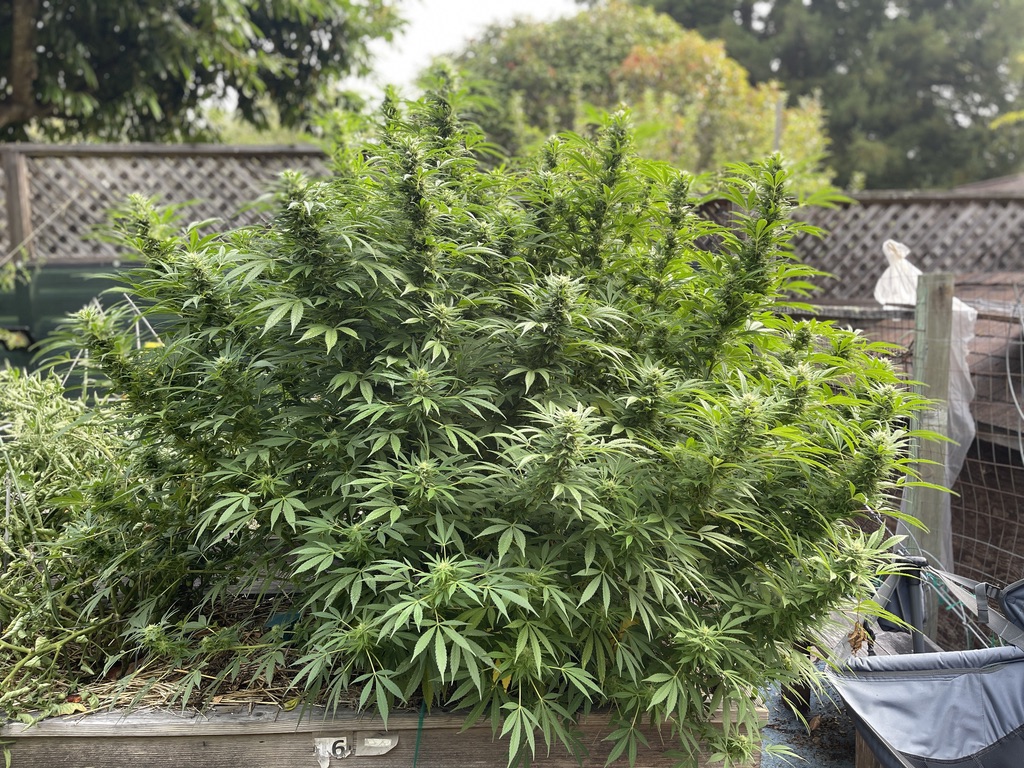
She is very likely another two pound plant. Growing a CBD plant this size is rare in my growing history. There is a smaller Love Lucy as well. Combining the two is going to give us more than three pounds of prime CBD medicine. This is a huge win for our dispensary.
The removal of BP22 and WCBG20 have finally opened up space for Rośe 21. But you can see the impact of having a monster plant grown next door. An entire side of Rośe is basically without flowers. She’s more than twice the height of any Rośe we’ve previously grown, but she was denied being as productive as she could have been:
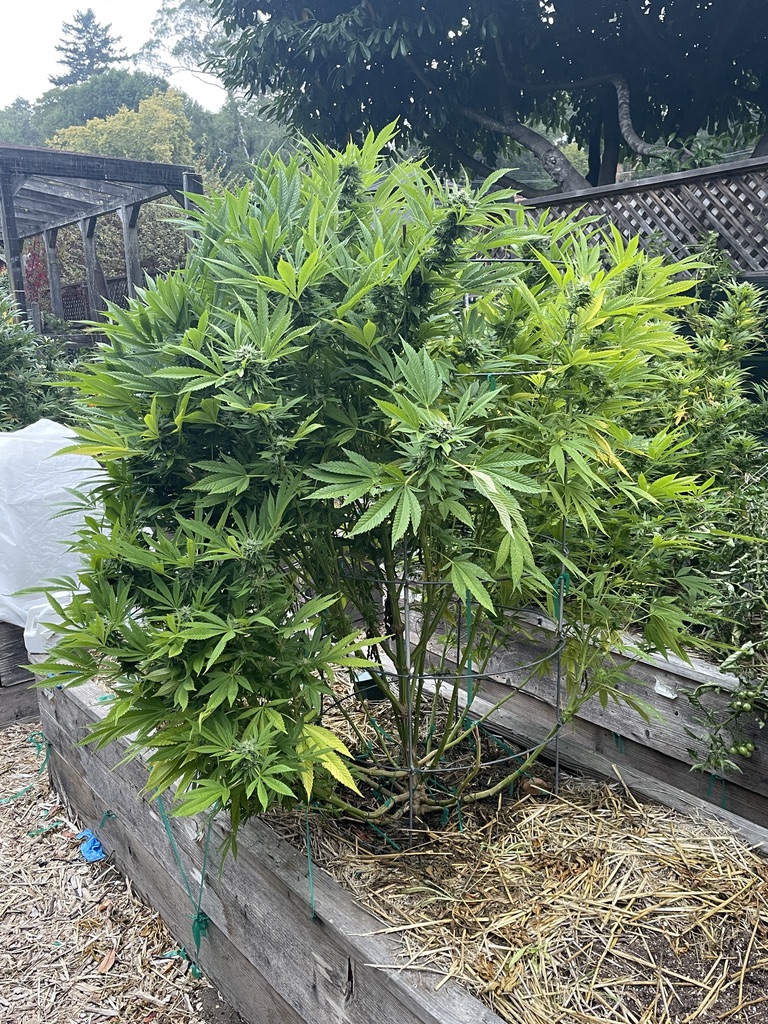
There’s a lot of blank space on either side of this plant. As I mentioned in the last blog, my one regret from this grow was that this plant and the Rośe in bed 19 should have switched places.
In an ironic twist, the last plant to come down next month will be Cherry Punch, which I believe was the first plant to come down last year. Because we chose to make everything flower early, Cherry Punch is now our late arrival, in early October. She also is showing herself as a phenotype with pretty flowers:
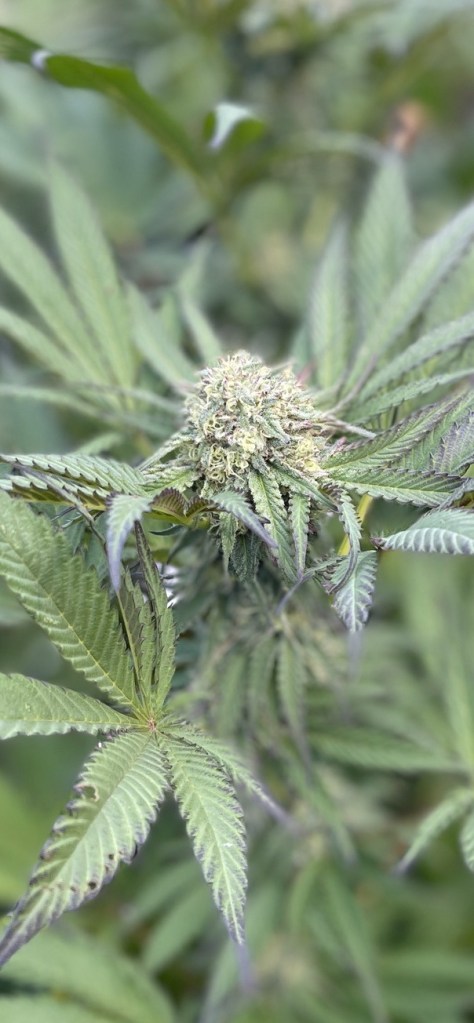
My dry grow is in the final phase, with only four plants still remaining. Some conclusions can already be drawn. The surprise rain is what caused a few of the plants to show pathogenic problems at the end. It did not have the same impact on other plants, which proceeded to harvest without mold.
The lack of water brings several advantages. If there is no moisture, it’s next to impossible for mold to start, much less flourish, unless humidity remains high. Remember last year, humidity remained above 70% the entire summer. This year, we had variable humidity, dipping around 50% most afternoons. We had advantageous humidity this year. Possible stem rot remained dormant until moisture was introduced. Also, with dry beds, the need for beer cups stopped. Slugs don’t like crawling across dry soil. After a busy few weeks when I was still watering, the slugs went away, including the giant banana slug, which can take down a small cannabis plant in a night. In terms of plant health, this is possibly the healthiest crop we’ve ever produced. It’s also going to be a plus ten pound yield on harvest, so not watering did not keep the plants small and thereby limit the total yield.
In this harvest, I think two plants will be over two pounds, and several others well over one pound. The best evidence I have for the size of this crop is the fact that only the first three plants harvested, the little ones, were washed in five gallon containers. The rest of the crop has needed the 20 gallon trash cans for washing.
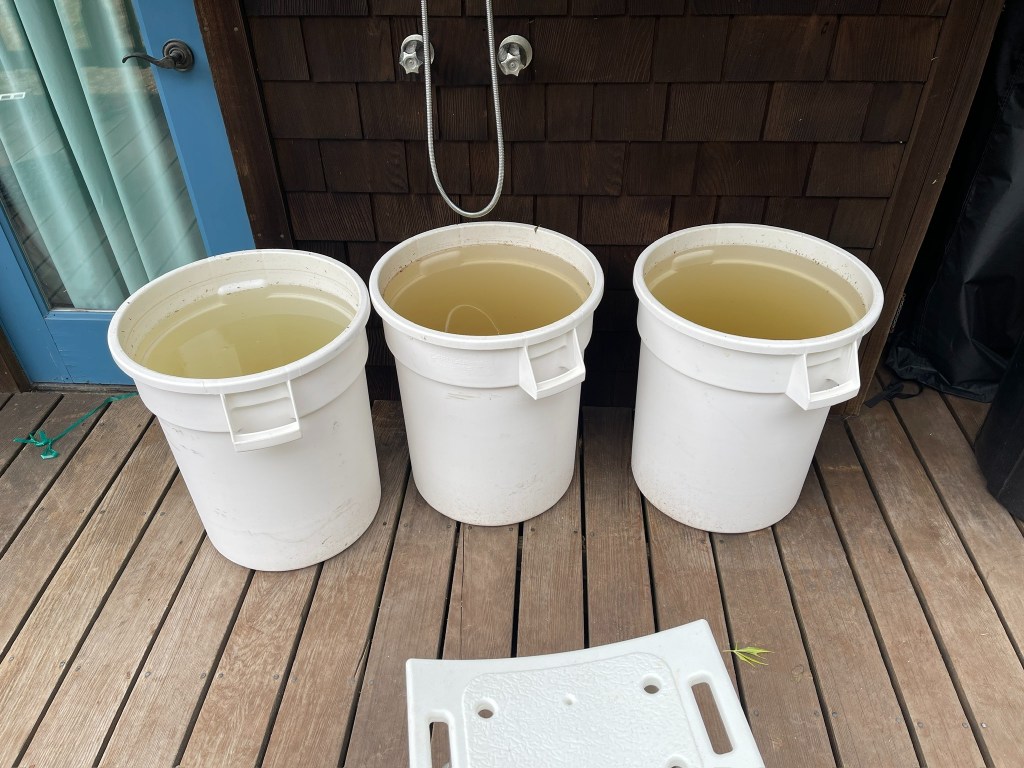
Please note the color of the water in each bucket. This was after BP22 got washed. The brown is from all the foliar sprays from the entire summer. You can read more about washing cannabis in my blog titled, Washing Cannabis.
I’ll be back late next month with my final harvest notes and most importantly, the test results from this year’s grow.
Survive and Vote.
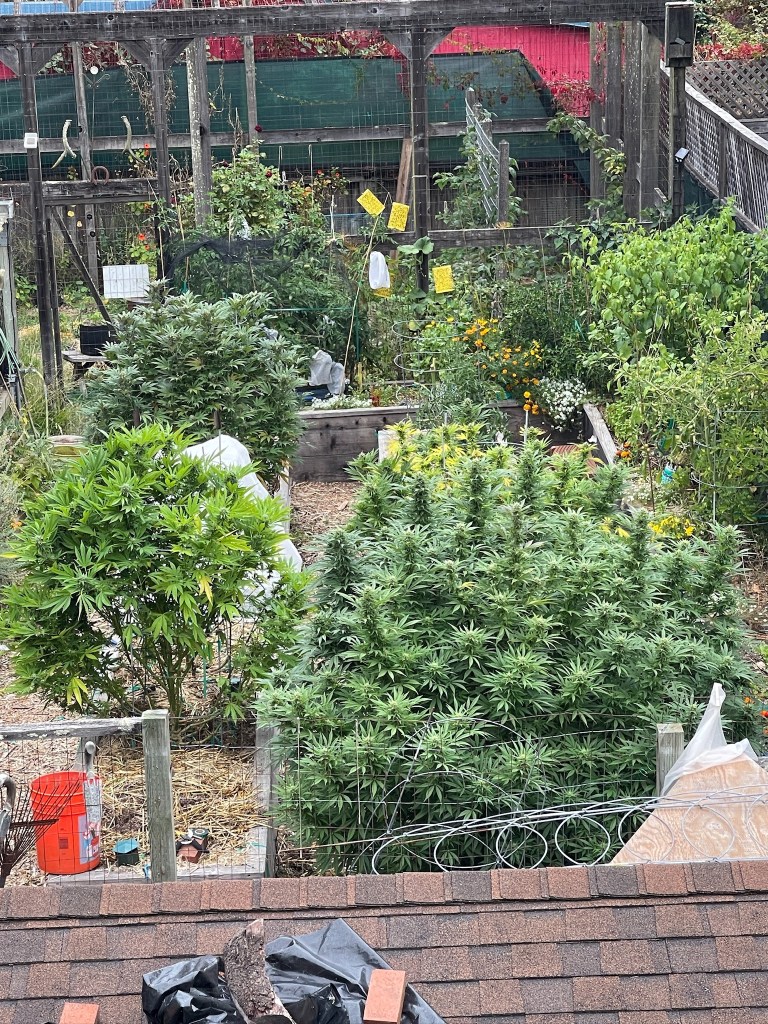
Four more to go.
Hey Friends: If you’d like to support jeffreyhickeyblogs.com, please feel free to contact me directly with your ideas (good seeds are always welcome–and if I grow them, I will get the flowers tested and share with you the results.)
Disclaimer: The majority of the links in jeffreyhickeyblogs.com posts are affiliate program links. This means that (most of the time) when you purchase a product linked from my site, I receive a commission, which helps support the blog.
 Jeffrey Hickey Writes Blogs
Leave a comment